QNL seeks to bring Islamic world’s scientific heritage to classrooms
<p>Doha, Qatar: Qatar National Library (QNL) is playing an increasingly important role in preserving and making accessible the scientific heritage of the Islamic world, while working to ensure that this wealth of knowledge reaches beyond researchers and specialist collections and into classrooms.</p> <p>Speaking on an Afikra podcast episode produced in collaboration with Qatar Foundation, QNL…
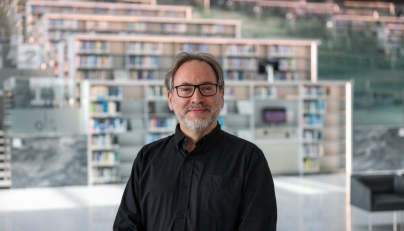
Doha, Qatar: Qatar National Library (QNL) is stepping up efforts to preserve and make accessible the scientific heritage of the Islamic world, with the goal of bringing this knowledge into classrooms. Historian of Arabic science Huseyin Sen highlighted Qatar's efforts to digitise its own collections and support the digitisation of important Arabic scientific manuscripts held by other institutions.
The Qatar Digital Library, launched in partnership with the British Library, allows researchers to access valuable scientific manuscripts remotely. Sen noted that Qatar has a distinctive collection of Western printed works related to Arabic science, which show the profound influence Middle Eastern scientific scholarship had on Europe.
However, preserving and digitising the materials is just the beginning. The real challenge is bringing this intellectual heritage into education and helping the next generation understand the contributions made by medieval Islamic scholars. Sen emphasized that teaching this history is not just about celebrating the past, but also about helping young people understand how scientific knowledge develops, providing historical role models, and challenging misconceptions about the Islamic world's contributions to science.
He stressed that the scientific tradition of the Islamic world was a diverse intellectual tradition involving scholars of various faiths. Among the works he believes deserve greater recognition are those of al-Khwarizmi, whose work laid the foundation for algebra, and Ibn al-Haytham, whose pioneering research in optics relied on experimentation.
Sen sees Qatar's role as an opportunity to connect the country's rich collections with contemporary education, hoping a new generation will appreciate their ancestors' contributions to science.
Written by urgent.news from The Peninsula Qatar's reporting — not their text. Machine-written — may contain errors; check the original before relying on it.