Kleinunternehmer: Liegt Afghanistans Zukunft in der Arbeit der Frauen?
Vor fünf Jahren eroberten die Taliban Afghanistan zurück. Seither unterdrücken sie die Rechte von Frauen. Aber deren Unternehmen sind ein Lichtblick in der sonst düsteren wirtschaftlichen Lage.
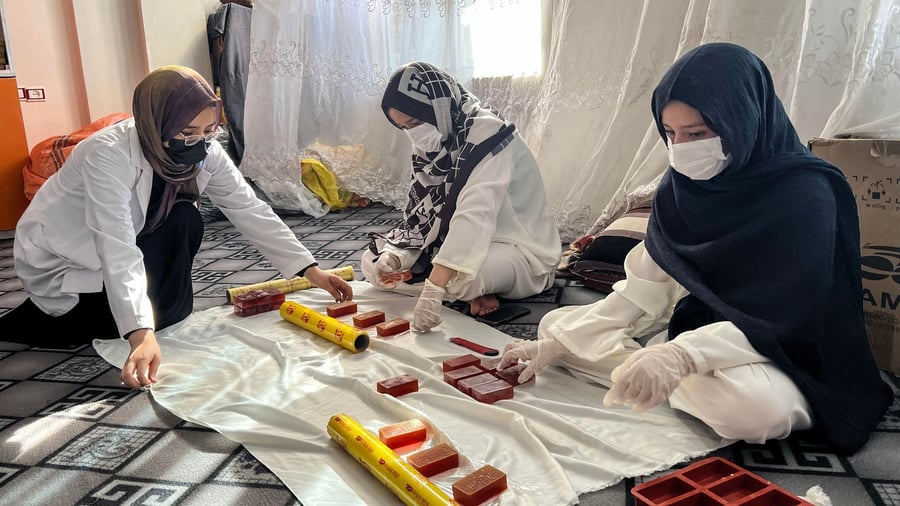
In the wake of the Taliban's five-year rule in Afghanistan, a ray of hope shines through the country's humanitarian crisis. Rukia Resai, a 21-year-old, founded a small soap-making factory in Herat, Afghanistan, in 2017. Obstinate restrictions on women have made life difficult for many, but Rukia and other women have found a way to improve their situation through work.
The factory has provided employment for eight people, and more during periods of high demand. Rukia's work has not only benefited herself, but also her sisters and other family members, leading to an improvement in their mental health. However, the situation in Afghanistan has worsened since the Taliban took over. The economy collapsed initially, the country was excluded from the international financial system, and aid funds have been lacking.
Almost 40% of the population may be facing acute food insecurity in winter, and at least 3.7 million Afghan children are severely malnourished. While the World Bank reports that the Afghan economy grew last year, the rapid influx of immigrants has made Afghans poorer per capita. The Taliban's restrictions on women's movement, especially in urban areas, have only exacerbated the situation.
Ghoncheh Karimi, a beekeeper, dresses as a man every day to navigate her 15-kilometer route to her hives in Herat. She attributes her success to her ability to earn a living and provide for her family. Despite the Taliban's restrictions, Latif Nasari, the deputy Afghan minister of economy, stated that the ministry supports women's businesses within Islamic norms.
However, women are hardly getting work permits for employment. The private sector is currently driving Afghanistan's weak economic growth, with women-led businesses performing significantly better than male-led ones. Expanding Rukia's soap-making business is one of many aspirations, but the lack of funds and support has limited her growth.
Rukia insists that people should not wait for someone to save them. Instead, individuals must take responsibility to improve their lives.
Written by urgent.news from Handelsblatt's reporting — not their text. Machine-written — may contain errors; check the original before relying on it.