'I felt Tourette's would ruin my life, now I teach at Cambridge'
Amanda Cole previously hid her condition but now wants others to "tic freely" without embarrassment.
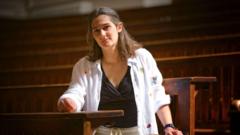
Dr Amanda Cole, now 32, was diagnosed with Tourette's syndrome in her 20s after experiencing a peculiar spasm during a religious studies class at 15. Initially, she feared that her Tourette's would ruin her life, asking herself how she could have a family or a job. Now a married mother of one and an assistant professor in sociolinguistics at Cambridge University, Cole has decided to be open about her condition.
Her decision came after a guest shouted out offensive words during the Bafta Film Awards ceremony, which was triggered by her own tics. Cole feels scared of Tourette's, as there were no public figures she could relate to, and she was often ridiculed in the media. She hid her condition from friends and colleagues by suppressing or releasing her tics when appropriate.
Cole says she still has some shame about her condition and wishes for a world where people can tic freely without embarrassment. Despite the challenges, she embraces her "superpowers," such as hyperfocus, which allows her to concentrate intensely on tasks. Cole's tics include the names of her husband, son, or cat, as well as random phrases.
She emphasizes that tics are merely neurological events beyond one's control. Emma McNally, CEO of Tourette's Action, mentions that many with coprolalia (the involuntary use of obscene or offensive language) end up isolating themselves due to societal reactions. Cole's openness has been well-received by her students, who appreciate her sharing her neurodivergence.
Written by urgent.news from BBC News's reporting — not their text. Machine-written — may contain errors; check the original before relying on it.