Beyond the numbers: why China’s carrier force won’t copy the US model
Having marked its 99th anniversary on August 1, the People’s Liberation Army is now just a year away from its centenary goals, with its evolution highlighting the past, present and future of China’s military strategy. In the sixth part of a series, Gabriel Dominguez looks at Beijing’s evolving aircraft carrier doctrine. Debate over China’s aircraft carrier ambitions has long centred on how many…
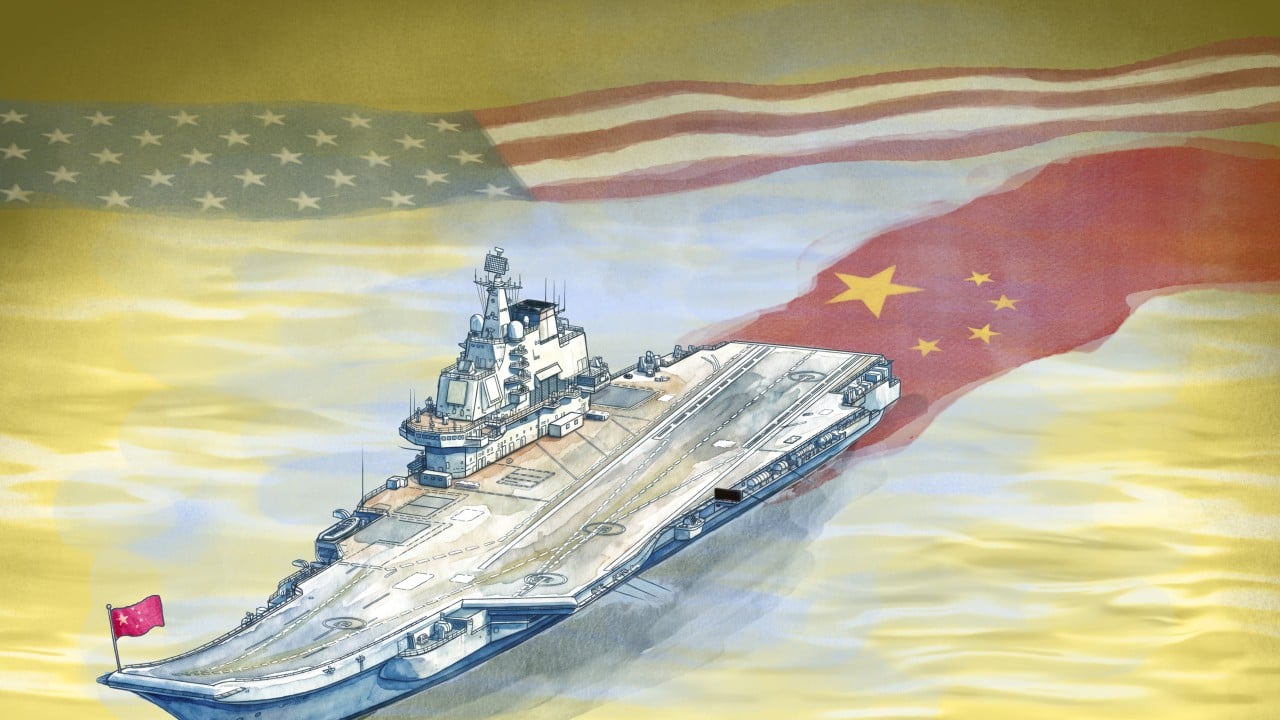
Since its formation in 1949, the People’s Liberation Army has recently approached its centennial milestone, revealing the trajectory of China’s military strategy. Amid the contention surrounding China’s naval ambitions, the focus has frequently been on the number of carriers the nation plans to commission, with the Pentagon forecasting a fleet expansion to nine by 2035.
However, experts emphasize that beyond the grandeur of ship launches, there are subtle shifts in pilot recruitment, command structures, and fleet integration that indicate a carrier strategy distinctly separate from the American model. Brendan Mulvaney, director of the China Aerospace Studies Institute, highlighted that "the tendency to evaluate the [Chinese navy] through the doctrinal lens of the US Navy is a major misconception."
The differing goals, missions, and challenges of the two nations necessitate distinct solutions to their unique problems.
China’s carrier force is evolving under circumstances distinct from those that shaped the American naval doctrine of projecting power thousands of kilometres from home. Instead, China’s carriers are envisioned to support its land-based air power, long-range anti-ship missiles, integrated air-defence systems, and rocket forces stationed along its coastline, extending the People’s Liberation Army’s presence farther into the western Pacific and beyond.
Furthermore, the distribution of strike capabilities across China’s aircraft carrier groups appears more evenly spread compared to the US model, which might bolster the PLA’s resilience in a conflict.
A recent International Institute for Strategic Studies (IISS) report suggests that analysts should not assess Chinese carriers using American benchmarks, but rather, focus on how they integrate into the PLA's broader operational framework. One of the primary distinctions observed is in the command hierarchy. Unlike the US Navy, where carriers are traditionally commanded by naval aviators, all known naval commanders of Chinese carriers have hailing from the surface warfare branch.
The IISS report indicates that China's pilot-captain class program, designed to qualify naval aviators for carrier duties, has not produced any graduates who have subsequently commanded a carrier. This underscores the enduring dominance of the surface warfare career track within the Chinese navy.
The pilots are perceived by the Chinese navy as coequal assets, working in tandem with the heavy missile arsenals of surface escorts, as opposed to serving as the primary offensive arm of the fleet. According to Mulvaney, Beijing's ongoing experiments with pilot-commanders indicate that this remains an unresolved organizational issue rather than a settled doctrinal choice.
However, this arrangement also poses the risk of commanders, schooled primarily in ship-handling, underestimating the specialized demands of flight-deck operations.
An often-overlooked aspect of China's carrier strategy is the level of authority vested in naval commanders. While American naval operations typically assume commanders have substantial autonomy once assigned a mission, the PLA operates differently, with commanding officers sharing leadership responsibilities with political commissars.
This latter role is tasked with ensuring the division adheres to the Communist Party's ideological principles. Although this system does not eliminate battlefield initiative, it likely influences how commanders gauge risk, convey intent, and manage escalation, according to Mulvaney.
Moreover, the Chinese navy increasingly treats its carrier fighters, Type 055 and Type 052D destroyers, submarines, airborne early warning aircraft, and long-range missile forces as complementary rather than hierarchical elements. This approach likely stemmed from practical constraints, such as limited aircraft range, limited aerial refuelling, and immature command-and-control networks, which compelled accompanying warships to shoulder a larger portion of the offensive burden during early carrier operations.
In contrast, the traditional American model has typically seen carriers as the principal offensive arm of a strike group, with escorts providing secondary missile firepower.
Additionally, a Chinese carrier group would likely operate in conjunction with land-based fighters, bombers, and long-range missile forces, leveraging the collective combat power from the mainland. Viewing the carrier group in isolation would therefore underestimate the combined offensive capabilities Beijing can deploy from its territory. As such, the Chinese carrier strategy is more nuanced and multi-faceted compared to the US model, reflecting unique strategic considerations and priorities.
Written by urgent.news from South China Morning Post's reporting — not their text. Machine-written — may contain errors; check the original before relying on it.