Ukraine’s cardboard protests look like democracy working. In a war, that’s also the risk.
Three weeks on, the protests go on—smaller but daily. Fedorov's old seat is filled by an acting minister, and Fedorov himself won't join the crowds demanding his return.
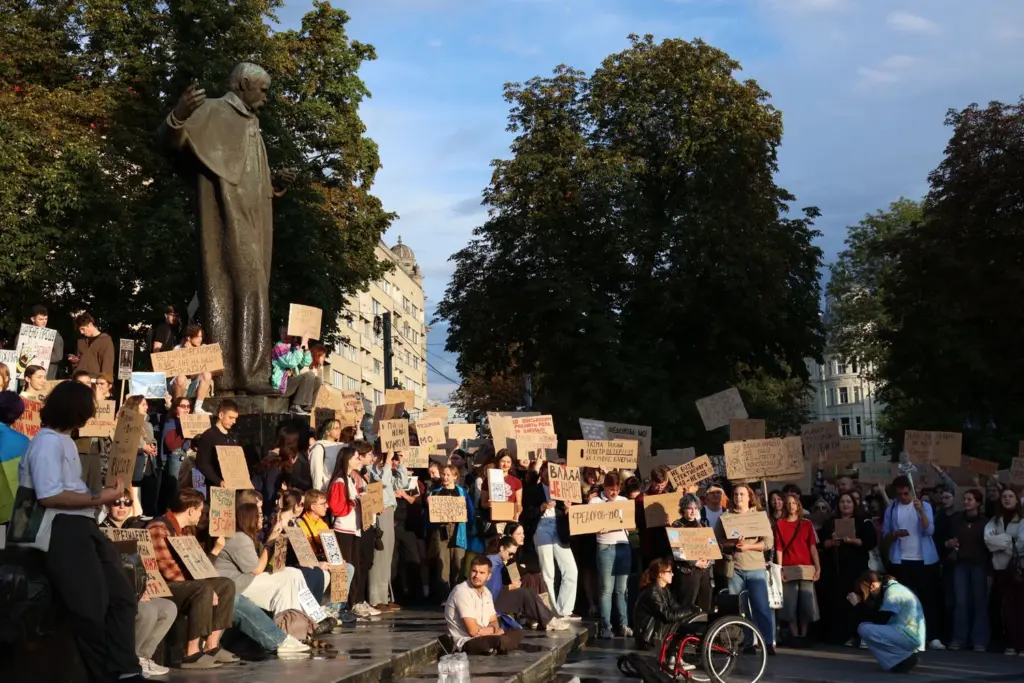
On 16 July 2026, Ukrainian protesters took to the streets with cardboard signs, demanding the reinstatement of Defense Minister Mykhailo Fedorov. The protests, which began in Kyiv, soon spread to other cities. The following day, the protesters added a new demand: the dismissal of Commander-in-Chief of the Armed Forces of Ukraine, Oleksandr Syrskyi.
President Zelenskyy addressed the second demand but not the first, leaving the protesters in a state of uncertainty. Despite the country being under martial law, which restricts democracy, the protests demonstrate a desire for more democratic processes. Political science professor Anatolii Romaniuk suggests that the protests illustrate society's quest for greater democracy, even in the midst of war.
The protesters' reliance on handwritten, individual signs reveals a personal connection to the cause. However, the identities of these protesters remain unknown, as no comprehensive sociological research has been conducted on either last year's protests or the current wave. Among the protesters, some expressed concerns about the current situation, while others urged for Fedorov's reinstatement to influence the ongoing events.
Written by urgent.news from Euromaidan Press's reporting — not their text. Machine-written — may contain errors; check the original before relying on it.