Total Solar Eclipse to Highlight Germany’s August Sky
As the moon briefly blocks the sun on the 12th, the Federal Republic also braces for a busy meteor shower and rare planetary pairings.
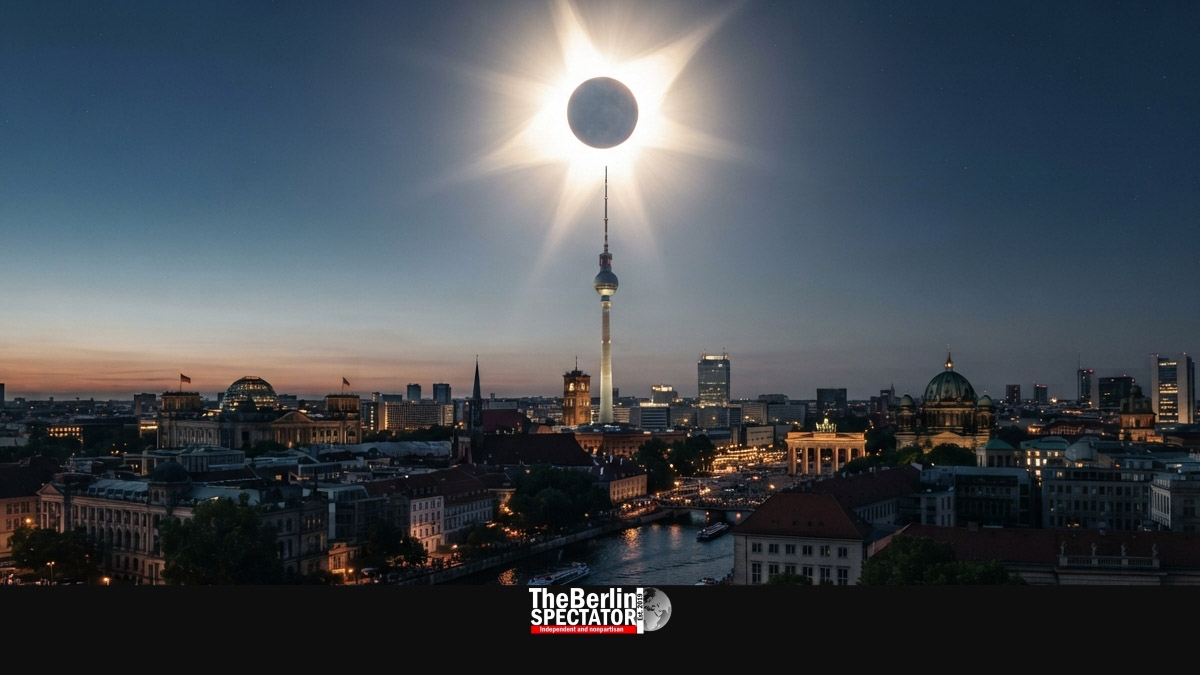
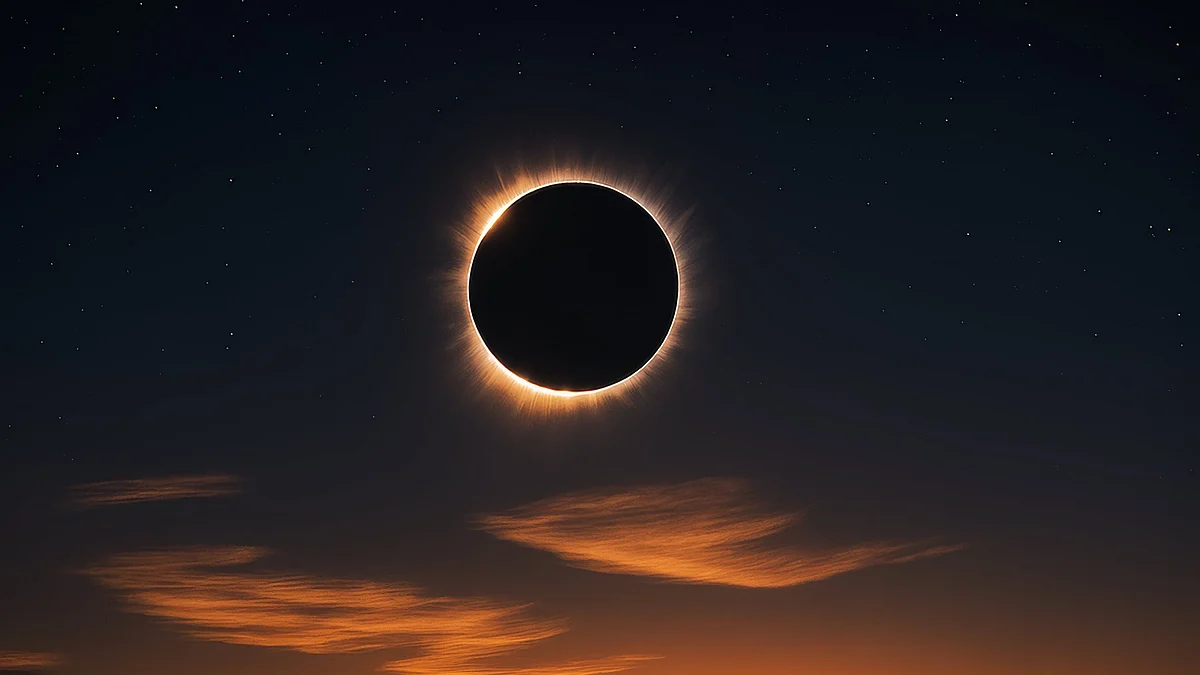
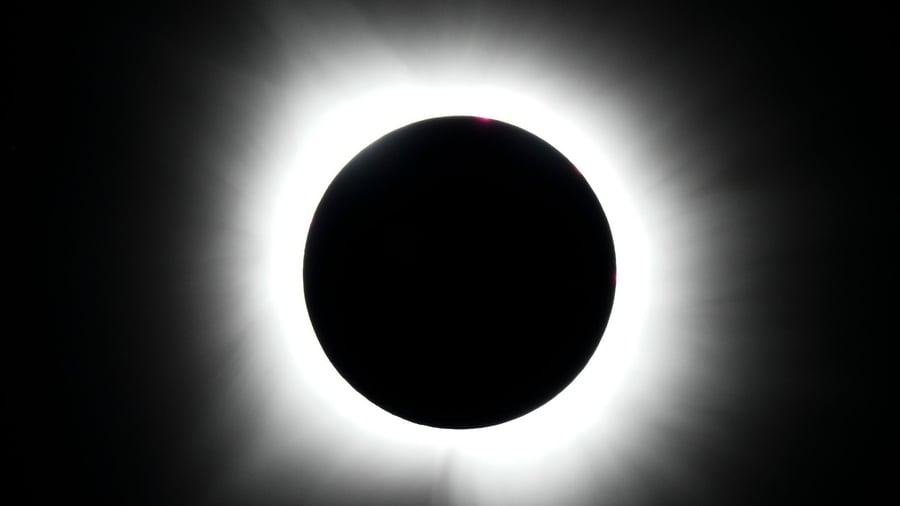
Germany prepares for a spectacular celestial event this August when a total solar eclipse graces the skies on August 12th. The path of totality will sweep across the Arctic, North Atlantic, eastern Greenland, Iceland, Spain, the Balearic Islands, and the western Mediterranean. While Germany is not in the direct line of sight for the total eclipse, residents will still witness a partial eclipse.
The partial eclipse will be visible throughout the country, starting around 7:20 p.m. and ending close to sunset at around 9 p.m. The moon will cover between 84 and 92 percent of the sun's face during this celestial phenomenon. To safely observe the eclipse, experts advise against looking directly at the sun without proper eclipse glasses.
Children are advised to use projection methods, such as a pinhole box or a small mirror, to view the sun's image without direct exposure. Germany has not experienced a total eclipse of this magnitude in its southern regions since August 1999. The next opportunity to witness totality from the southwestern tip of the country will only arise on September 3rd, 2081, when only a fraction of today's population will still be alive.
August offers more than just the solar eclipse. The Perseid meteor shower peaks between the 9th and 13th, with the greatest activity occurring between the 12th and 13th. Under the new moon conditions, observers may see up to 100 meteors per hour. The optimal viewing window is between 11 p.m. and 4 a.m., when meteors burn up in the atmosphere at an incredible speed of 60 kilometers per second.
The Perseid shower gets its name from the constellation Perseus, where the meteors appear to radiate. On August 28th, a nearly total lunar eclipse will be visible in the early morning hours. The moon enters Earth's shadow at 4:34 a.m. and exits at 7:52 a.m., with the deepest point occurring at 6:13 a.m., when 94 percent of the moon's visible disk will be within the shadow.
However, only the first half of this eclipse will be observable from Germany, as the moon sets shortly after reaching the midpoint. Full moon arrives on August 28th at 6:19 a.m., situated in the constellation Aquarius. The moon's distance from Earth will fluctuate throughout the month, ranging from approximately 363,300 kilometers at its closest point on the 10th to 404,600 kilometers at its farthest on the 22nd.
Venus fades from view as an evening star, setting earlier each night, while Saturn becomes more visible as the month progresses. Mars moves from Taurus into Gemini and rises progressively earlier. Jupiter joins the pre-dawn sky in the second half of August, pairing with Mercury on the 15th. The Summer Triangle, consisting of Vega, Deneb, and Altair, dominates the southern sky, while the constellation Delphinus, the small but distinct constellation to the east of Cygnus, adds to the celestial display.
Arcturus graces the western horizon, and the Great Square of Pegasus rises in the east. The sun travels through Cancer before entering Leo on the 11th, marking the shrinking of daylight hours by nearly two hours throughout the month. Beyond the physical aspects, researchers emphasize the enduring fascination with solar eclipses.
Psychologist Peter Walschburger explains that witnessing a solar eclipse is like experiencing a temporary catastrophe, where people enjoy the fleeting "doomsday" thrill without actual danger. Historically, sudden daytime darkness was often interpreted as an ominous sign, linked to wars, plagues, and disasters across various cultures.
Early societies closely observed the sky for practical purposes, such as predicting weather and marking seasons, and the heavens were believed to be home to gods with human traits. Ancient Egyptians revered the sun as a life-giving deity, personified by the god Ra. However, modern light pollution is diminishing the night sky's ability to captivate, causing a decline in stargazing interest outside of eclipses.
Written by urgent.news from The Berlin Spectator's reporting — not their text. Machine-written — may contain errors; check the original before relying on it.