Pulau Tuba's ‘gayam’ snail: From local delicacy to tourism draw
LANGKAWI, Aug 10 — Beyond the popular “bronok” (sea cucumber), Pulau Tuba boasts another unique seafoo...
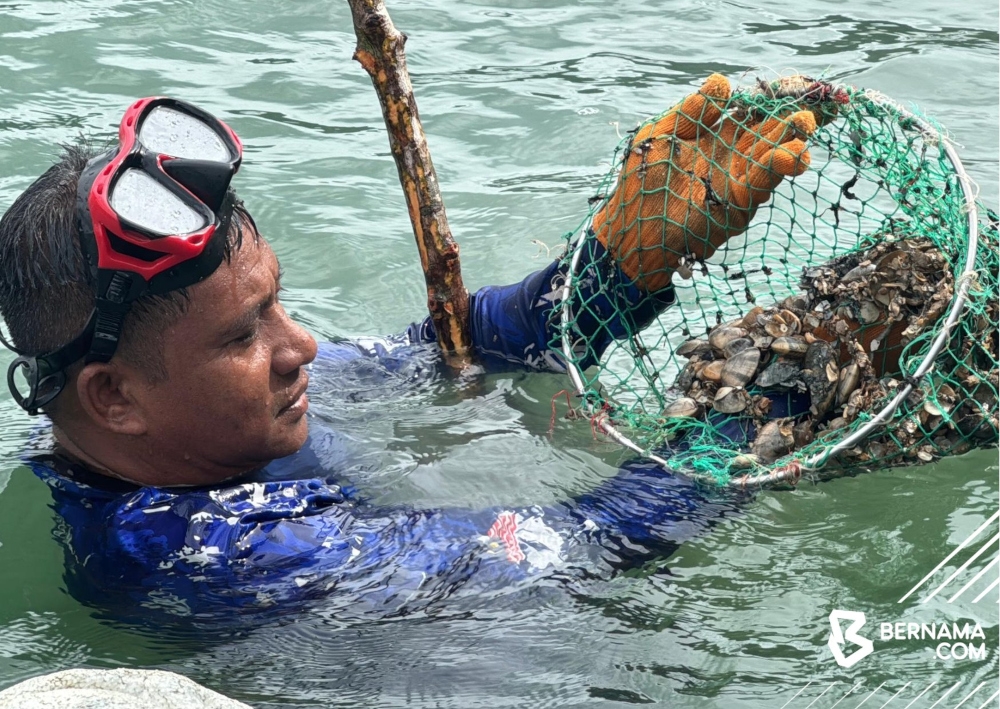
Pulau Tuba, a popular tourist destination, is gaining recognition for its unique culinary offering – the "gayam" snail. This local delicacy, often overshadowed by its more well-known counterpart, the "bronok" or sea cucumber, is gaining attention for its sweet taste and meatier texture. However, harvesting these snails is a challenging task that requires specialized skills and sea navigation expertise.
Rahman Ahmad, a 49-year-old Pulau Tuba resident and gayam snail harvester, emphasizes that only about seven or eight individuals on the island possess the necessary skills to successfully harvest these snails. The harvesting process occurs during the low-tide period, particularly during "dead water" conditions when sea currents are weak.
Divers descend to depths of two to three meters to locate the snails, which are buried about two inches beneath the seabed. These snails are detected by observing jets of silt rising to the surface, at which point they are collected using a scoop. To avoid being swept away by strong currents, fishermen attach a piece of wood to a rope and hold onto it above the surface.
The harvesting process is physically demanding, with Rahman Ahmad noting that fishermen must make hundreds of dives to collect about 100 kilogrammes of snails within a four-hour period. Despite the challenges, including the risk of being swept away by strong currents, Rahman Ahmad has been harvesting gayam snails for four years alongside his wife, Rubiha Abd Hamid, and their son, Mohd Akram, now 11.
The season for harvesting gayam snails typically runs from July or August until December, during low tide. Once harvested, Rubiha Abd Hamid sifts through the catch to separate the snails from sand and debris, harvesting between 70 and 150 kilogrammes daily. These snails, with their sweeter and more substantial meat compared to the more common lala, can be prepared in various dishes, including curries, lemongrass-stir-fries, and fritters.
Written by urgent.news from Malay Mail's reporting — not their text. Machine-written — may contain errors; check the original before relying on it.