One of the Most Important Cookbooks of the 20th Century Is Celebrating 50 Years. What Made Its French Author So Special in American Kitchens?
With instructions and images explaining how to carve vegetables and deconstruct a lamb, "La Technique" by Jacques Pépin became a how-to guide and an inspiration for countless cooks and food lovers
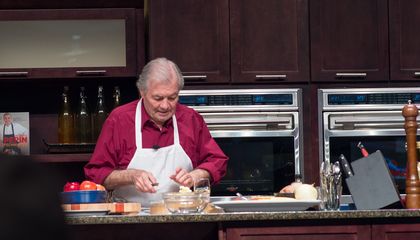
In 1974, Jacques Pépin suffered a severe car accident while en route home, suffering multiple injuries and narrowly avoiding the loss of his arm. This event marked the end of his career as a chef, which had begun at the age of 13 when he began his apprenticeship at the Grand Hôtel de l'Europe. However, Pépin's return to culinary arts took a different form, with a focus on writing and teaching about food.
After immigrating to the U.S. in 1959, Pépin discovered that many students lacked a solid grasp of basic cooking techniques such as peeling a carrot, poaching an egg, or deboning a chicken. This realization led to the creation of his seminal work, La Technique, a book that laid the foundation for the careers of numerous chefs and home cooks.
La Technique, published this year, marks its 50th anniversary and has earned a prestigious spot in culinary history. Its unique approach, focusing on step-by-step visual guides rather than traditional recipes, set it apart from other cookbooks. Bridget Lancaster, a co-host of "America's Test Kitchen," reminisced about discovering La Technique during a yard sale, appreciating not only Pépin's instructional methods but also his public access cooking show, "Everyday Cooking."
She found the detailed visuals invaluable in understanding the cooking process. The book was honored by the New York Times Style Magazine in its 2024 list of the 25 most influential cookbooks from the past century.
The process of creating La Technique was arduous, with Pépin and his daughter Claudine spending countless hours meticulously documenting each culinary step. Pépin himself admits to working 10 to 12 hours a day on the project, a testament to his dedication. Photographer Léon Perer captured more than 1,500 images of Pépin practicing various techniques, from skillet chicken to sizzling omelets.
These images brought an unprecedented level of clarity to culinary instruction, making it accessible to those who had never experienced such precision in American kitchens.
La Technique's influence extended beyond the pages of the book. Pépin continued to promote French culinary techniques through television programs, including "Julia and Jacques Cooking at Home," and later introduced his daughter Claudine on set to film "Jacques Pépin's Kitchen: Cooking with Claudine." Claudine later shared that her father aimed to answer the questions many home cooks might have, fostering a culture of accessible culinary education.
Pépin's impact is evident in the careers of many influential chefs, including Tom Colicchio. Colicchio, a renowned chef and judge on "Top Chef," credits La Technique for instilling in him a deep appreciation for method over recipe, helping him perfect his knife skills as a teenager with ADHD. While some of the whimsical elements in La Technique, such as making a rabbit sculpture from an olive, might seem out of place in contemporary cooking, they reflect Pépin's belief in the pleasure of cooking as well as its necessity.
Written by urgent.news from Smithsonian's reporting — not their text. Machine-written — may contain errors; check the original before relying on it.