Italian scientists ready new solar instrument for high-stakes eclipse test
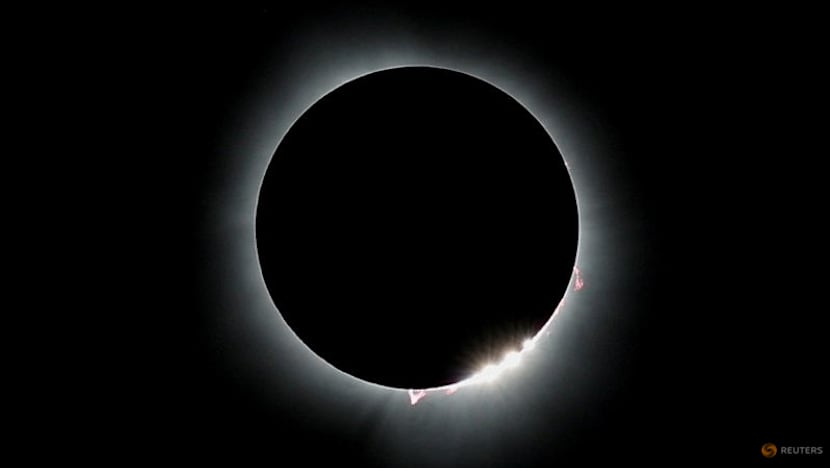
In Padua, a team of Italian scientists has been working on a novel instrument called the Circular Slit Spectrometer (CISS), which they believe could revolutionize the study of the solar corona. The solar corona, the outer layer of the sun's atmosphere, is notoriously difficult to observe due to its changing nature on timescales of minutes.
However, the CISS, developed by Principal Investigator Federico Landini from the Astrophysical Observatory of Turin, features a unique circular slit design that allows it to capture the entire corona's spectrum from a distance in a single photograph, significantly faster than existing instruments.
The CISS will be put to the test during an upcoming total solar eclipse on August 12, 2023, as it crosses Europe. The eclipse will create a temporary window where the corona becomes more visible, enabling researchers to examine the area surrounding the sun. This could have significant implications for understanding the behavior of the corona, which can impact Earth's communications networks and power grids.
Unlike previous instruments that took hours to scan the corona line by line, the CISS's innovative design promises to speed up the process dramatically. If successful, this technology could pave the way for future space missions to observe the sun's outer atmosphere. The last major ultraviolet spectrometer, UVCS, operated aboard the European Space Agency and NASA's SOHO spacecraft from 1996 to 2013, but its mapping process was much slower.
However, before reaching this critical stage, the team must ensure the CISS is ready for the brief window of totality during the eclipse. Senior Researcher Paola Zuppella from the Institute for Photonics and Nanotechnologies in Padua emphasized the importance of precise team coordination and favorable weather conditions. To transport the delicate instrument to Spain, the team chose to travel by road rather than flying, to avoid any potential disruptions due to flight cancellations.
Landini expressed relief at securing their safe arrival in Spain, highlighting the critical nature of this moment for their two-and-a-half year effort.
Written by urgent.news from Channel News Asia's reporting — not their text. Machine-written — may contain errors; check the original before relying on it.
Also reported by 1 other outlet
- Italian scientists ready new solar instrument for high-stakes eclipse test freemalaysiatoday.com