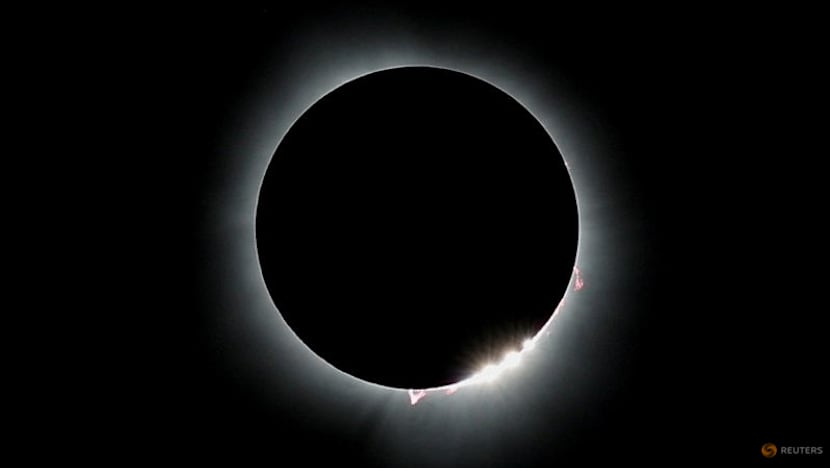
How to take photos of Wednesday’s solar eclipse – the best it’s been since 1999!
Here are some tips on how to view and safely photograph the solar eclipse that will be visible in the US and parts of the UK on 8 April. The post How to take photos of Wednesday’s solar eclipse – the best it’s been since 1999! appeared first on Amateur Photographer .
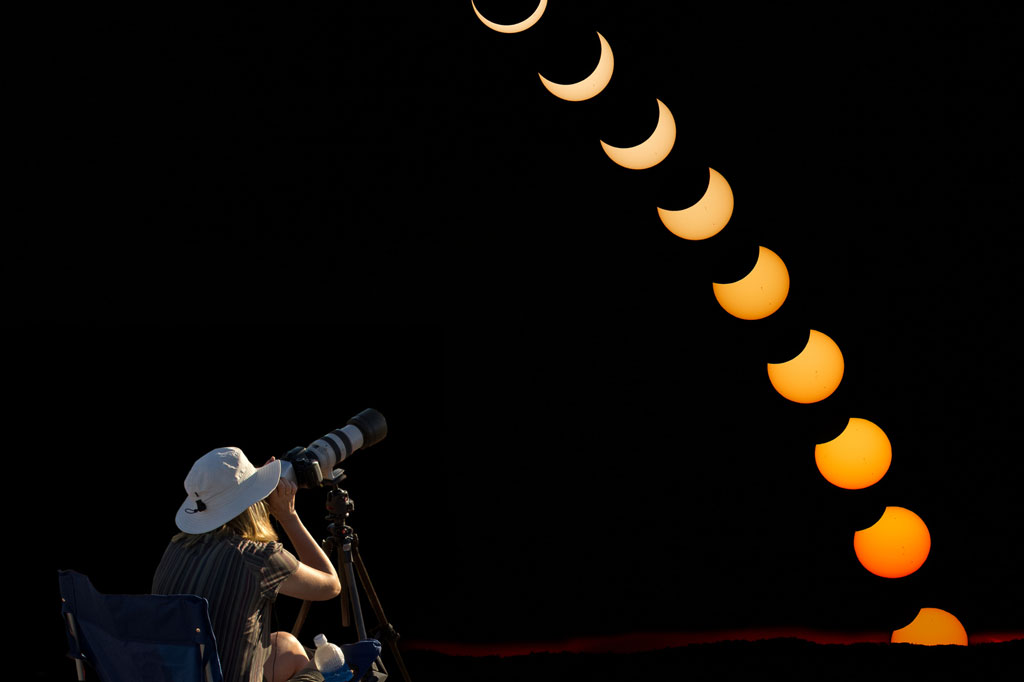
On Wednesday, 12th August, observers across Europe, the UK, Ireland, Scotland, and parts of the United States will witness a solar eclipse. In the UK, Ireland, and Scotland, the partial eclipse will be visible from 6:10-6:17 PM BST, peaking after 7 PM. The Royal Astronomical Society reports that Belfast, Northern Ireland, will see up to 93% of the sun obscured by the moon, while London, UK, will experience 91% obscuration.
Other cities like Glasgow, Dublin, Liverpool, Manchester, and Sheffield will also be able to witness the event. The best view of a total (100%) solar eclipse is expected in Iceland and Northern Spain. In Madrid, Spain, the eclipse will begin at 7.36 PM CEST and peak at 8.30 PM CEST. In the US, viewers can expect a partial eclipse (around 21-28%) in Bangor, Maine, starting at 1.00 PM EDT, peaking at 1.53 PM EDT.
To safely view and photograph the eclipse, it's crucial to use filters. The most popular filter is the Baader Astro Solar film, a high-quality Mylar sheet that blocks harmful UV, infrared, and other wavelengths of light. This affordable filter (about £20) should be securely attached to a DSLR or Mirrorless camera using a telephoto lens for best results.
Smartphone users can also capture the eclipse by wearing protective glasses and using a tripod for stability. Alternatively, a pinhole camera can project an image of the eclipse onto a white surface for safe observation. Remember, never use any other opaque material to block the sun as it's extremely dangerous.
Written by urgent.news from Amateur Photographer's reporting — not their text. Machine-written — may contain errors; check the original before relying on it.