How US conditions on Saudi nuclear accord could torpedo the deal
Appropriately for atomic physics, the US-Saudi Arabia accord on nuclear co-operation, signed during the last week of July, hovers in quantum uncertainty. The crucial “123 Agreement”, it was reported, would allow Riyadh to enrich uranium, the issue at the nucleus of decades of Iran-US collision. But US President Donald Trump promptly posted: “There will be no enrichment of material!” So which is…
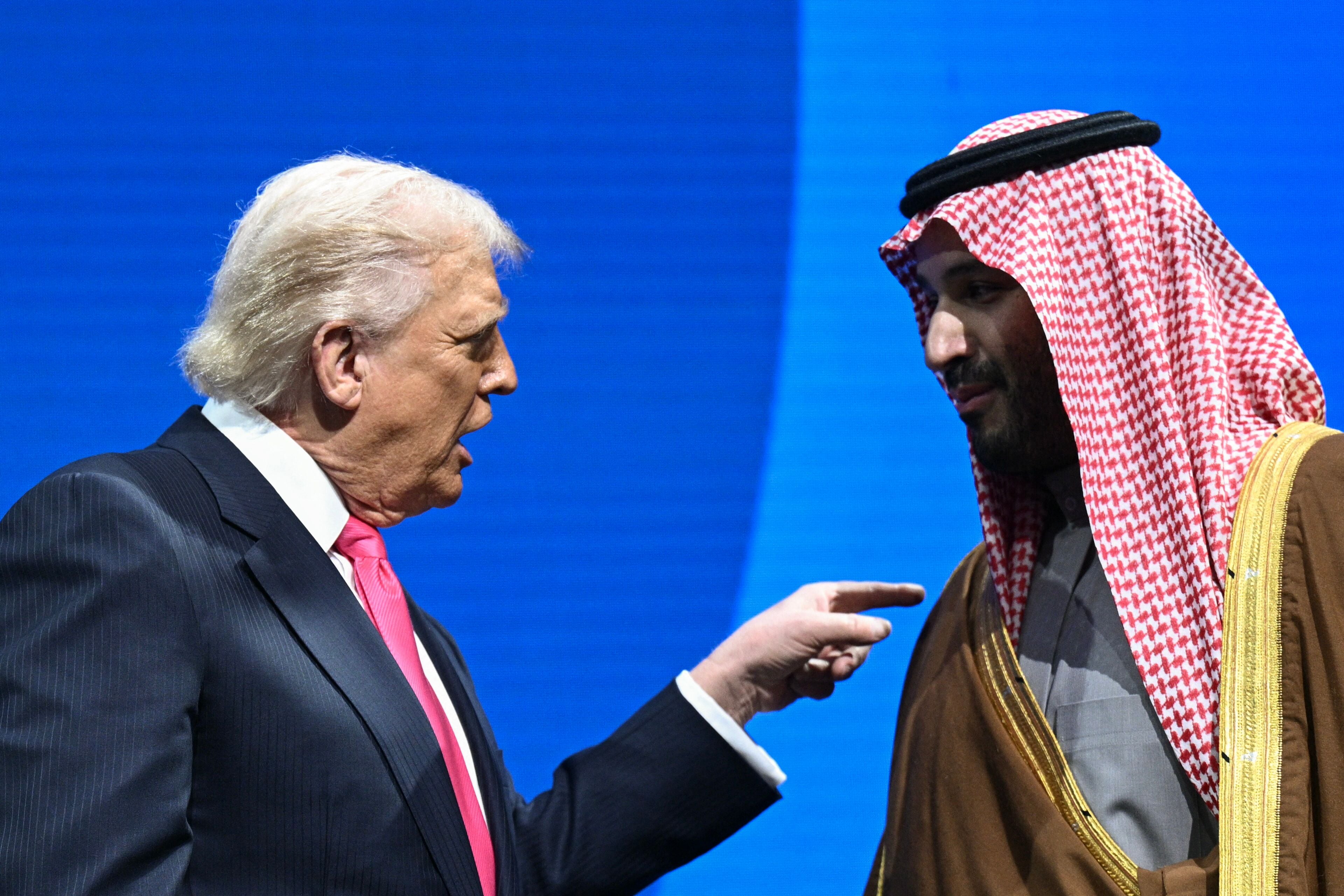
The US-Saudi Arabia nuclear agreement, signed in late July, remains shrouded in uncertainty. The "123 Agreement," a crucial component of the accord, would have permitted Saudi Arabia to enrich uranium - a contentious issue given the decades-long Iran-US conflict. However, US President Donald Trump quickly declared: "There will be no enrichment of material!" The dispute over this agreement has the potential to derail the entire deal, raising questions about the nature of the signed document and its implications.
US civil nuclear cooperation has a complex history dating back to Eisenhower's "Atoms for Peace" program. The 123 Agreement, named after the relevant section of the Atomic Energy Act of 1954, was intended to facilitate wider civilian participation in nuclear energy. Iran was one of the initial beneficiaries, signing a 123 Agreement in 1957. However, the agreement fell apart after the 1979 Iranian Revolution, leading the Islamic republic to distrust foreign enrichment facilities.
In contrast, the UAE sought to maintain strong relations with the US and other nuclear suppliers for its civil nuclear program. The UAE's Barakah nuclear plant, built by the Korea Electric Power Corporation (Kepco) with American-origin technology, has provided significant low-carbon electricity, particularly beneficial in the current crisis when Iran attacked gas installations.
Saudi Arabia, too, has long harbored nuclear ambitions. Established in 2010, the King Abdullah City for Atomic and Renewable Energy planned to develop 17 gigawatts of generating capacity by 2032, primarily relying on solar and wind power initially. However, Saudi Arabia also sought the option to enrich uranium on its soil, complicating its nuclear power project.
The kingdom has considered five potential lead nuclear partners: the US, South Korea, France, China, and Russia. While the UAE has shown interest in small modular reactors (SMRs) from the US, Saudi Arabia's desire to enrich uranium on its soil has made this a challenging prospect. The confusion surrounding the 123 Agreement and the US stance on enrichment could potentially lead Saudi Arabia to explore other nuclear partnerships.
Written by urgent.news from The National Business's reporting — not their text. Machine-written — may contain errors; check the original before relying on it.
This story
This is one outlet's version. Read the fullest account.
- How US conditions on Saudi nuclear accord could torpedo the deal thenationalnews.com