Gridlock ahead: Perth's industrial hub faces a decade of disruption
Transport operators in Perth’s south worry worsening congestion on the Kwinana Freeway is already driving up costs, delaying deliveries and fatiguing drivers. Now they are preparing for at least another decade of disruption.
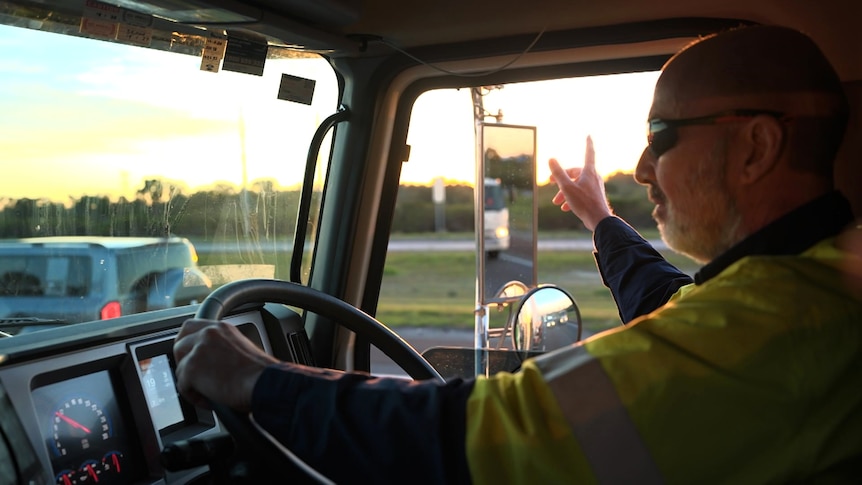
In the early morning hours of a weekday, truck driver Carolus Broers faces a challenging journey as he transports fuel to various service stations across Perth. Standing outside a fuel depot in Kwinana, a city that serves as the state's industrial hub, Broers begins his day just after 6 a.m. Soon, he is on the road bound for Ascot, a location less than 50 kilometers away.
Truck traffic in Kwinana has already come to a standstill, despite the fact it is not peak hour and only 7 a.m. The Kwinana Freeway remains an obstacle, with traffic crawling at only 20 km/h. For hundreds of truck drivers moving fuel, fertiliser, and waste in and out of the region, this is the new reality.
The region of Kwinana is on the brink of its most significant transformation in decades. Future developments include AUKUS submarine support facilities and a defence manufacturing precinct, while nearby Westport will become the state's future container port. These changes will require substantial infrastructure upgrades, including a $1.1 billion improvement to Anketell Road and a $700 million widening of the Kwinana Freeway.
Construction is slated to commence early next year, and the transformation is expected to span a decade or more.
David Harrison, from the Kwinana Industry Council, emphasizes the magnitude of the region's transformation, stating that Kwinana will be "completely unrecognizable" in just a few years. The region's industrial importance is underscored by the fact that it processes fuel for cars, fertiliser for food production, and even oxygen for public hospitals. Harrison notes that the region's roads are the essential arteries for industry, and they must continue to function.
In addition to the defence presence, the US Navy expects up to 2,300 Americans to settle in Perth's southern suburbs by 2030. Defence Minister Richard Marles announced that this will involve more than six billion dollars in construction work, beginning next year. Waste company Veolia already anticipates heavier congestion and has begun planning by scheduling extra drivers and trucks to ensure timely garbage collection.
Veolia's operations manager Rebecca Goodwin confirms that the company is actively addressing the potential congestion issues. They expect to require at least two additional trucks operating in the southern corridor to maintain efficient garbage collection. These extra trucks come at a cost, and Veolia hopes it will not have to pass on the increased expenses to councils and ratepayers.
Atlas Fuels, a fuel distributor, faces similar challenges. Operations executive Tina Hopkins explains that longer journeys result in more trucks, drivers, and higher operating costs. To manage these deliveries effectively, Atlas Fuels must deploy extra trucks and drivers.
The state government has warned commuters to anticipate average delays of around 15 minutes during freeway upgrades. However, for freight operators, these delays quickly multiply across dozens of vehicles and hundreds of deliveries. By the time Broers arrives at the Ascot service station, he has already been on the road for an hour and a half, more than half an hour behind schedule, well before the major roadworks even commence.
This situation is merely a glimpse of what lies ahead as Kwinana embarks on this unprecedented reconstruction, marking the start of years of construction to support Western Australia's industrial future and testing the patience of those who keep it running.
Written by urgent.news from ABC News AU's reporting — not their text. Machine-written — may contain errors; check the original before relying on it.