A college student had to retract her paper. The move was ‘the starting point for a better study’
As a sophomore at Princeton University, Rishika Porandla took a course called “The Curious Scientist,” where students practice disciplinary research skills and act as a “PI” on a project of their choosing. Porandla didn’t have to think twice about what subject to dive into. In high school, she had studied the biodegradability of polyvinyl chloride … Continue reading A college student had to…
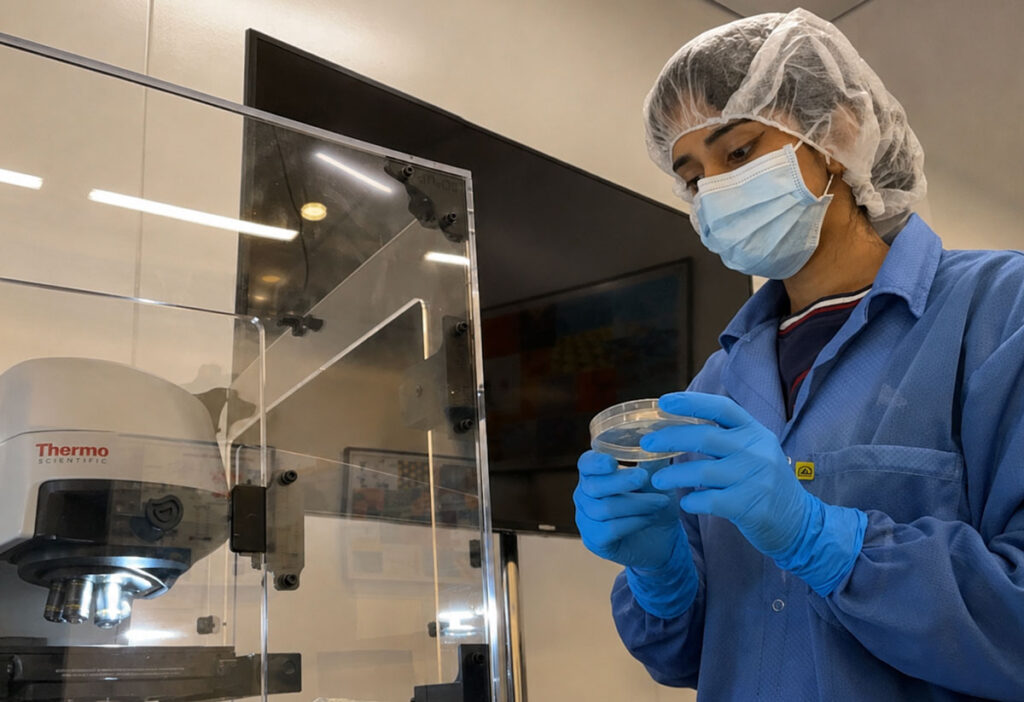
Rishika Porandla, a sophomore at Princeton University, published a paper based on research she had conducted in high school. While revisiting her work, she found errors in the methodology of the study, leading her to retract the research. Porandla took a course at Princeton called "The Curious Scientist," where students practice research skills and act as principal investigators on their chosen projects.
She had previously studied the biodegradability of polyvinyl chloride (PVC) in high school and discovered a new method to break down the plastic, resulting in a published journal article. Porandla was eager to use the Princeton class to further her discovery. However, during her research at the Princeton Imaging and Analysis Center, she uncovered two methodological errors that affected the study's conclusions and made the results inaccurate.
Initially, she struggled to accept the discovery and hoped the next experiments would explain away the inconsistencies. After consulting with her course instructor, Andrea DiGiorgio, and conducting her own research, Porandla decided to contact Wiley to seek guidance on how to address the issues. She chose to retract the paper, a decision that came with personal and professional risk, as she had invested many years of work and identity into the project.
The journal, Macromolecular Materials and Engineering, retracted the paper in May after reviewing it. Porandla's decision to self-retract is considered rare, with only about 22% of retractions being self-reported according to a 2013 study. The Center for Scientific Integrity recently established the Ctrl-Z Award to recognize scientists who take steps to correct their published work, acknowledging the professional risks involved.
Written by urgent.news from Retraction Watch's reporting — not their text. Machine-written — may contain errors; check the original before relying on it.