Who are the least-contacted people on Earth?
"Uncontacted" and "isolated" peoples live in roughly 10 countries around the world, including one group that erases their footprints so they cannot easily be found.
In our increasingly interconnected world, a significant number of people remain virtually untouched by modern civilization. Estimates suggest that there are at least 196 Indigenous groups worldwide that are largely uncontacted, primarily residing in ten countries across South America, Asia, and the Pacific, including Brazil, Indonesia, and India.
These groups inhabit diverse environments, ranging from islands to deserts and the densely forested areas of the Amazon basin. Some groups have only occasional contact with neighboring Indigenous communities, while others face regular interactions, often against their will due to the encroachment of industries such as oil, logging, agriculture, and mining on their lands.
Determining the most isolated people on Earth is challenging, but experts have identified several candidates, according to Live Science.
Defining what constitutes an uncontacted group is not straightforward, as the United Nations acknowledges various terms used to describe such communities, including free, uncontacted, hidden, or invisible peoples, as well as those in voluntary isolation. Hal Russell, a research and advocacy officer with the NGO Survival International, defines uncontacted peoples as Indigenous groups that generally avoid contact with outsiders and maintain no permanent relationship with them, despite being aware of the outside world.
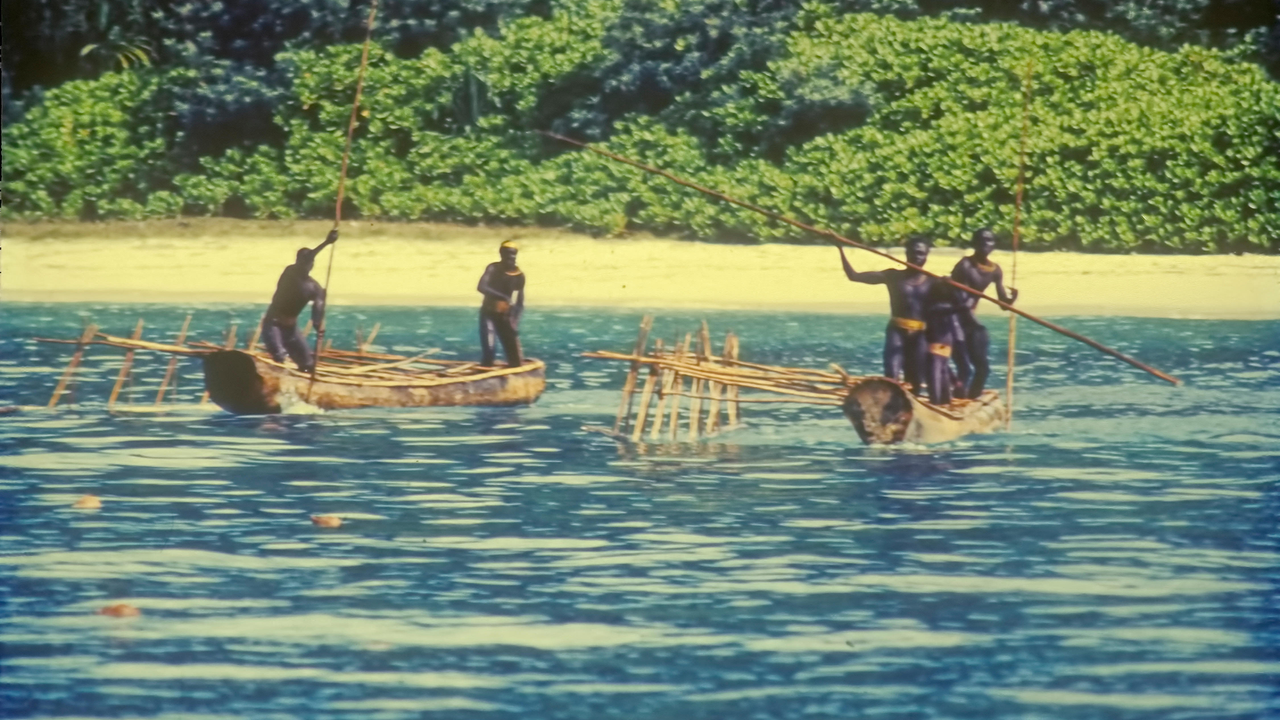
These groups share a common characteristic: they actively seek to limit or avoid contact with other cultures to preserve their unique way of life. One such candidate is the Sentinelese, a small group of Indigenous islanders inhabiting North Sentinel Island within India's Andaman and Nicobar Islands in the Bay of Bengal. The Sentinelese have lived on the 23-square-mile (60 square kilometers) island for up to 55,000 years, believed to be direct descendants of the first humans to migrate out of Africa.
Today, they lead a hunter-gatherer lifestyle and fish along the coast using hand-carved canoes. Their population estimate ranges from 50 to 150 individuals, though their actual numbers remain unknown due to the group's resistance to contact. The Indian government has prohibited travel within a 3-mile (5 km) radius of the island for the protection of both parties.
The Sentinelese have demonstrated their desire to be left undisturbed by shooting at approaching boats and helicopters, even killing at least three outsiders, including a missionary named John Allen Chau, who illegally visited the island in 2018.
Another potentially highly-isolated group is the Kakataibo, a forest peoples community in the Aguaytia basin of central Peru's Amazon basin. The Kakataibo are exceptionally difficult to encounter, even by other Indigenous peoples. According to Beatriz Huertas, an anthropologist, researcher, and special adviser on isolated peoples policy with Rainforest Foundation Norway, the Kakataibo are so dedicated to avoiding detection that they erase their footprints with Earth, leaving little information about them.
This deliberate isolation is a protective strategy adopted due to negative past experiences with outside contact.
Survival International also highlights other highly-isolated groups in the region, such as the Kawahiva, a nomadic Indigenous group that has successfully evaded contact to the point that they are known only through chance encounters and one piece of video evidence. They were only recognized as a distinct group in 1999. It is not unusual for uncontacted groups to lack documentation altogether, as even Brazil, which has stringent documentation policies for Indigenous communities, only documented one such group.
Written by urgent.news from Live Science's reporting — not their text. Machine-written — may contain errors; check the original before relying on it.
Also reported by 1 other outlet
- Who are the least-contacted people on Earth? r.smartbrief.com