2024 Wayanad landslide: Study reveals the interplay of climate and geology
Extreme rainfall triggered the disaster, but geological weaknesses and valley formations determined its scale, movement and destructive impact
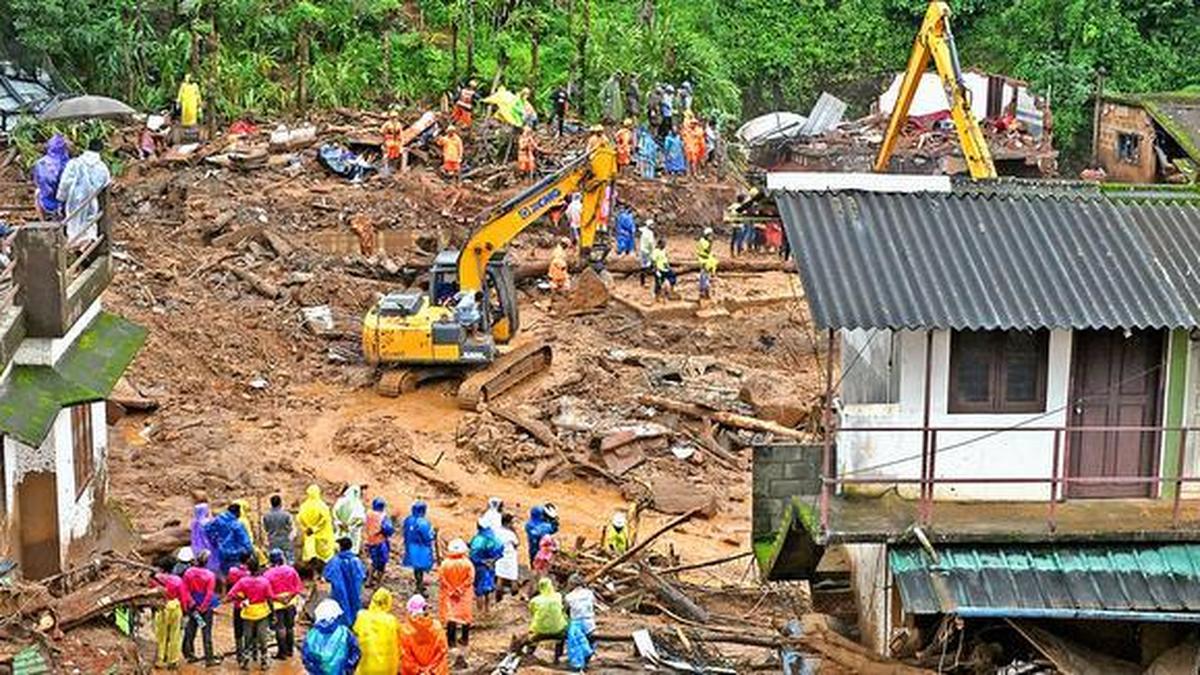
A new study published in the journal Landslides reveals that the 2024 Wayanad landslide in Kerala was not solely caused by extreme rainfall, but rather a combination of climate and geological factors. The disaster, which struck on July 30, 2024, was triggered by nearly 573 mm of intense monsoon rain within 48 hours, leading to a massive slope failure in the upper catchment of the Punnapuzha river.
Researchers from the University of Kerala, IISER Mohali, and Savitribai Phule Pune University conducted extensive field investigations and geological mapping to understand the role of pre-existing geological conditions in the landslide. The hills in the affected area are underlain by ancient crystalline rocks with numerous natural planes of weakness created by repeated deformation over millions of years.
These weaknesses, such as shear zones and fractures, allowed rainwater to penetrate and cause extensive chemical weathering, transforming hard rock into soft, deeply weathered material beneath the surface. The study suggests that the landslide originated within a highly weathered shear zone near the crown, where a first-order stream crossed the weakened rock.
Extreme rainfall rapidly infiltrated the interconnected fractures, increasing water pressure within the slope, ultimately leading to the detachment of a large block and initiating the landslide.
Brief written by urgent.news from The Hindu - Sci-Tech's own syndicated text. Machine-written — may contain errors; check the original before relying on it.