Migration: Family reunification: SPD criticizes regulations as too strict
A year ago the government sent out a stop signal to people who want to join a family member with limited protection status in Germany. Now there is criticism from the coalition partner.
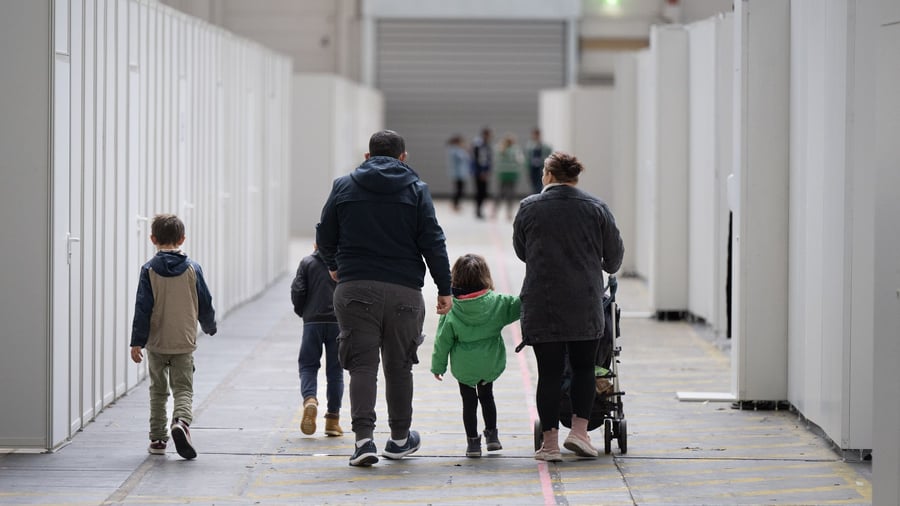
About a year after the preliminary stop of family reunification for refugees with restricted status, the SPD parliamentary group criticized the regulation as being too strict. "The fact that only so few applications were successful does not mean that they were made without reason. It is the restrictive regulations that are the problem: the permissible separation times for children and parents are not family-friendly, but unacceptable," said the migration policy spokesperson Rasha Nasr to the Redaktionsnetzwerk Deutschland (RND).
The severity is disproportionate. "It is clear that the regulation cannot be extended beyond two years. We must already start preparing the pending applications so that no further waiting times arise after the regulation expires in the summer of 2027," Nasr demanded. It has been proven that refugees integrate better if they know their families are with them and are safe.
The SPD parliamentary group's child representative, Truels Reichardt, also called on the RND to comprehensively restore family reunification. It is questionable whether the regulation is constitutionally sustainable. "Because the special protection of the family is enshrined in the Basic Law," he said. The goal is merely to reunite the core family, i.e., parents with their minor children.
Few visas granted since the stop of family reunification The regulation concerns the families of so-called persons with subsidiary protection. These are people who do not qualify for asylum or refugee protection but are allowed to stay in Germany for the time being due to threats in their home country. Their relatives are only allowed to join them in exceptional cases.
The previous quota solution of up to 1,000 visas per month for family reunification has been suspended from July 24, 2025, to July 23, 2027. In the first year since the preliminary stop, only a few visas were granted for exceptional cases. The number was 13, as the German Press Agency learned from the Foreign Office at the end of July.
The exceptional case procedure works as follows, according to the Federal Government: exceptional cases are reported to the International Organization for Migration, which then helps to examine the situation. The dossier is then sent to the Foreign Office.
Translated by urgent.news. Machine-written — may contain errors; check the original before relying on it.