US conducts first live-fire hypersonic test with repurposed HATS launcher
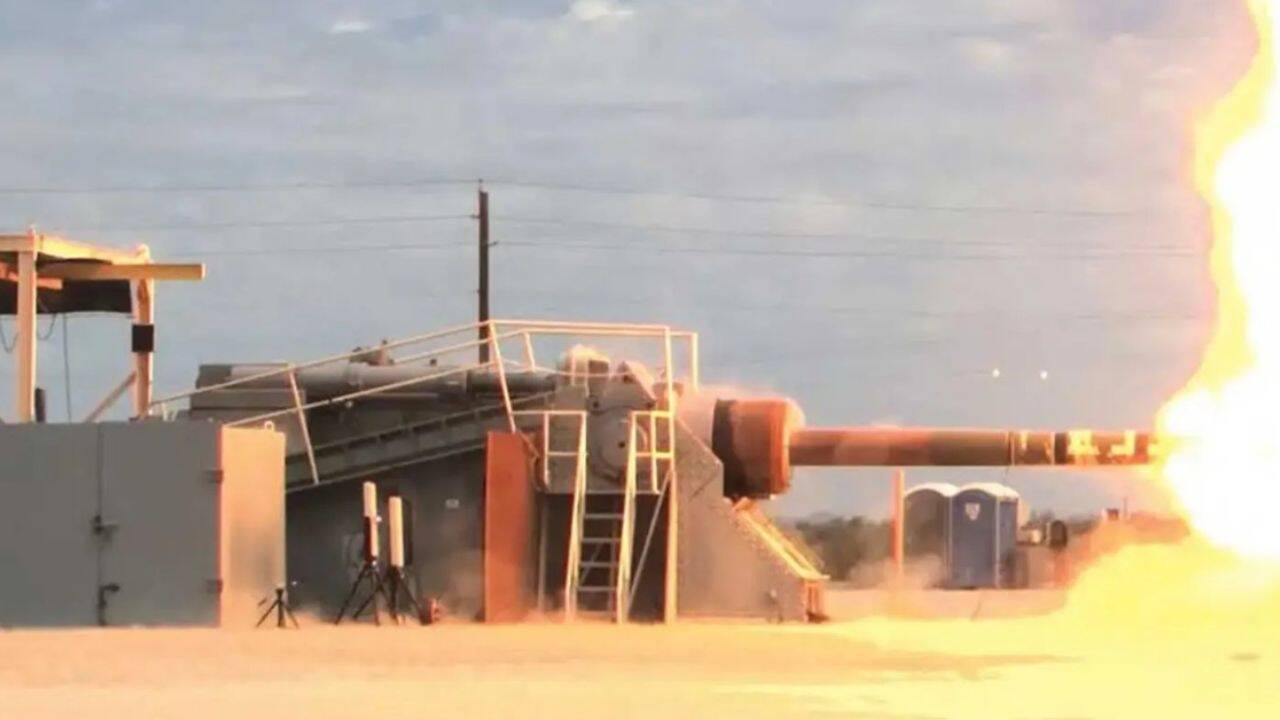
The US Army has successfully conducted its first live-fire hypersonic test utilizing a repurposed Heavy Artillery Test System (HATS) launcher, originally designed for the canceled Strategic Long Range Cannon (SLRC) program. The July 30 test took place at the Arizona-based Yuma Proving Ground (YPG), a sprawling 830,000-acre facility.
The Army's DEVCOM Armaments Center, Lawrence Livermore National Laboratory, and YPG participated in the trial. Instead of a fully developed hypersonic missile, a specially designed Integrated Launch Package (ILP) was fired from the HATS. This hardened package carried the experimental payload, offering a more economical and expedient way to evaluate its performance upon impact.
The cannon, adapted from the SLRC, is capable of launching rocket-assisted, precision-guided projectiles over 1,000 miles, a range far surpassing that of conventional 155-mm artillery. Post-program cancellation, the launcher was repurposed for hypersonic research. During the test, telemetry, high-speed cameras, and range instruments tracked the package from launch to impact, enabling assessment of its performance during the final stage of a weapon's mission.
This marks the first live-fire trial of the hardened ILP, proving its ability to endure the intense forces of a cannon launch. The data collected could aid future hypersonic weapon development while minimizing the financial burden of costly full-scale missile tests. While a full hypersonic missile test can range from $9.5 million to over $15 million, depending on the vehicle and program, the cannon-based approach is not meant to replace conventional flight tests.
Instead, it aims to complement wind tunnels, laboratory experiments, rocket sleds, and live missile launches, thereby lowering testing costs.
Written by urgent.news from Times of India's reporting — not their text. Machine-written — may contain errors; check the original before relying on it.