IIM Indore Study Calls For Decolonising Philosophy, Not Just Expanding Its Canon
Indore (Madhya Pradesh): A new study by the Indian Institute of Management Indore has called for a fundamental rethink of how philosophy is taught, researched and practised, arguing that decolonising the discipline requires far more than adding non-Western thinkers to reading lists. Published in the prestigious journal Philosophy Compass, the study co-authored by Prof Swati Arora argues that…
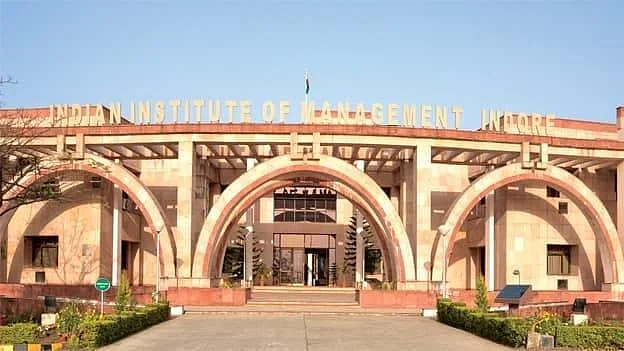
A recent study from the Indian Institute of Management Indore (IIM Indore) contends that decolonising philosophy demands more than merely expanding its canon. Published in the esteemed journal Philosophy Compass, the research led by Prof Swati Arora contends that the discipline's Eurocentric origins stem from centuries of colonial knowledge destruction, marginalisation, and delegitimisation – termed by scholars as epistemicide.
Beyond erasing non-Western thinkers from reading lists, the study posits that colonialism fundamentally reshaped philosophy, presenting European thought as universally applicable while relegating other intellectual traditions to the periphery.
Taking inspiration from Frantz Fanon's philosophy of decolonisation, the authors illustrate how colonial power perpetuates itself through the structures that uphold this skewed perspective. Citing Sylvia Wynter's work, they explore how a predominant notion of reason centered around a universal "Man" aided colonialism and persists in modern philosophical exclusion.
Central to their argument is the introduction of an "ignorance-epistemicide cycle" framework. This model elucidates how the erasure of alternative knowledge systems leads to generations inheriting an intellectual landscape where these absences seem normal, generating a self-reinforcing mechanism that perpetuates historical exclusions.
The study introduces the concept of the "colonial intellectual," differentiating it from Fanon's "colonised intellectual." This term refers to scholars within contemporary academic institutions who may unwittingly perpetuate inherited Eurocentric assumptions through practices like curriculum design, peer review, hiring, research evaluation, and citation.
Thus, the researchers argue that the responsibility for decolonisation lies not only with educators but also with editors, reviewers, supervisors, and institutional leaders, who can alter how knowledge is produced and disseminated.
Beyond philosophy departments, the implications of this research are far-reaching. As universities globally strive to internationalise curricula and promote inclusive knowledge systems, the study cautions that mere representation is insufficient. Instead, institutions must scrutinise the norms that determine the authority of various traditions, the validation of knowledge, and the assessment of academic excellence.
Ultimately, the researchers contend that historical reconstruction is crucial not just for rediscovering forgotten traditions but for identifying where colonial epistemic structures still influence modern academic practice. Consequently, they present decolonisation as a profound process of epistemic restructuring, expanding philosophy's conceptual resources while challenging the fundamental structures that dictate whose knowledge is deemed significant.
Written by urgent.news from Free Press Journal's reporting — not their text. Machine-written — may contain errors; check the original before relying on it.