A.I. Is Now a Major Election Issue
As Abdul El-Sayed, Michigan’s newly elected Democratic nominee for the U.S. Senate, put it, “People really effing hate data centers.”
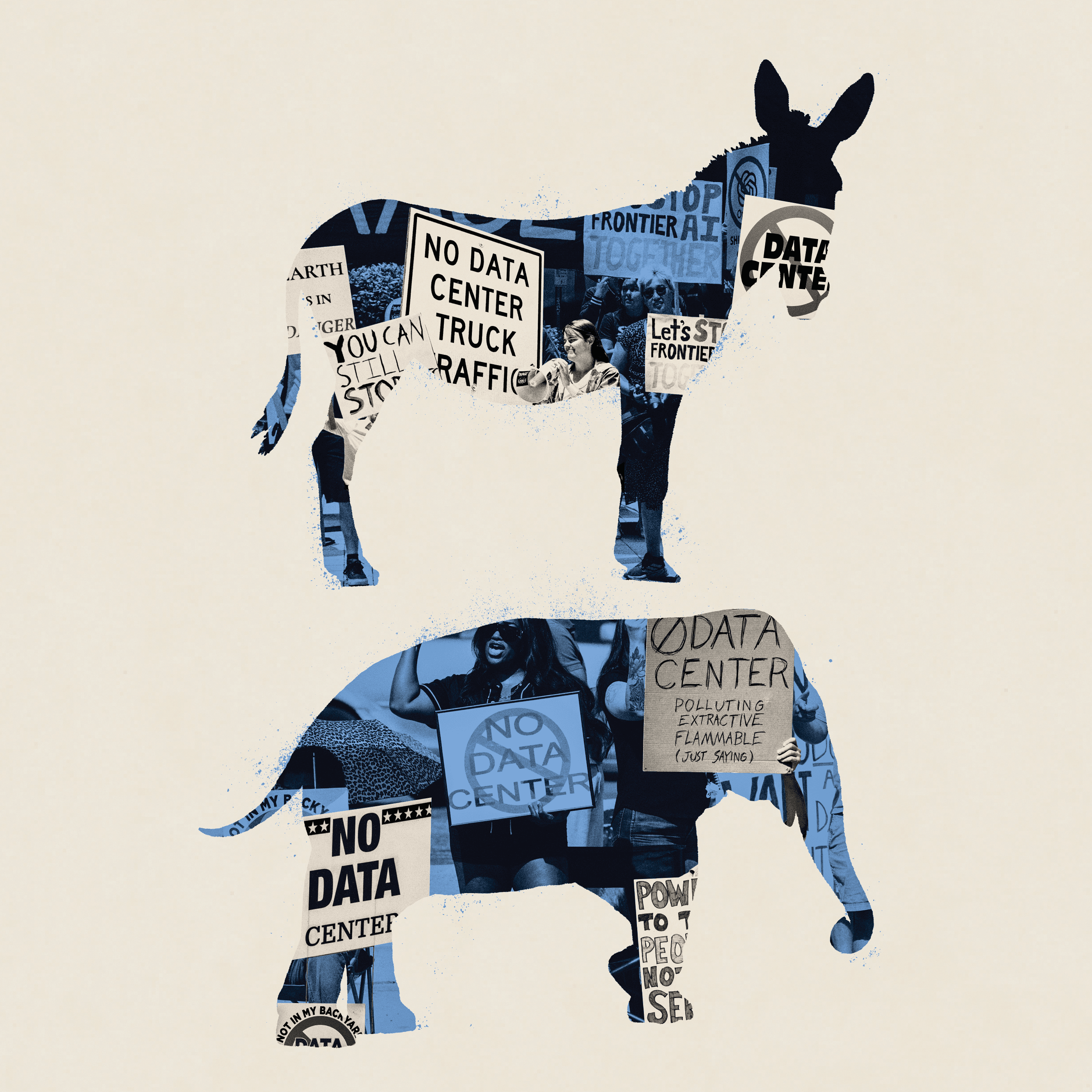
A.I. has emerged as a significant issue in the upcoming election. A Gallup survey indicates that seventy percent of Americans, including sixty-three percent of Republicans, oppose the construction of hyper-scale data centers in their communities. Despite this widespread opposition, over four thousand such centers have been established across the country, with an additional four thousand planned.
Politicians from various factions have rushed to distance themselves from these facilities. Bernie Sanders and Alexandria Ocasio-Cortez proposed a federal moratorium on new data centers in March, while New York Governor Kathy Hochul implemented the first statewide ban in July. Campaign slogans against A.I. seem to be crafted by a machine, with one Democratic Socialist candidate for Wisconsin governor's ad declaring, "It's time to press control-alt-delete to put a stop to this A.I.-data-center crisis."
However, despite the strong sentiment against A.I., blunt talk can be effective. Florida's Republican Governor Ron DeSantis introduced conditions for new data centers in May, and Texas Governor Greg Abbott abruptly suspended all such projects last week, pending an audit of their costs and benefits. Even Republican politicians who had previously championed A.I. projects are now exhibiting caution.
Vivek Ramaswamy, the Republican nominee for Ohio Governor, declared, "despite my opponent's claims, I'm not 'pro-data center.'" The sheer scale of these facilities, which often provide limited jobs post-construction, is a primary concern. For instance, Microsoft's new site in Wisconsin alone required significant infrastructure, including 46.6 miles of deep foundation piles and 26.5 million pounds of structural steel.
The substantial electricity and water demands have strained local systems, leading to protests and the suspension of over seventy-five data-center projects totaling around $130 billion in the first quarter of 2026. However, recent political developments suggest a deeper unease among politicians about the true benefits of A.I. infrastructure.
While Donald Trump's 2016 campaign focused on Rust Belt economic decline, his 2024 campaign has been associated with tech billionaires like Elon Musk, who was invited to the White House to discuss A.I. Despite Musk's presence, the President has largely avoided discussing A.I., and the tech industry's warnings of widespread job displacement have been largely ignored.
Meanwhile, the Trump Administration's A.I. stance appears to be more of a political liability than a strategic advantage, underscoring the complex relationship between artificial intelligence and politics in this election year.
Written by urgent.news from The New Yorker's reporting — not their text. Machine-written — may contain errors; check the original before relying on it.