World Cat Day: GPS and AI: How much high-tech does my kitty need?
Can AI tell if a cat is in pain? Smart technology is also on the way for velvety paws. But is all this good for four-legged friends? This is what animal protectors and veterinarians say.
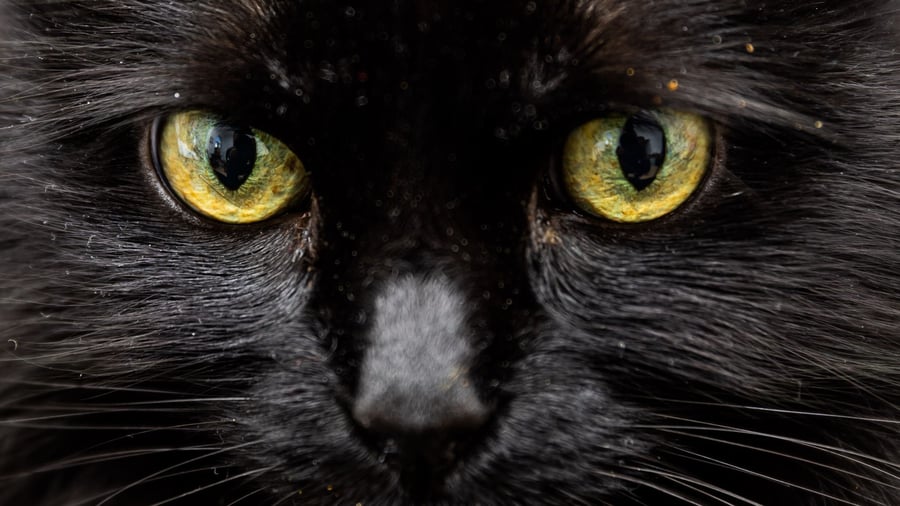
Wristwatch-style pedometers, blood pressure apps on the finger, and heating systems controlled by voice commands - will we soon have digitally monitored "smart cats"? The internet is full of offers for intelligent pet doors, GPS trackers, automated feeders, and payment apps. And cats are by far the most popular pets in Germany, with their number estimated to be around 15 million. What can high-tech do for velvety paws - and is it sensible? A small check on the occasion of World Cat Day on August 8.
Location tracking via GPS tracker controversial
Many owners know the anxious hours when their free-roaming cat does not come home at the usual time. Where is it, has something happened to it? The tech industry offers trackers for this uncertainty. The GPS devices on a collar are about half the size of a matchbox. Mie's tour of her territory can be tracked using a mobile phone or computer.
However, the German Animal Protection Association does not like GPS trackers at all. "Collars pose an increased risk of injury. Cats can get stuck on them while climbing," says spokeswoman Nadia Wattad.
Scientific studies from Scandinavia found that most cats rarely move very far from their home. In a one-week Danish study, the animals spent an average of 5 hours outdoors and ran around 2.4 kilometers. They roamed an area roughly the size of five soccer fields.
Pain recognition using AI?
The Hanover University of Veterinary Medicine, together with Tel Aviv University, conducted a study on this question three years ago. Specifically for velvety paws, the researchers trained two different AI-based models. They wanted to test whether artificial intelligence can read pain from the facial expression of cats. "This is not easy in veterinary medicine, even for humans," explains scientist Sabine Kästner in an interview with the German Press Agency.
"Cats hide pain so as not to appear weak." Although they are predators, they can also become prey for other animals. "That's why they also hide from humans when they're in pain, either outside or under the bed."
Human or machine - who is better at diagnosis? Nevertheless, there are indications in the rather immobile facial expression of a cat that can indicate discomfort or pain: the position of the ears, the eye area, and also the facial expression around the mouth. Who was more successful in pain recognition - AI or veterinarian? "We can't say that yet," says researcher Kästner.
The AI was not better than humans in terms of its measurable hit rates. "But a huge advantage of AI is that it doesn't have bad days like we do," says veterinarian Kästner. And not every veterinarian is a cat specialist.
Apps with facial recognition are supposed to support
The knowledge about visual characteristics of pain in cats has already been incorporated into payment apps. Kästner thinks it's sensible if the facial expression of the animals is photographed with it? "If cats realize we're watching them and then waving a smartphone in front of their nose, that alone can distract them from pain," says the veterinarian.
A series of photos over a longer period would be more helpful - but not as the only criterion. Experienced owners often know their cats so well that they notice a changed facial expression and behavioral changes such as hiding, a low head position, or lack of appetite without technical help.
High-tech at the cat door and feeding station
Some free-roaming cats carry a mini-chip with information about their home under their skin, which is harmless from a veterinary medicine perspective, in case they get lost. Smart cat doors can also read these chips. Only the owner's cat has access to the home. Some doors with cameras lock the entrance if the cat carries prey in its mouth. Smart feeders help improve nutritional management. Webcams can also keep an eye on indoor cats.
The German Animal Protection Association says that all this does not harm cats. "But it's clear that technical aids cannot replace responsible pet ownership," emphasizes spokeswoman Wattad. After all, domestic cats don't like to be left alone.
Growth market suspected
According to the latest figures from the Bitkom industry association of the digital economy, around four percent of German citizens used intelligent pet tools in 2024. In general, it can be assumed that - as with humans - a trend towards increasing technologization and data collection will also affect the pet sector, according to the Animal Protection Association. The promises of advertising are almost limitless, ranging from self-cleaning cat toilets to Miau apps for better communication with four-legged friends.
The Animal Protection Association classifies: "Technologies are to be rejected if they harm the animal. Acceptable if they only benefit humans without affecting the animal. And sensible if they demonstrably serve animal welfare," says Wattad.
Translated by urgent.news. Machine-written — may contain errors; check the original before relying on it.