The race is on in a secret location to save one of our rarest orchids
It takes years of work, dozens of volunteers, picky pollinators and a special fungus to save Australia’s endangered orchids. Here's why people drive from all over the country to do it anyway.
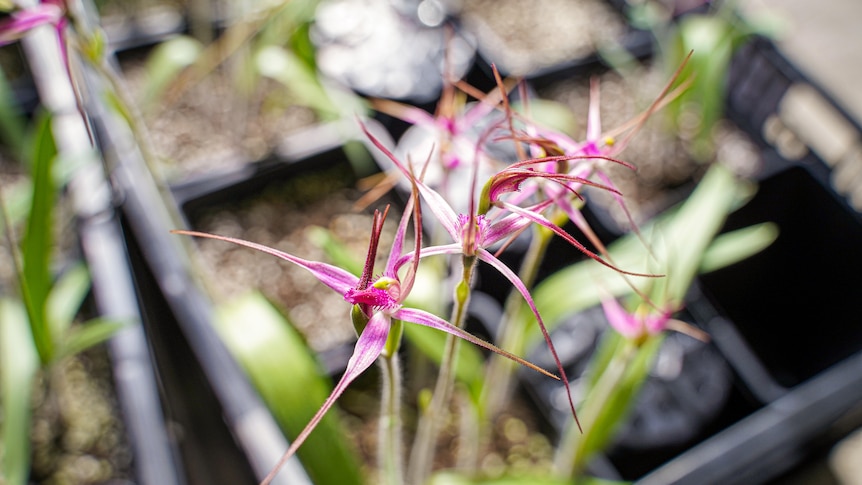
In a secluded green shed, located roughly an hour from Melbourne, workers meticulously measure and prepare delicate pot plants for their journey into the wild. Small green leaves protrude from each pot, occasionally crowned with a thin stem adorned with a purple orchid flower. As the day warms, the shed emits a faint musky aroma, signaling the orchids' efforts to attract pollinators.
Volunteering their time, individuals delicately extract the tubers from the soil, observing their size and shape. Alex McLachlan, a research scientist at the Royal Botanical Gardens, explains the considerable effort and resources required to nurture the plants from seed to bloom. With approximately a thousand plants in total, he expresses satisfaction at their imminent return to the wild.
The rosella spider orchid (Caladenia rosella) is classified as critically endangered in Victoria and is endemic to Australia. Approximately 500 of these rare plants will be planted in hard soil, effectively doubling their presence in the wild. The race is on to save these threatened species, as more than 200 of Australia's orchids are at risk of extinction.
The specialized relationship between the rosella spider orchid and its pollinator, the native bee Leioproctus platycephalus, highlights the delicate balance required for the plant's survival.
Written by urgent.news from ABC News AU's reporting — not their text. Machine-written — may contain errors; check the original before relying on it.