Starts With A Bang podcast #132 – Space in the ultraviolet
Whenever you look at the Universe in a more powerful way than you ever have before, either in a new set of wavelengths, at higher sensitivity, on wider-field scales, or with novel capabilities, you open yourself up to a remarkable possibility. In addition to the “obvious” science gains that you’ll achieve from finding more examples and revealing greater details about the types of objects and…
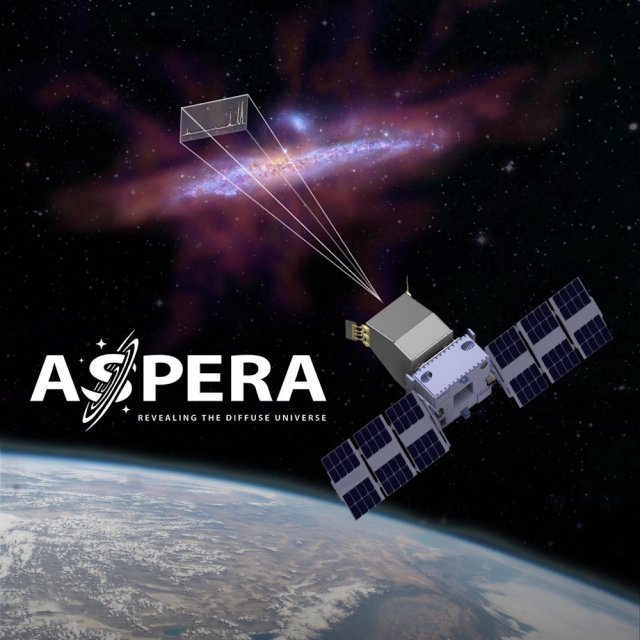
In the latest episode of the Starts With A Bang podcast, Dr. Carlos Vargas, the Principal Investigator of the ASPERA mission, discusses the exciting scientific possibilities that await us when we explore the far-ultraviolet part of the electromagnetic spectrum. This portion of the spectrum, which is largely inaccessible from Earth, offers a unique opportunity to study the Universe in new and unprecedented ways.
One of the key areas that the far-ultraviolet spectrum can illuminate is the circumgalactic medium, a region that has been largely understudied due to the limited capabilities of existing telescopes. This area, located around our own galaxy, is believed to contain the majority of the baryons, or ordinary matter, in the Universe. By studying this region in greater detail, scientists hope to gain valuable insights into the fundamental composition of the cosmos.
The ASPERA mission, a "finesse mission" designed to specialize in the far-ultraviolet band, promises to revolutionize our understanding of this previously poorly studied region. With its advanced capabilities, the mission aims to unlock a wealth of new scientific discoveries, providing a glimpse into the hidden depths of the Universe beyond our current observational reach.
Written by urgent.news from Big Think's reporting — not their text. Machine-written — may contain errors; check the original before relying on it.