The 19 questions asked in Australia's first complete census
When you sit down to fill in the census, you will be taking part in an ancient human tradition.
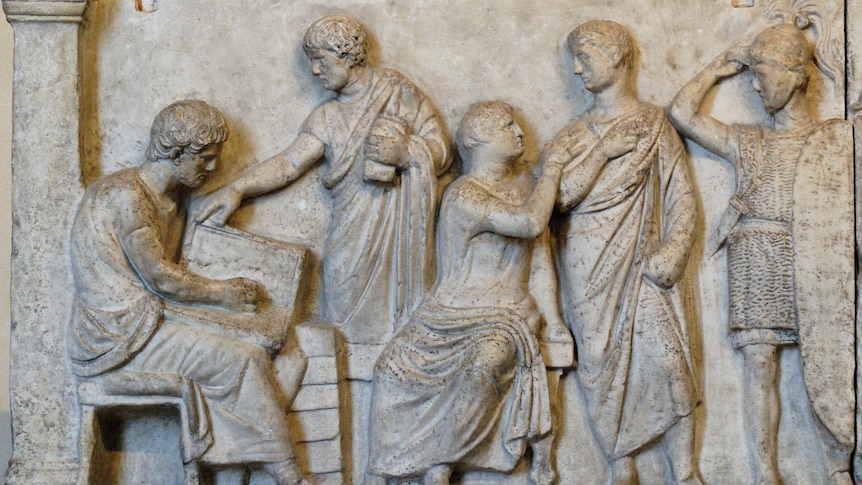
The ancient Romans introduced a census system resembling the one used today, allowing for more equitable distribution of resources and tax burdens. Servius Tullius, a 6th-century BC Roman king, implemented the census to provide military service, establish fairer taxes, and expand voting rights based on wealth. Ancient Romans were required to register their names, ages, family members, property values, and districts of residence.
Roman historian Livy believed the census was a valuable tool, preventing arbitrary distribution of war and peace burdens. The census was conducted every five years during Rome's transition from a kingdom to a republic and empire. According to Catholic tradition, Mary and Joseph were traveling to Bethlehem for a census when Jesus was born.
Australia's first population count, known as a muster, was carried out in Sydney Cove in 1788, aiming to estimate food and supplies for the new colony. Census-taking in Australia became more systematic in 1881, when a single-day count was attempted. Aboriginal and Torres Strait Islanders were initially excluded from the total population count for nearly a century.
In 1967, Australians voted to amend the Constitution, ending the exclusion of First Nations people from the census. The 1971 census was the first to include Aboriginal and Torres Strait Islanders in the national population count. The inaugural Australian census took place on April 2, 1911, asking several questions still used today.
The 1911 census revealed Australia's total population was 4,455,005, marking a 681,204-person increase from the 1901 census.
Written by urgent.news from ABC News AU's reporting — not their text. Machine-written — may contain errors; check the original before relying on it.