OPINIÃO. Quem manda na economia?
No dia 14 de julho, o Senado aprovou por 73 a 1 uma PEC que cria uma aposentadoria especial para agentes comunitários de saúde – R$ 27 bilhões em dez anos – sem indicar de onde sai o dinheiro. A Fazenda passou meses implorando para que a matéria não fosse pautada e ameaçou ir ao […] The post OPINIÃO. Quem manda na economia? appeared first on Brazil Journal .
No recent approval of a Senate bill on July 14, a special retirement fund for community health agents was established, requiring R$27 billion in the next ten years without specifying the funding source. The Finance Ministry had previously pleaded not to discuss the matter and threatened to take the issue to the Supreme Court, but Davi Alcolumbre prevailed.
Finance Minister Faria Lima, who considers himself at the center of Brazil's economy, learned of the events through the news. He informed investors and executives in the pre-campaign period that true power lies in Piauí and Amapá, provinces where the Senate and Chamber of Deputies are heavily influenced by clientelism. While the financial market remained distracted, a group of idealistic idealists founded the Mission Party, with the author as its presidential candidate.
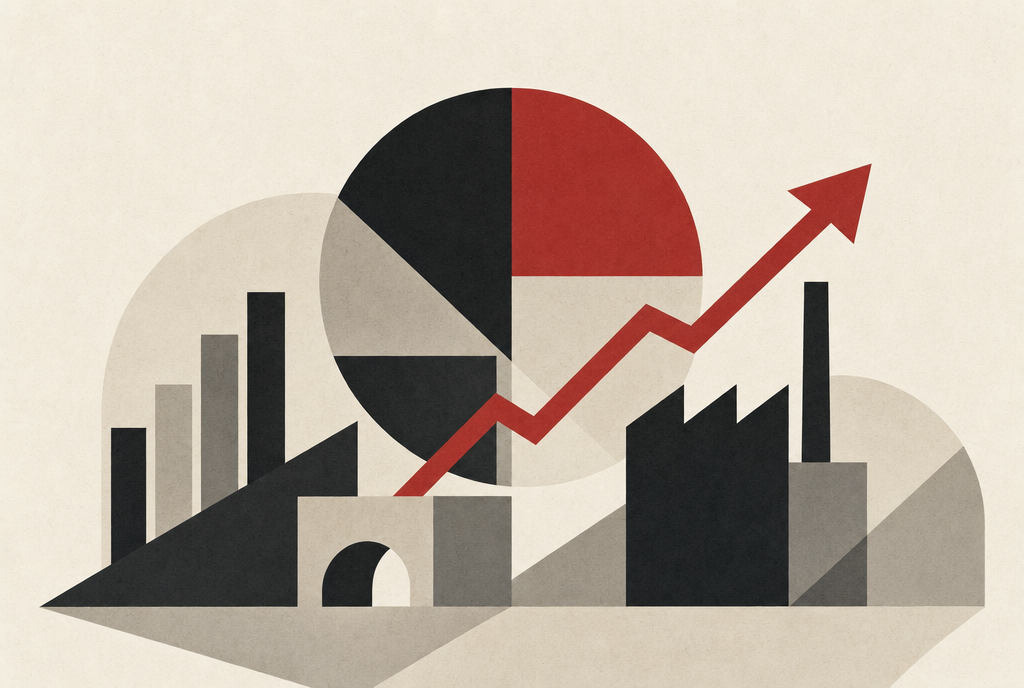
Their agenda begins with the premise that fiscal problems cannot be resolved without addressing political issues. The current debt-to-GDP ratio stands at 81.9%, with interest consuming R$1.1 trillion in the last twelve months and the nominal deficit reaching 10% of GDP. The Independent Fiscal Institution (IFI) projects the debt to surpass 100% of GDP by 2030.
To stabilize it, a primary surplus of 2.1% of GDP is required. The solution starts with the Fiscal Balance Law, proposed by Congressman Kim Kataguiri, which will be approved during the transition. It deindexes Previdência and BPC based on the minimum wage, removes health and education subsidies from the minimum wage, revises social security pensions, and cuts tax exemptions, saving R$1.1 trillion over five years.
The main effect will be to stabilize the growth curve of expenses, which will be controlled by the spending ceiling. Additionally, severance pay and tax privileges for over 50,000 government employees and tax breaks for unproductive sectors will be reduced, saving R$20 billion annually. This economic adjustment will be invested in infrastructure, transportation, and energy, generating long-term returns.
Parallel to this, a productivity agenda will be implemented, including the automatic expiration of sector and geographic incentives, the end of sectoral unions, alternative employment regimes, and arbitration in labor relations. To increase the labor force, a major reform of the assistance system will be carried out. Today, 19.1 million families rely on Bolsa Família, and 2,639 cities and nine states have more beneficiaries than employed workers.
The Citizen Fronts will create an exit from the program, allowing beneficiaries to work in urban infrastructure and cleaning projects, receiving a salary and the opportunity to reintegrate into the economy. By 2030, no Brazilian state will have more dependent families than formally employed workers, returning approximately R$80 billion annually to the federal budget.
With these adjustments, the goal is to eliminate the primary deficit and eventually achieve a nominal surplus. The path to growth involves ending the rent-seeking economy and creating an innovative one where investing in a company proves more profitable than lending to the government. The question remains: who really calls the shots in Brazil's economy?
It's not the market or the voters, but the politicians who play their cards in Macapá or Teresina, taxing workers in Belo Horizonte or Florianópolis at will. The proposed economic plan aims to reverse this arrangement, putting pressure on Congress to adjust spending instead of redistributing government revenue. In the short term, this puts Congress on the side of adjustment, while in the long term, economic growth and the formation of a middle class will democratize power.
Written by urgent.news from Brazil Journal's reporting — not their text. Machine-written — may contain errors; check the original before relying on it.