Insects’ mastery over flowering-plant mimicry dates back 99 million years
The Hindu’s weekly Science for All newsletter explains all things Science, without the jargon.
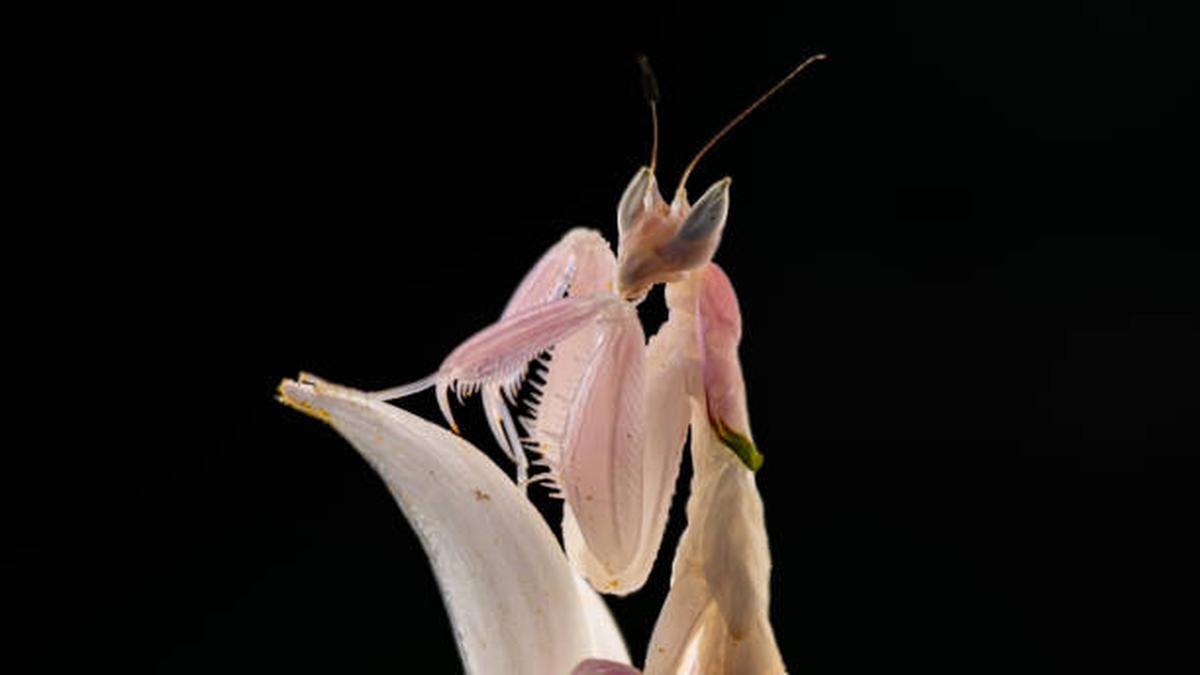
Insects have long employed mimicry to evade predators and attract pollinators. An exceptional example is the dead leaf butterfly, which, when its wings are closed, resembles a dead leaf, effectively blending into its surroundings. Another remarkable mimic is the orchid mantis, found in Southeast Asia, whose legs appear to be flower petals, allowing it to attract pollinators while avoiding predators.
Scientists have now discovered that such flowering-plant mimicry extends back 99 million years, significantly earlier than previously believed. This was uncovered through the examination of a fossilized moth lacewing, Dryadithone cretacea, preserved in amber and dating back 50 million years before the earliest recorded instance.
The researchers noted that this ancient insect showcased a sophisticated mimicry, replicating the midvein, pinnate framework, and reticulate venation of plant leaves. This finding suggests that insects rapidly adapted to the emergence of flowering plants, not just for survival, but also to model defensive tactics against predators.
This discovery underscores the intricate ecological relationships between flowering plants, insects, and their predators during the Cretaceous period, which lasted from 145 to 66 million years ago. Furthermore, insects exhibit mimicry in various forms – resembling tree bark, twigs, moss, lichen, ants, and even excreta of other creatures.
These adaptations have evolved through natural selection and mutations, creating intricate disguises that aid their survival and contribute to an ongoing evolutionary "arms race" between insects and their predators.
Written by urgent.news from The Hindu - Sci-Tech's reporting — not their text. Machine-written — may contain errors; check the original before relying on it.