The world that made Confucius – and the China he made
“Philosophers have only interpreted the world, in various ways; the point, however, is to change it.” This famous 11th thesis from Karl Marx’s Theses on Feuerbach is engraved on his tombstone in Highgate Cemetery in London. It was meant to be a refutation of another famous saying, by G.W.F. Hegel: “The owl of Minerva takes flight only when darkness falls.” This poetic but enigmatic remark is from…
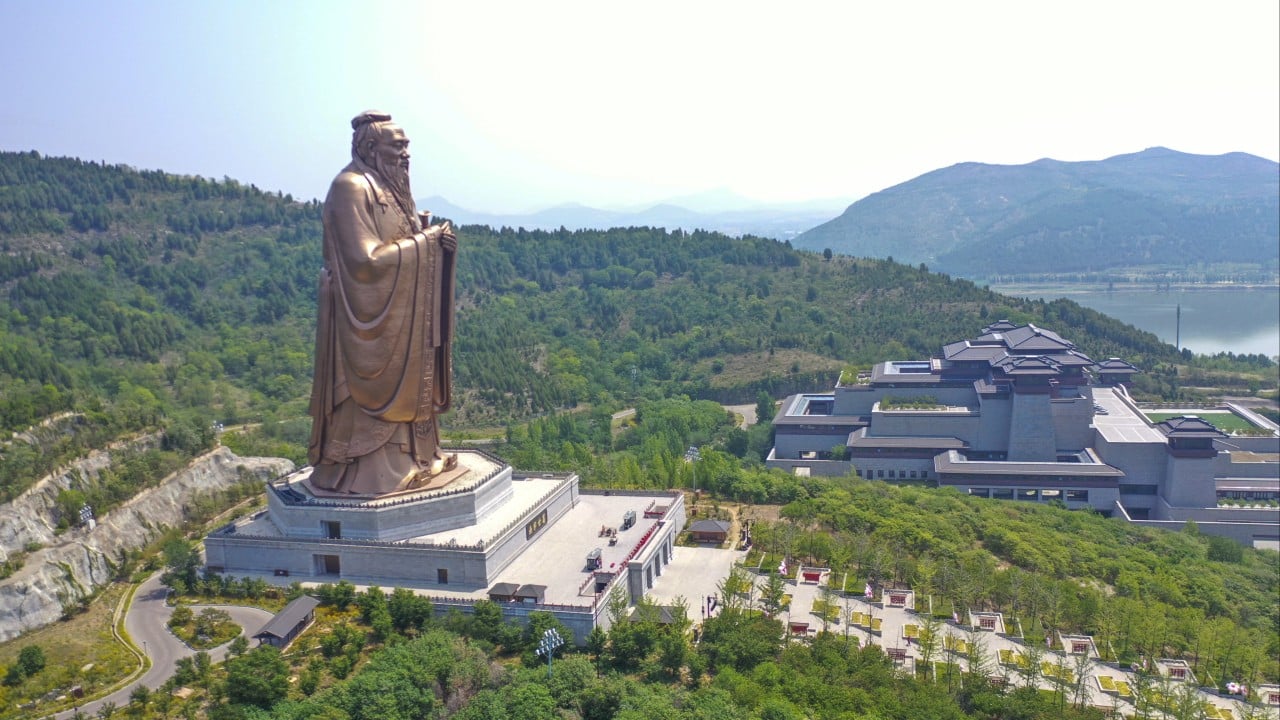
Confucius, the ancient Chinese philosopher, developed a unique approach that diverged greatly from the philosophical trends of his time. While his contemporaries were focused on interpreting and changing the world, Confucius sought to preserve and rejuvenate the past. This distinction created a fundamental political divide between radicalism and conservatism, a divide that had its roots two millennia earlier.
Confucius was born in Lu, a minor state in present-day Shandong province. To truly understand Confucius, one must examine Lu and its complex relationships with other states and the Western Zhou dynasty. Confucius famously declared, "I follow the Zhou" (Analects 3.14). Lu held significant cultural prestige during the Spring and Autumn Period and beyond, as it was founded by the son of the Duke of Zhou, who was renowned for his exemplary virtue.
The adherence to Zhou's norms and standards in Lu contrasted with more ruthless states, as the destruction of rival states was not typically acceptable. This approach, considered a prudent choice for a smaller state, was rooted in Zhou's ritual norms and benefited Lu by promoting commonly accepted rules of conduct.
The slow decline of the Zhou realm and its ritual-based order led to the chaos of the Warring States Period. For Confucius and his disciples, who witnessed this decay, the only solution was to return to the ethical propriety of the ancient Zhou, based on proper court rituals. Confucius innovated by introducing a new interpretation of the term "noble man" or "gentleman" (junzi), who was no longer limited to aristocratic birth but rather a properly educated individual whose qualifications were based on personal merit.
Confucius' ideology played a crucial role in transitioning from the aristocratic age to dynastic China and its meritocratic system, which emerged under the Han dynasty. He did not favor either the past or the future but sought a synthesis of the two. This perspective starkly contrasts with later philosophers like Hegel, whose ideas were heavily influenced by the political turmoil of their time.
Written by urgent.news from Reuters Business via SCMP's reporting — not their text. Machine-written — may contain errors; check the original before relying on it.
This story
This is one outlet's version. Read the fullest account.