NASA's SkyFall Mars helicopters will wear tiny capes
These tiny capes carry some serious technology.
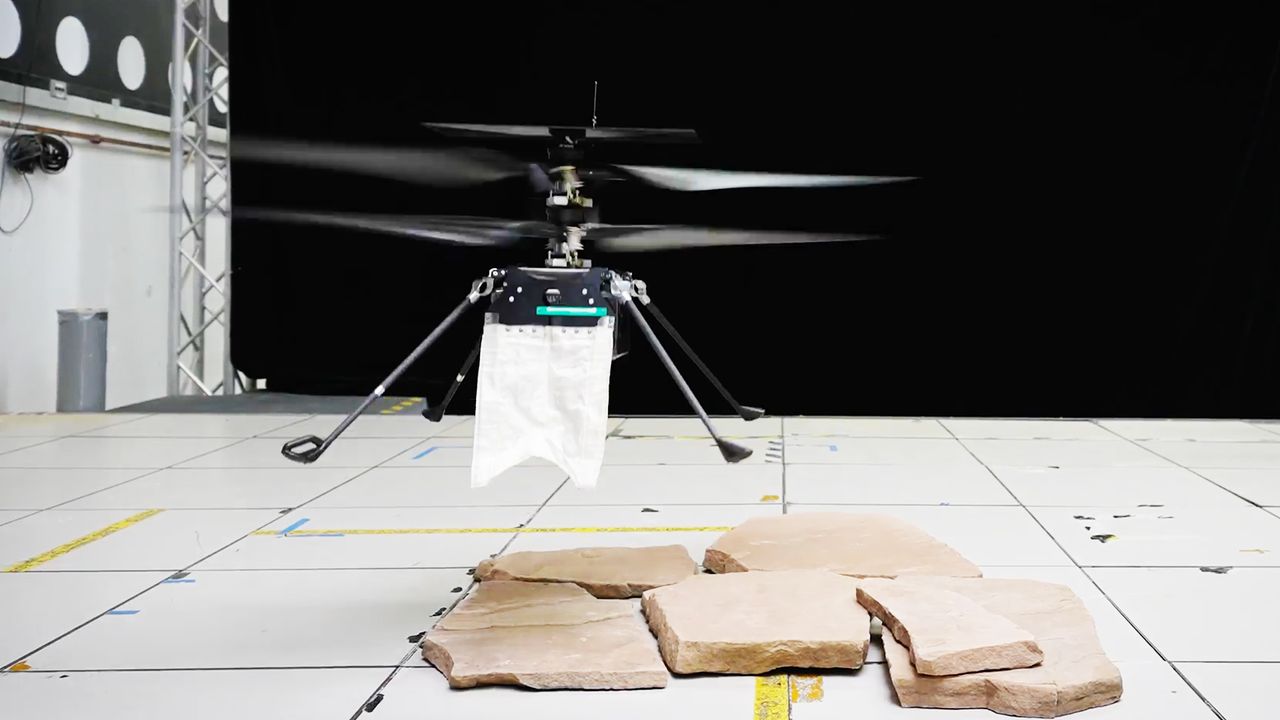
NASA's SkyFall mission is preparing to send a trio of miniature helicopter drones to Mars, equipped with a unique caped technology for ground penetrating radar. These miniature radar capes, resembling tiny antennae, will allow the drones to explore the Martian surface in search of shallow ice deposits. Adrian Tang, the ground-penetrating radar lead instrument scientist at NASA's Jet Propulsion Laboratory, explained that the only way to detect subsurface ice remotely is to fly close to the ground.
By operating low and slow, the SkyFall helicopters can capture radar images that reveal the fine layering where dry soil transitions to ice, enabling them to detect its presence and map its extent.
The caped radar technology, known as Vivaldi, is a flexible antenna invented in 1978 which allows the drones to bend and move out of the way during landing. Despite being extremely lightweight, the antenna's unique design ensures that it can withstand the pressures of repeated landings without losing its shape, as demonstrated in rigorous testing at NASA's Environmental Test Laboratory.
The antennas, which weigh just 5 ounces (142 grams), are covered in layers of strong materials like polyester and Vectran to protect them during their journey to Mars. The SkyFall helicopters will follow in the footsteps of the first Mars rover, Ingenuity, and are expected to launch in 2028 aboard NASA's Space Reactor-1 Freedom, the first nuclear fission-powered interplanetary spacecraft.
Written by urgent.news from Space.com's reporting — not their text. Machine-written — may contain errors; check the original before relying on it.