Minnesota solar farms turn into wildflower havens, invites bee and butterflies
Minnesota solar farms seeded with native plants tripled insect abundance. Native bees increased twentyfold, and more bird species were observed. Taller solar panel arrays allow more native species to grow underneath. Native prairie habitat costs less than gravel over the solar farm's life. Most American solar farms currently lack documented pollinator habitat.
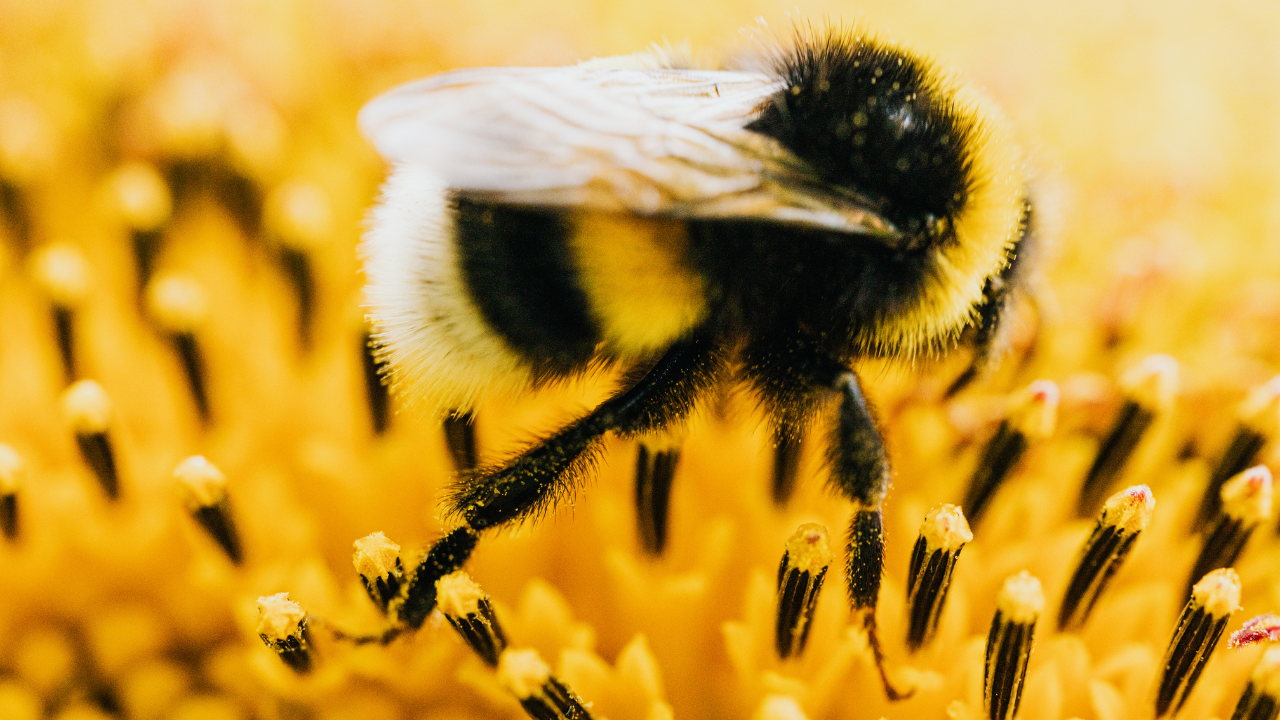
Two solar farms in Minnesota were built on former farmland, utilizing native wildflowers and prairie grasses beneath the panels instead of traditional gravel or maintained turf. Researchers from Argonne National Laboratory studied these test plots over five years, counting the number of insects and other creatures passing by. During this period, insect abundance tripled, while native bees increased twentyfold.
Various species such as bees, butterflies, wasps, and hornets were observed in greater numbers as the plantings grew older. Lee Walston, the landscape ecologist who conducted the fieldwork, aimed to answer a simple question: if you build it, will they come? He found that the answer is yes, provided the appropriate plants are introduced to the soil.
At an 18-acre site in Ramsey, north of Minneapolis, the researchers used simple methods to monitor the changes. Plastic flags marked the plots, students walked the rows with clipboards, and everything observed was logged. Acoustic monitoring at the site detected 73 bird species, drawn by the seeds and insects. Some birds even nested in the steel supports holding up the panels.
The height of the panels plays a crucial role in determining the level of wildlife a solar farm can support. Engel, the developer, learned that raising the arrays allowed more native species to grow underneath without shading the glass. This added steel and seed did not significantly impact the project budget, and the site now requires far less mowing compared to traditional methods.
Lower arrays result in a landscape with clover and a few grasses, far better than gravel but nowhere near a prairie.
The economic benefits of native prairie habitats are more convincing than the beauty of butterflies. Over a 25-year period, a native grass-and-forb mix costs approximately $14,150 per acre, compared to $16,800 for standard turf grass and $25,000 for gravel. Maintenance expenses decrease significantly once the natives establish, typically within three to four years.
Solar farms also see positive returns on investment. A study by the Nature Conservancy in New Jersey found that squash and blueberry yields increased by 80% near pollinator habitats, with tomatoes, peppers, cucumbers, and apples gaining 10 to 20% yields as well.
However, most American solar farms still lack pollinator habitats. Only about 24,000 acres of US solar installations have documented pollinator habitats, whereas roughly 600,000 acres of operating utility-scale sites have none. Meeting national energy targets could require close to 10 million acres of solar panels. While at least 15 states have pollinator scorecards, they primarily rely on developer promises without actual monitoring.
A California project marketed as a pollinator solar farm pledged over 200 native trees and shrubs along its perimeter, but a UC Davis ecologist found invasive grasses, yellow star thistle, and remnants of partial plantings. The Xerces Society and an industry-funded research group are working on a certification requiring at least 15% of a site's vegetated area to consist of diverse native plants.
The Minnesota plots have answered the ecological question, but it remains uncertain whether the rest of the industry will invest in taller steel structures for such habitats.
Written by urgent.news from Times of India's reporting — not their text. Machine-written — may contain errors; check the original before relying on it.