Minha jornada entre Inteligência Artificial, Artes Visuais e experiência industrial
Durante muito tempo, tecnologia, arte e experiência industrial pareceram ocupar espaços diferentes em minha trajetória. De um lado, o trabalho prático, cercado por processos, equipamentos, riscos e problemas que exigem soluções concretas. De outro, a música e as artes visuais, que me ensinaram a observar, interpretar e criar. Mais recentemente, a Inteligência Artificial passou a ocupar um…
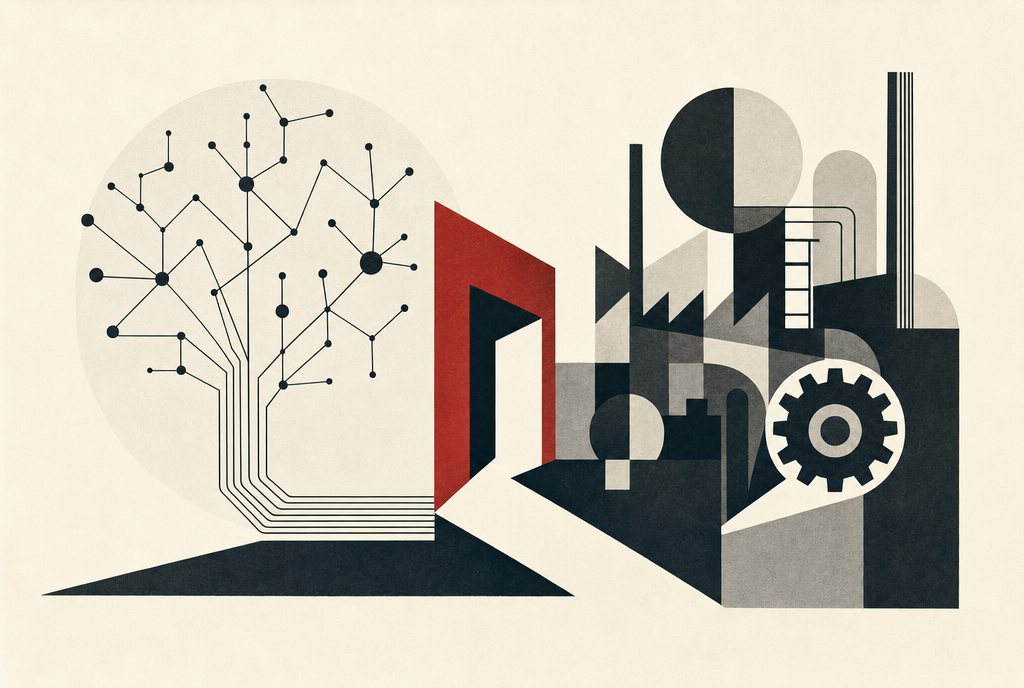
The author's journey between Artificial Intelligence, Visual Arts, and industrial experience has been a transformative one. Initially, technology, art, and industrial experience seemed to occupy separate spaces in their trajectory. The author worked practically, surrounded by processes, equipment, risks, and problems that required concrete solutions. On the other hand, music and visual arts taught them to observe, interpret, and create.
Recently, Artificial Intelligence entered their life, and they began to realize that these paths did not need to remain separate. Currently, they study Technology in Artificial Intelligence and Visual Arts simultaneously, still carrying with them experience from the industrial environment and a constant relationship with music and creation.
The author's interest in Artificial Intelligence did not arise solely from the novelty of the technology, but from the questions it began to provoke. They realized that it was not just about machines capable of generating texts, images, or responses, but about a broader field involving knowledge, language, decision-making, automation, and different ways of representing problems.
This perception sparked a desire to understand what lies behind the tools they use. Instead of remaining merely users of artificial intelligence systems, they started seeking a formation that would allow them to comprehend its foundations, possibilities, and limits.
As they entered the Technology in Artificial Intelligence course, they began to encounter topics such as algorithms, machine learning, symbolic AI, knowledge engineering, rule-based systems, and the development of intelligent solutions. Each new concept reshaped their approach to problems they already knew in other contexts. This process led them to understand the importance of differentiating simple technology use from seeking to understand how it can be structured to solve real-world problems.
As they study Artificial Intelligence more, they realize it's not just about knowing models or tools. It means learning to formulate better questions, represent knowledge, recognize limits, and decide in which situations automation adds value. Art, music, and technology did not need to remain separate for the author. They all deal, in some way, with creation, language, structure, and interpretation.
In Visual Arts, they learn to observe forms, relationships, composition, symbols, and different ways of communicating an idea. In music, they find rhythm, organization, emotion, and construction of meaning. In Artificial Intelligence, they find systems capable of representing information, recognizing patterns, and supporting creative and decision-making processes.
This convergence led them to understand that technology does not need to occupy the place of human creativity. It can function as a tool, means of experimentation, and even as a space for dialogue between different forms of knowledge. This perception also influenced their own project development, where they began to consider Artificial Intelligence not just as code or automation, but also in terms of identity, language, user experience, and the feeling of using a system.
Perhaps it is precisely in this intersection that the author finds their greatest interest: investigating what happens when technical thinking, artistic sensitivity, and practical experience no longer walk separately and start contributing to a single construction. When the study begins to transform into a project, the author realized that simply studying concepts was not enough for them.
They needed to experiment, test, make mistakes, correct, and observe how those ideas behave when placed in front of a real problem. This led them to transform part of the knowledge acquired into practical application.
Written by urgent.news from Dev.to's reporting — not their text. Machine-written — may contain errors; check the original before relying on it.