Can cow dung and farm waste fuel Japan’s next phase of growth in India’s car market?
Tokyo and New Delhi launched an initiative on Jul 1 to build 1,000 biogas plants across India by 2030, aimed at powering 2.5 million vehicles. Analysts expect an uneven road ahead as favourable conditions collide with formidable obstacles.
Tokyo and New Delhi have collaborated on an ambitious plan to construct 1,000 biogas plants across India by 2030, with the goal of powering 2.5 million vehicles. Analysts view this initiative positively, pointing to favorable conditions, but also acknowledge formidable obstacles that could hinder progress. On July 1, the partnership aimed to develop more than seven times the current number of biogas plants in operation, aiming to meet the growing demand for renewable fuel in India's rapidly expanding automotive market.
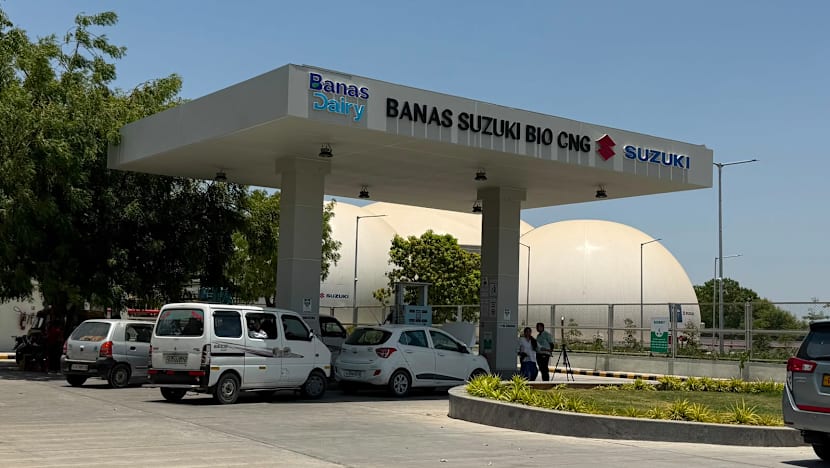
Maruti Suzuki, the largest carmaker in India and a subsidiary of Japanese automaker Suzuki Motor, has already approved four biogas projects worth 5.61 billion rupees (US$58.8 million) in its first phase of expansion. The Indian agricultural sector, coupled with the growing popularity of compressed natural gas (CNG) vehicles, presents a favorable environment for this initiative.
However, analysts caution that the success of this endeavor hinges on overcoming supply chain and distribution challenges across the vast nation of 1.4 billion people. The technology involved in converting agricultural waste, food scraps, and cattle dung into biogas is relatively simple, with the added benefit of producing fermented organic manure as a byproduct.
Rising oil prices due to geopolitical tensions and the high cost of electric vehicles (EVs) have made CNG vehicles an increasingly attractive alternative. CNG vehicles now account for 24.3% of passenger vehicle retail sales in India, compared to EVs at 7.8%. Automobile analysts attribute the growing popularity of CNG to its cost-effectiveness in regions with lower-priced cars and its superior mileage compared to petrol and diesel vehicles.
Maruti Suzuki's sustainability report indicates that CNG vehicles cost 44% less to fuel over 10,000km compared to their petrol counterparts. As CNG's market share increases, manufacturers have expanded their offerings to include feature-rich CNG models, making them more appealing to private buyers. Notably, manufacturers have addressed one of the technology's limitations by introducing twin-cylinder systems to save space, and Suzuki has begun placing CNG tanks beneath vehicle floors.
India currently has 8,980 CNG stations, although they remain concentrated in specific regions and cities. Japanese automakers, already dominating India's passenger-vehicle market, see biogas vehicles as a cost-effective solution to reducing emissions from the existing vehicle base while waiting for EV adoption to scale.
Written by urgent.news from Channel News Asia's reporting — not their text. Machine-written — may contain errors; check the original before relying on it.