Algae-Based Food Product Development Earns Gates Foundation Award
Mingyu Qiao, PhD’s recent work focused on DHA, critical to fetal and infant brain and eye development. The DHA will be produced in a microalgal strain isolated in Qiao’s lab. The post Algae-Based Food Product Development Earns Gates Foundation Award appeared first on GEN - Genetic Engineering and Biotechnology News .
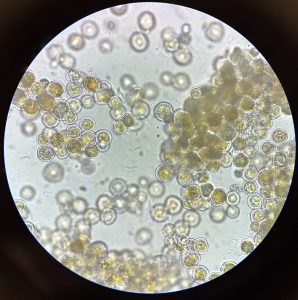
The Gates Foundation granted a $500,000 Grand Challenges award to Mingyu Qiao, PhD, a University of Connecticut researcher, for his work on developing sustainable food products using algae and other natural materials. Qiao, an assistant professor of innovation and entrepreneurship at UConn's College of Agriculture, Health and Natural Resources, proposed the project "Ultra Low-Cost DHA Powder from Algae Grown on Digested Grain Spent."
His research team specializes in eco-friendly biomanufacturing and bioprocessing technologies to create cost-effective food and nutrients. Qiao's lab recently isolated a novel strain of microalgae from brewer's waste yeast (Saccharomyces cerevisiae) to produce docosahexaenoic acid (DHA), an essential omega-3 fatty acid crucial for fetal and infant brain and eye development.
This method, using spent brewer waste, is significantly cheaper than current production methods and can be deployed in low- and middle-income countries (LMICs) to produce nutrients locally and create jobs. The proposed project will be developed over an 18-month initial phase, with potential for further funding to establish manufacturing sites in Africa and other regions.
Written by urgent.news from GEN Biotechnology's reporting — not their text. Machine-written — may contain errors; check the original before relying on it.