Aktien: Analysten rechnen mit neuer Phase der Volatilität bei SpaceX
Nach dem Ende der sogenannten Lock-up-Frist hat die Aktie des Raumfahrtkonzerns überraschend zugelegt. Doch Analysten sorgen sich vor den Folgen der Aktienschwemme.
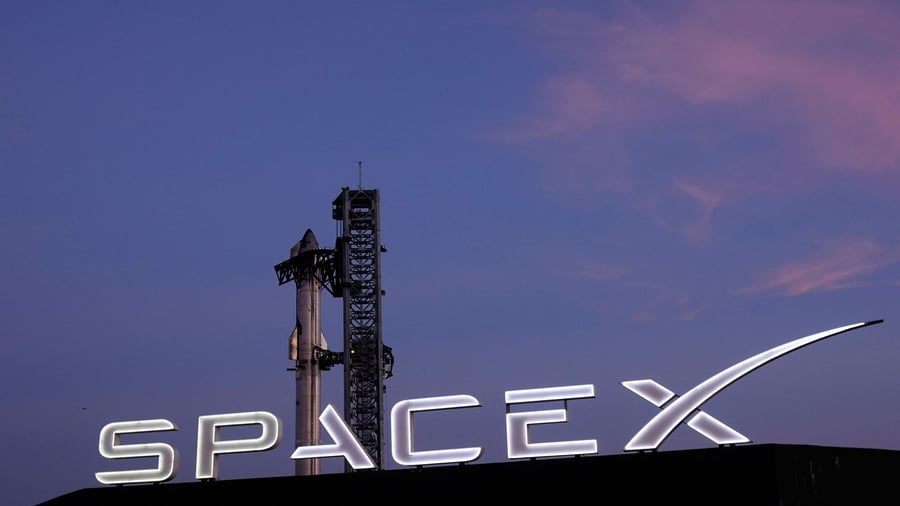
The SpaceX stock experienced a brief recovery on Thursday after a prolonged downtrend, gaining nearly six percent following a 14 percent loss on Wednesday. The stock has also been showing a positive trend pre-market on Friday in New York. However, analysts have warned that the stock is likely to enter a new phase of volatility due to the expiration of the initial Lock-up period for the space company SpaceX on Thursday, marking its listing on the New York Stock Exchange.
This means that certain employees and early investors can now trade the stock publicly for the first time. Over 255 million shares changed hands on Thursday, according to Bloomberg data, the same amount as in the early trading phase right after the initial public offering (IPO). Industry experts believe many early investors sold their shares as they sat on high paper profits despite the price drop since the IPO.
The positive response to the stock on Thursday suggests that many investors anticipated the expiration of the Lock-up period and sold their shares by Wednesday. The unusual structure of SpaceX's Lock-up periods, with nine of them extending until summer 2027, could potentially lead to increased volatility. Maximilian Wienke, a market analyst from online trading platform Etoro, warns that the many Lock-up stages could make the stock even more volatile.
Many large investment banks worldwide orchestrated SpaceX's IPO in June, the biggest IPO ever, where Musk's company raised 85 billion dollars from investors. SpaceX only brought a small portion of the shares to the market, with a float of 4.9 percent or 639 million shares. The trading volume now more than doubled, accounting for 11.8 percent of the outstanding shares.
The largest tranche for early investors and employees, 1.3 billion shares, will be released after the company presented its quarterly results in November. Musk, the largest shareholder of SpaceX with over 6.4 billion shares, can only get access to most of this package on June 27, 2027. The effects on the stock in the coming weeks are heavily debated on Wall Street.
"It's unclear how many shares early investors and employees will actually sell," says Wienke. "Many employees are now millionaires and might take advantage of this opportunity to cash in their shares and diversify their wealth." In the seven weeks since its IPO, SpaceX's stock initially shot up to a record high of 225 dollars, before falling by nearly 50 percent and sitting well below the offering price of 135 dollars.
Analysts are closely watching the behavior of employees and early investors. "If everyone sells all they have, the price at the IPO might have been driven too high. If insiders hold onto their shares, it might keep the rest of the investors invested in the long term," says Michael Field, Chief Strategist at Morningstar. "According to my calculations, the SpaceX stock is still significantly overvalued.
The fair value of the paper, derived from the company's fundamental characteristics, is around 62 dollars, which is about 45 percent below its current price of 115 dollars. This is significantly below the estimated price of 225 dollars from many other analysts. JP Morgan Chase, America's largest bank, raised its price target for the stock from 225 to 240 dollars in the next twelve months.
The CEO of JP Morgan Chase, Jamie Dimon, personally wooed wealthy clients for SpaceX before the IPO and appeared alongside Musk. The record IPO has also provided a record revenue stream for Wall Street with fees. The future development of the SpaceX stock will also be a key indicator for upcoming large IPOs in the coming months.
Companies like Anthropic, developing AI models, plan an IPO in the fall aiming for a valuation of over a billion dollars, just like SpaceX. OpenAI is rumored to have postponed its IPO to 2027, hoping for better chances, aiming for a valuation over a billion dollars as well. SpaceX achieved a market capitalization of over two trillion dollars on its first day of trading, briefly surpassing established tech giants Amazon and Microsoft.
Written by urgent.news from Handelsblatt's reporting — not their text. Machine-written — may contain errors; check the original before relying on it.