A Rare Look at How Life First Colonizes Cooling Lava Tubes
Life finds a way, and when volcanoes form new land, it gets going as soon as temperatures drop to manageable levels—even underground.
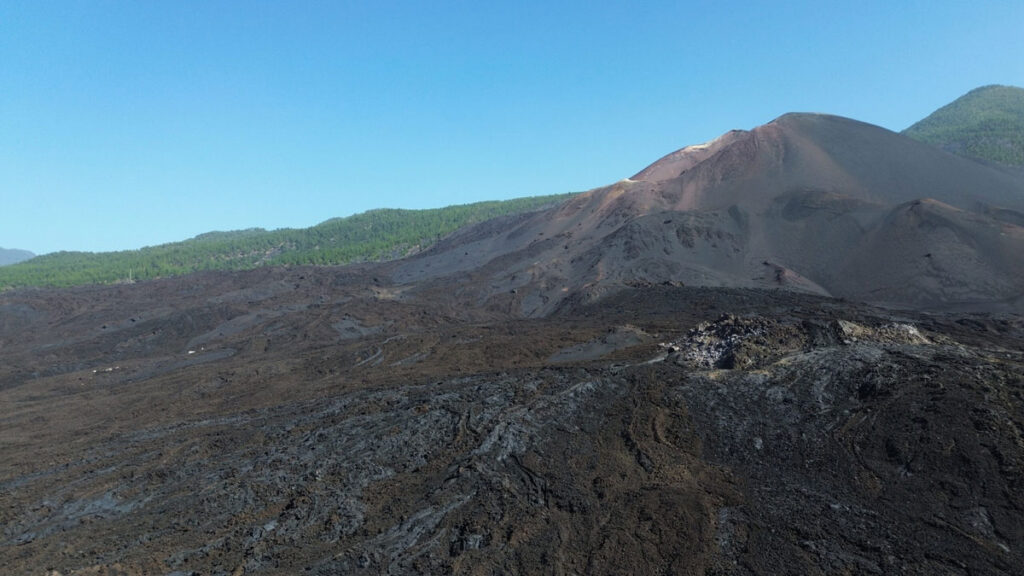
On the Spanish island of La Palma, a volcanic eruption in 2021 transformed the landscape almost instantly. The Tajogaite volcano spewed gas, ash, and lava, creating a massive cone that destroyed thousands of homes and infrastructure. However, the eruption also provided scientists with a unique laboratory to study how life colonizes newly formed lava tubes.
Between 12 to 24 months after the eruption, a team of researchers ventured into the still cooling tubes to observe the early stages of microbial colonization. This is the first time such a study has been conducted, offering insights into terrestrial lava tubes and potentially those on other celestial bodies like Mars or the Moon.
Ana Miller, a geomicrobiologist leading the study published in Environmental Microbiome, emphasized that this represents a "unique opportunity" to observe nature's "blank pages." The lava tubes, sometimes tall enough for a person to walk through, were initially hot enough to cause discomfort, with air temperatures reaching up to 60°C (140°F) and rock surfaces up to 90°C (194°F).
Despite these harsh conditions, researchers discovered microorganisms already residing in the caves, altering the rock. While initial expectations were that only highly specialized chemolithotrophs could survive, the findings revealed a more complex picture. Opportunistic organisms thrived on available nutrients, such as decaying vegetation, feathers, and guano, while the harsh interior conditions favored highly specialized species adapted to extreme environments.
The dynamic environment, with constantly changing temperatures and secondary mineralization, further influenced the colonization process, ensuring that these communities are continuously evolving. The researchers' findings underscore the importance of the interactions between microbes and the volcanic substrate, highlighting that survival requires more than just presence—it necessitates active engagement with the unique conditions of these young lava tubes.
Written by urgent.news from Eos's reporting — not their text. Machine-written — may contain errors; check the original before relying on it.