Scientists Designed a Virtual Alien Lifeform to Hunt for Extraterrestrials
A model of a microbe cell revealed that methane-producing organisms could potentially emerge on a wide variety of exoplanets, which can inform the search for extraterrestrial life.
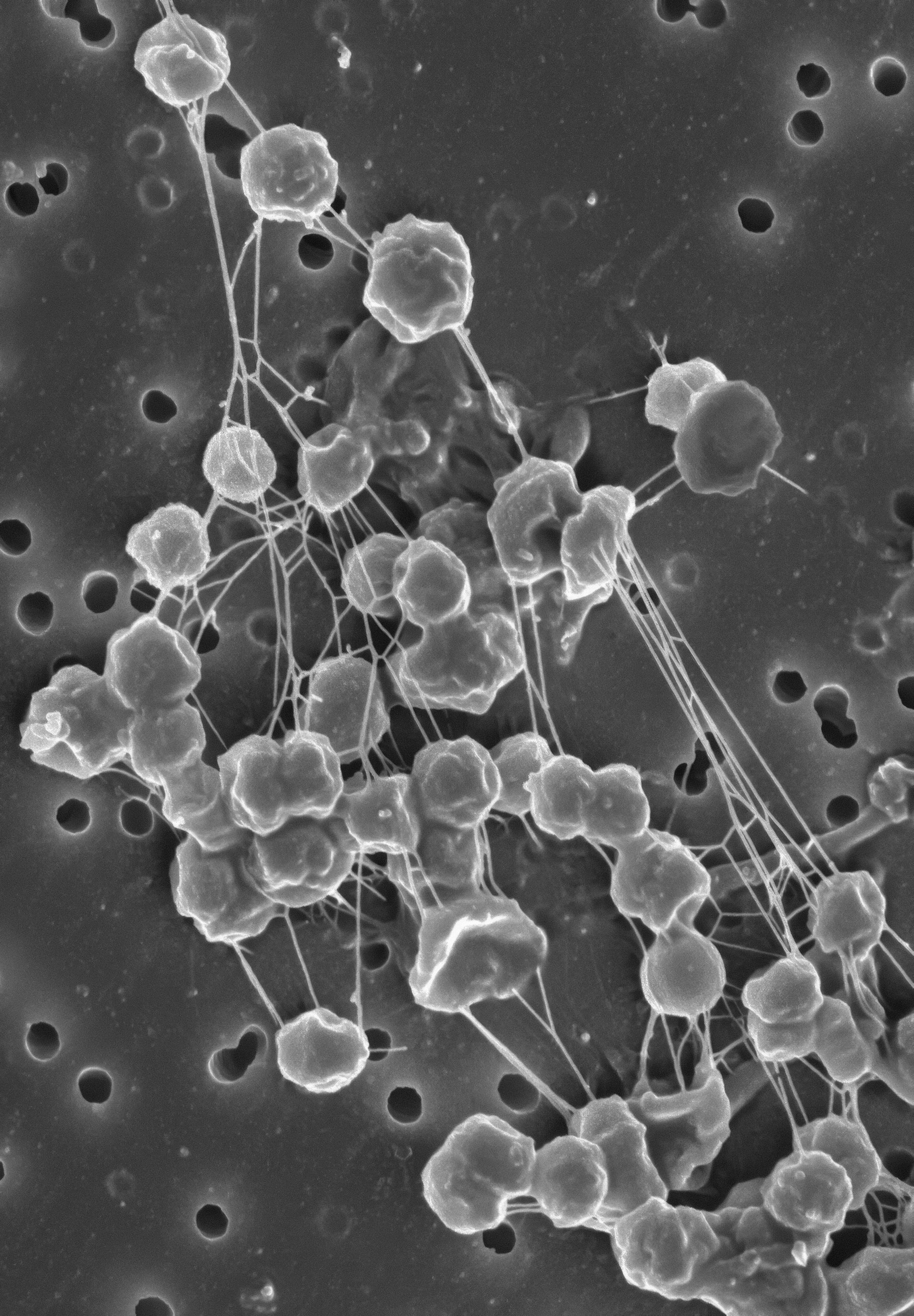
Scientists have engineered a digital depiction of an extraterrestrial cell and observed its behavior on a hypothetical exoplanet, a technique that could assist astronomers in identifying potential signs of alien life on distant worlds, as reported in a recent study published in Monthly Notices of the Royal Astronomical Society. The findings shed new light on how microbes that generate methane gas, known as methanogens, may evolve on various exoplanets, including Earth-sized ocean worlds and hypothetical giant "Hycean planets" featuring expansive oceans and hydrogen-rich atmospheres.
By predicting how methanogens might affect their surroundings, researchers might identify biosignatures—indications of life—within the skies of exoplanets outside our solar system. Contrary to previous studies that theorized about specific forms of life on particular exoplanets, this method begins with a general cell model and explores its evolution in diverse biospheres.
"This is a kind of plausible life that's very unconstrained by Earth-based conditions," stated Arwen Nicholson, a researcher at Exeter University who spearheaded the study. "We can place it in different environments, and then examine: What other effects does it have?" Nicholson explained that this approach simplifies the intricate quest for extraterrestrial life.
"This is a generalized idea of what biology would roughly do that we can then put into different places to try and start getting biosignature predictions ideally for different planets, or to understand what we're seeing from the telescopes." Methanogens, which thrive in oxygen-poor conditions, have been present on Earth for billions of years, even today.
These microbes are versatile, capable of energy production through a process called chemosynthesis, independent of sunlight. Consequently, methanogens serve as an excellent model for contemplating life's emergence in various habitats, including shadowy regions devoid of direct starlight. The researchers created a basic spherical model of a methanogen cell and adjusted its size, life cycle, and environmental factors in various alien biospheres.
The results indicated that the planet's hydrogen and methane levels are highly influenced by the microbe's specific characteristics. In essence, "life will act to 'erase' abiotic aspects of their environment" by altering the composition of atmospheric gases, potentially detectable by astronomers. The team also hypothesized that resource competition in extraterrestrial ecosystems would likely favor smaller, longer-lived methanogens, which could outcompete larger, shorter-lived or more energy-demanding species.
However, while these clues may aid scientists in detecting probable biosignatures in the future, accurately predicting the appearance of the life form responsible remains a challenge. Nicholson emphasized, "You could have different life forms in your ocean and they would look the same in terms of a biosignature. You could have a single film of some algae covering the whole ocean, or a little amoeba, or maybe something else.
I thought that was quite interesting. It almost frees us up from making too many assumptions of what alien life would look like, because how are we going to know?" "We can use spherical microbes as a representation, but even if we found a biosignature, even if it all made sense, and we found life, we still wouldn't actually know what they look like," she added.
Nicholson and her colleagues intend to expand this research by modeling simplified cells of photosynthetic life and forecasting their impact on various exoplanet atmospheres. Ultimately, these studies will aid scientists in distinguishing authentic biosignatures from complex atmospheric chemistry arising from geological processes.
Additionally, it's prudent to prepare for the highly probable scenario where we identify clear biosignatures on a distant exoplanet yet are ultimately unable to learn much more about them. "We don't live in sci-fi," Nicholson concluded. "Sci-fi is super cool. I love it too. But the reality is, we're looking at a habitable planet like our own.
If we find anything, they will be life forms embedded in their world, just like we're embedded in our world." "It's a super exciting time to be in astrobiology again with all of this data, and it's super neat that people are so interested in it as well," she added.
Written by urgent.news from 404 Media's reporting — not their text. Machine-written — may contain errors; check the original before relying on it.