What the leeches reveal about the movement
Lidia Szczupak resorted to these animals to investigate how the nervous system coordinates movement.
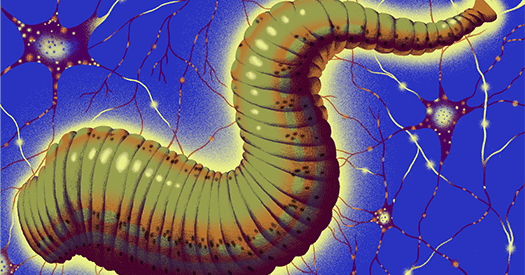
Sanguessugas, also known as medicinal leeches, can reveal valuable insights about the nervous system's role in movement. When scientist Lidia Szczupak hit a roadblock in her research on muscle fibers, she turned to the medicinal leech as a potential solution. This decision proved fruitful, as Szczupak discovered the simplicity and clarity of the leech's body and motor system, making it an ideal model for studying neural bases of locomotion and other complex phenomena.
Szczupak found that even without a brain or sensory stimuli, individual ganglia (segments) could produce rhythmic motor activity and coordinate with each other, forming a global network that drives movement. Additionally, each segment utilizes inhibitory signals to modulate motor neuron activity, shaping specific phases of locomotion. Her research has shed light on how leeches maintain balance, move without a brain, and showcase the simplicity of their body and motor system, offering potential benefits to neuroscience.
The leech's unique motor patterns and the ability to study them at the level of a single segment make it an excellent model for understanding the coordination of signals necessary for movement. Szczupak discovered that the leech organizes its movements by considering balance measures, extending its anterior part while maintaining its center of mass at the posterior until it reaches a safe position, only then shifting its center of mass.
This coordinated movement is not merely a mechanical repetition but involves complex neural signaling.
Unlike a centralized control in the brain, the leech's nervous system relies on the coordinated action of many ganglia, which produce coordination signals without direct cerebral involvement. These signals are then transmitted both forwards and backwards, with anterior ganglia instructing posterior ones, while posterior ganglia also provide instructions to anterior ones: "Don't start your movement before I finish mine."
Although the number of sanguessuga researchers has dwindled, Szczupak highlights the importance of this model organism in neuroscience. In the past, the community was small but active, but many researchers have since retired, leaving few laboratories studying neurophysiological principles using leeches. Szczupak suggests that advancing techniques, such as enabling neurons to express calcium sensors, would significantly benefit sanguessuga research.
Ultimately, the study of sanguessugas could offer crucial insights into neural network functioning and help unravel the complexities of movement and coordination in the nervous system.
Written by urgent.news from The Transmitter's reporting — not their text. Machine-written — may contain errors; check the original before relying on it.