Iran tightens grip on Strait of Hormuz
A new shipping route is likely to emerge out of the expected agreement between Tehran and Muscat this week, and the chokepoint’s relevance will likely remain.
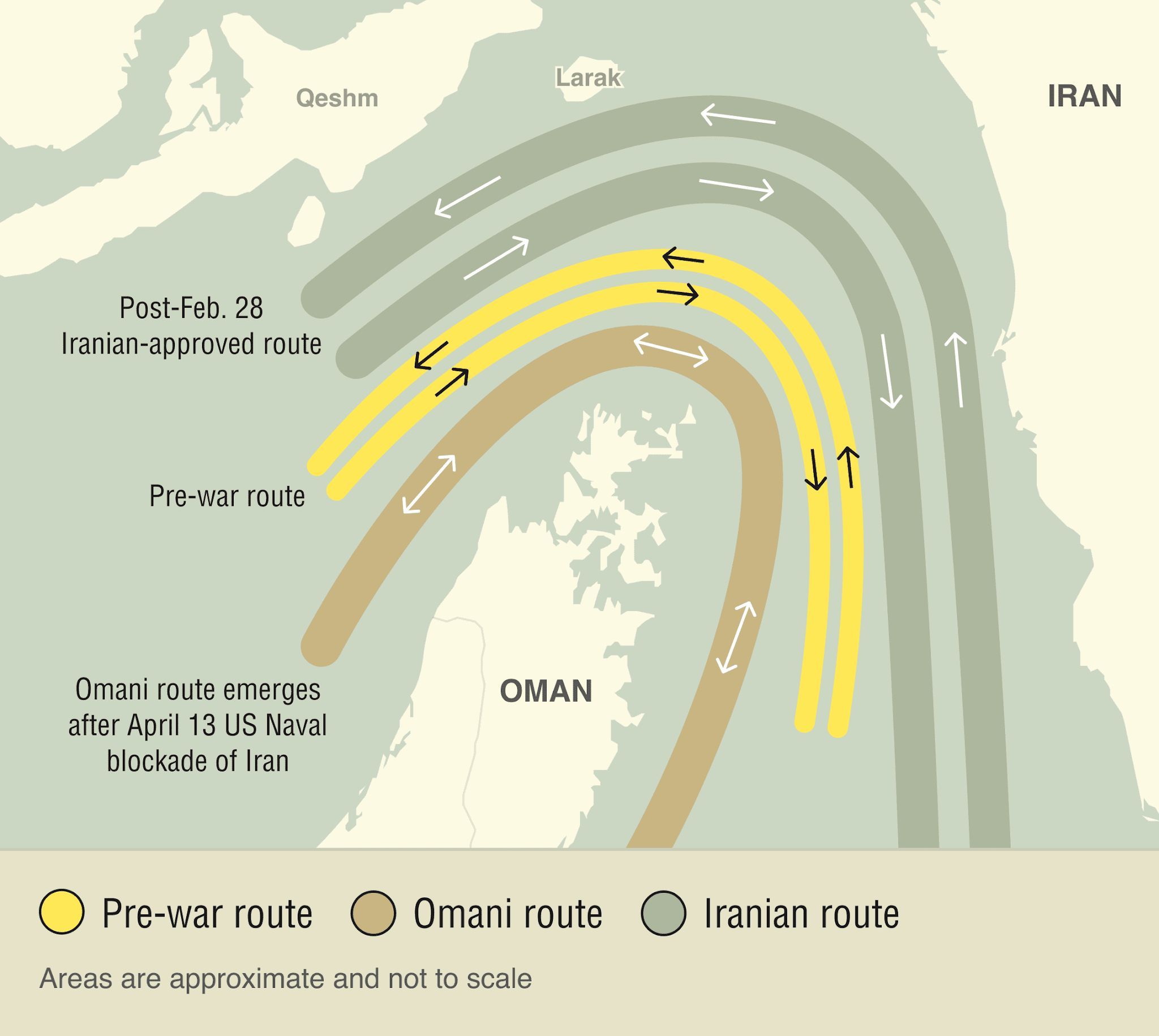
The Strait of Hormuz, once a bustling thoroughfare for global trade, now stands as a silent sentinel, its lanes eerily deserted. Before the advent of Iranian mines, drones, and tolls, the narrow channel, with its two-mile wide lanes, facilitated the flow of two-fifths of the world's oil and liquefied natural gas, alongside essential foodstuffs, petrochemicals, and other commodities.
This vital route, initially proposed jointly by Iran and Oman and later endorsed by the UN's maritime body in 1968, was instrumental in the region's trade. However, the current landscape paints a starkly different picture. Ships are now avoiding the strait due to the presence of Iranian mines, while a fraction of the traffic is rerouted through temporary corridors, skirting the Iranian and Omani coasts.
Despite these changes, Iran's grip on the strait remains strong. The Economist, in its recent prediction, forecasts that Tehran's influence over Hormuz will persist beyond the ongoing conflict with the US. Those who foresee the strait's diminishing significance due to the rise of pipelines and the relocation of refineries and port operations may be overlooking the strategic resilience of Iran.
Written by urgent.news from Semafor's reporting — not their text. Machine-written — may contain errors; check the original before relying on it.
This story
This is one outlet's version. Read the fullest account.
- There's no simple alternative to the Strait of Hormuz semafor.com
- Iraq oil exports plunge on Strait of Hormuz closure gulf-times.com
- Spinneys reroutes food shipments amid Strait of Hormuz disruption, cuts delays from 38 days to 9 arabianbusiness.com
- Oil prices fall on hopes Strait of Hormuz could reopen bbc.co.uk