First photos of SpaceX lunar rocket crash show blackened hole torn into the moon's surface
New images from South Korea's Danuri lunar orbiter reveal where a runaway SpaceX rocket part slammed into the moon on Wednesday.
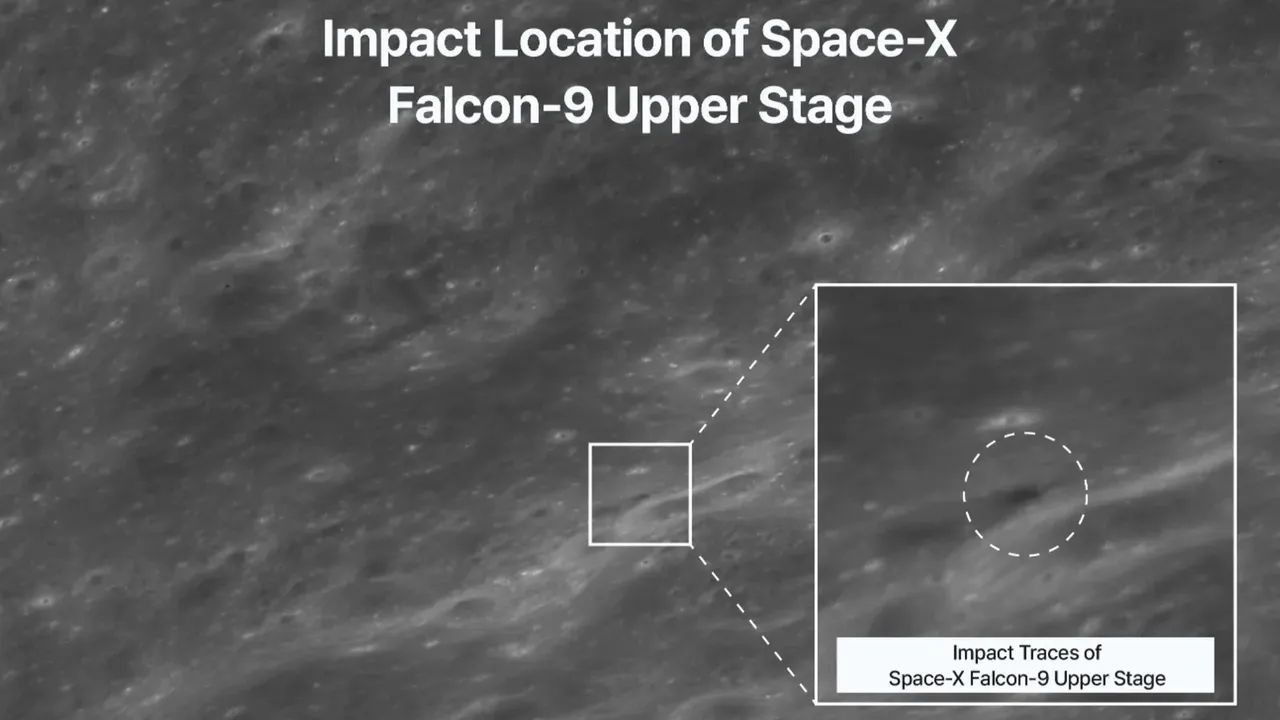
On Wednesday night, a section of an outdated SpaceX rocket crashed into the moon at speeds surpassing 5,000 mph. South Korea's Danuri lunar satellite captured the first images of the aftermath, revealing a small blackened crater near the Einstein crater on the moon's northwestern edge. The crash, near the terminator zone where lunar day and night meet, occurred around 2:35 a.m. ET.
The European Southern Observatory's Very Large Telescope observed a debris plume rising from the lunar surface following the collision, though no photos have been released yet. A preprint study estimated the new crater to be about 90 feet wide and 16 feet deep, but measurements are pending. The crashed piece is the Falcon 9 rocket's second stage, discarded from a mission that launched on January 15, 2025, carrying two lunar landers.
Elon Musk's company abandoned it in an elliptical orbit before it was nudged towards the moon in May. Previously, human-made impacts have provided valuable insights about the moon's composition, like the discovery of subsurface ice near the lunar south pole. As more astronauts prepare for lunar missions, understanding the risks of such artificial impacts becomes increasingly crucial.
Written by urgent.news from Live Science's reporting — not their text. Machine-written — may contain errors; check the original before relying on it.