When a President Promises a Massacre
Harkening back to colonial massacres, Trump abandons the premise of proportionality for butchery in Iran and beyond. The post When a President Promises a Massacre appeared first on The Intercept .
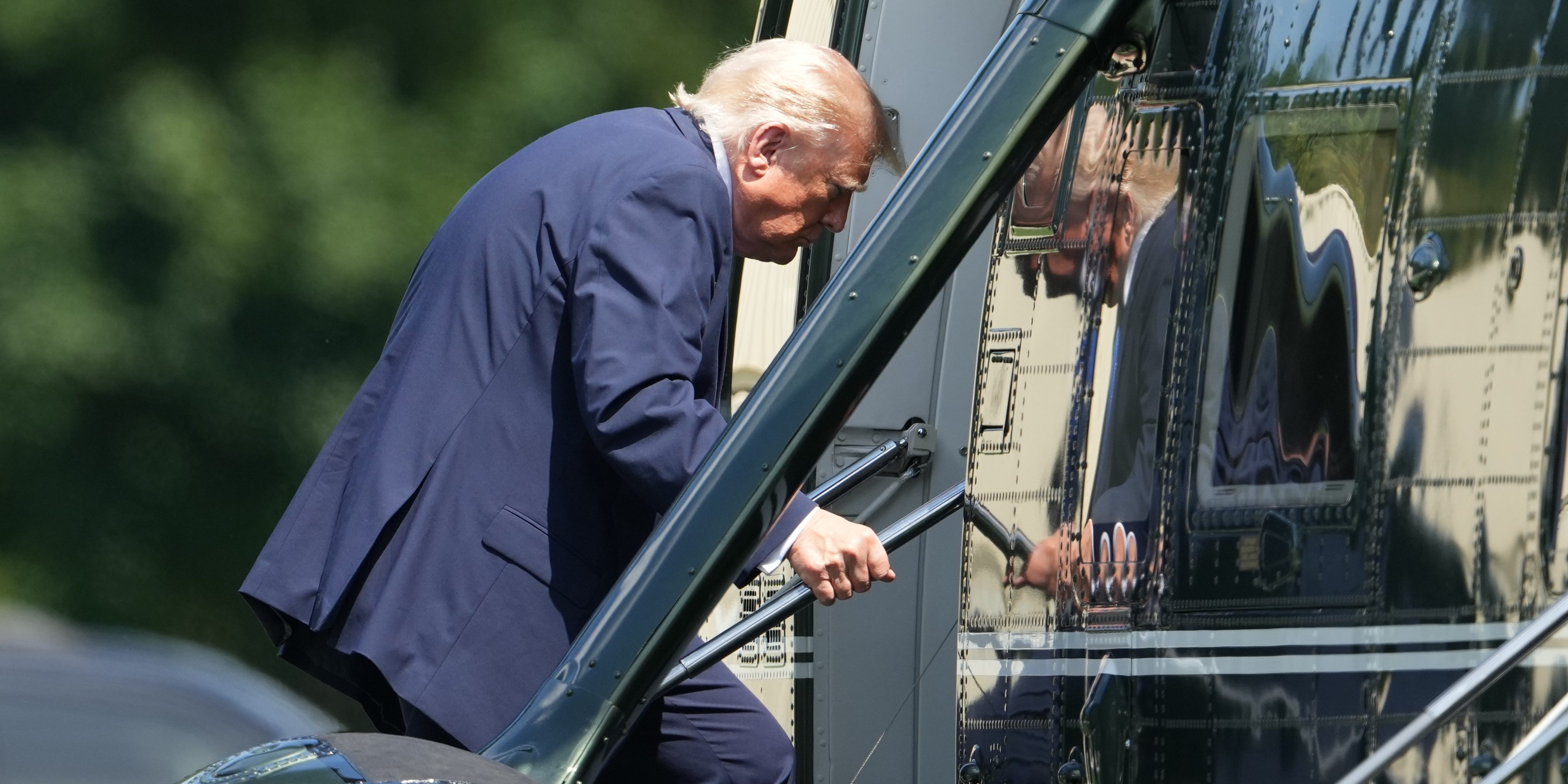
President Donald Trump recently spoke about his war with Iran, stating, "I want to give them every last chance before decapitation," referring to eliminating the country's leadership. However, decapitation, a method of psychological warfare employed throughout history, has been prevalent in colonial warfare from Africa to Asia. An example can be found in Joseph Conrad's novel "Heart of Darkness," where a white military officer adorned his garden with the heads of twenty-one natives killed during a punitive expedition.
To comprehend the gravity of this unacknowledged horror, one must delve into Trump's own world of wars, which can be described as a war of the worlds. This approach to warfare shares key traits with the unrestrained colonial extermination campaigns of the past. As Trump's war in Iran falters and his poll numbers decline, he resorts to bellowing for blood and issuing orders that disregard the principles of proportionality in warfare.
The increase in Iranian casualties compared to American fatalities by a significant margin aligns with the dynamics of 19th-century extermination campaigns, in which weaker nations, ethnic groups, and races were massacred. Trump has consistently invoked the values of might makes right, territorial acquisition through armed intervention, and colonial relationships with conquered foes and weaker nations.
This aligns with the values espoused by the 19th-century American president Andrew Jackson, who implemented a policy of Indian removal, leading to the deaths of thousands of Native Americans.
The similarities between Trump's genocide rhetoric and the historical massacre of Tasmanian Indigenous people, as described by early settlers, are striking. The slaughter in Tasmania inspired H.G. Wells' 19th-century sci-fi novel "War of the Worlds," where Martians with advanced firepower and no qualms about annihilating humanity invade England, leading to the destruction of London and the near-extinction of the human race.
Tasmanian Indigenous people faced a similar fate, with European immigrants conducting a war of extermination that wiped them out within fifty years. The historical impact of these acts of genocide has been so profound that Raphael Lemkin, who coined the term "genocide," considered Tasmania a case study to inform his concept. It remains unclear if Trump had read Wells' novel or understood its allegory, but the parallels between his current rhetoric and the atrocities of the past remain undeniable.
Written by urgent.news from The Intercept's reporting — not their text. Machine-written — may contain errors; check the original before relying on it.