Were there tiny dinosaurs? New study explores one of evolution's biggest mysteries
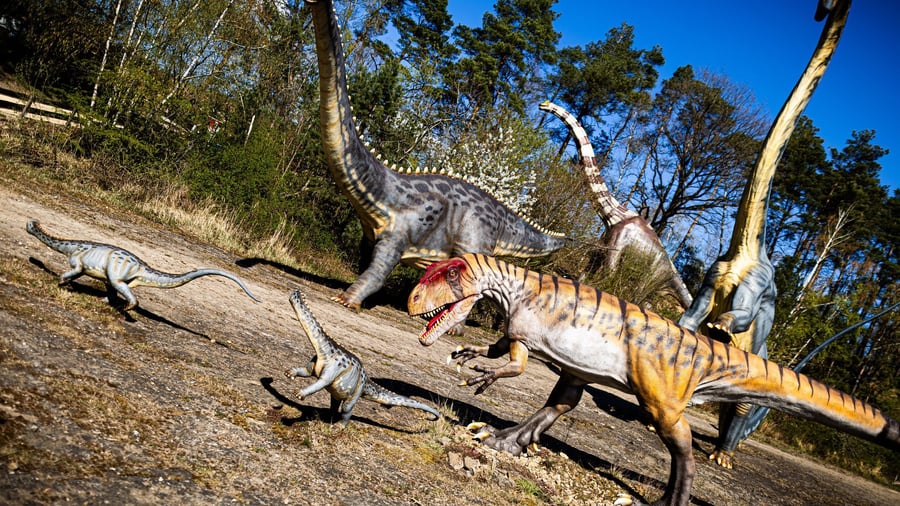
Dinosaurs are famous for being big, from the towering Tyrannosaurus rex to the colossal Apatosaurus. But a new study published today in the journal Evolution by scientists at the American Museum of Natural History and Princeton University suggests that one of the greatest mysteries of dinosaur evolution isn't how some species became giants—it's why even the smallest dinosaurs never became truly…

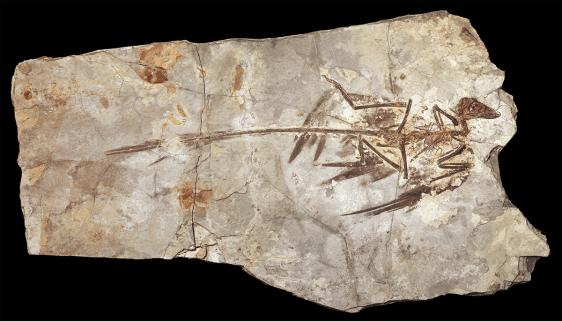
This study published in the journal Evolution explores a mystery in dinosaur evolution: why even the smallest nonbird dinosaurs remained unusually large throughout their history. While dinosaurs are known for their gigantic sizes, such as Tyrannosaurus rex and Apatosaurus, the smallest known nonbird dinosaur weighed only about 1 pound, more than 200 times larger than the smallest bird and mammal today.
Researchers from the American Museum of Natural History and Princeton University used mathematical models to study body size evolution across vertebrates. These models could explain body sizes in mammals, birds, and turtles, but not in dinosaurs. The study suggests that competition with small mammals may have prevented dinosaurs from becoming truly tiny, similar to how mammals prevented dinosaurs from becoming mouse-sized animals.
The fossil record shows that genuinely tiny nonavian dinosaurs were rare, or possibly absent. While scientists might have missed fossils of the smallest dinosaurs, the fossil deposits that preserve smaller vertebrates also suggest that mouse-sized dinosaurs would have been found if they existed. The researchers propose that ecological factors, including competition and predation, played a significant role in limiting the size of nonavian dinosaurs.
Another key aspect of the study is the evolution of birds, which evolved from dinosaurs. Birds are much smaller than even the smallest known nonavian dinosaurs. The researchers believe that the development of powered flight allowed birds to escape the ecological constraints that prevented their dinosaur ancestors from becoming smaller. This shift gave birds access to new ecological niches, enabling them to evolve into diverse body sizes.
The findings highlight the importance of understanding ecological pressures in shaping the diversity of body sizes among dinosaurs and their descendants, the birds. The study opens up new avenues for future research to uncover more about the evolutionary forces that determined which body sizes flourished and which did not.
Written by urgent.news from Phys.org's reporting — not their text. Machine-written — may contain errors; check the original before relying on it.