On this day in space! Aug. 5, 2011: NASA's Juno spacecraft launches to Jupiter
On Aug. 5, 2011, NASA launched the Juno spacecraft on a mission to study Jupiter, the largest planet in the solar system. Here's why it mattered.
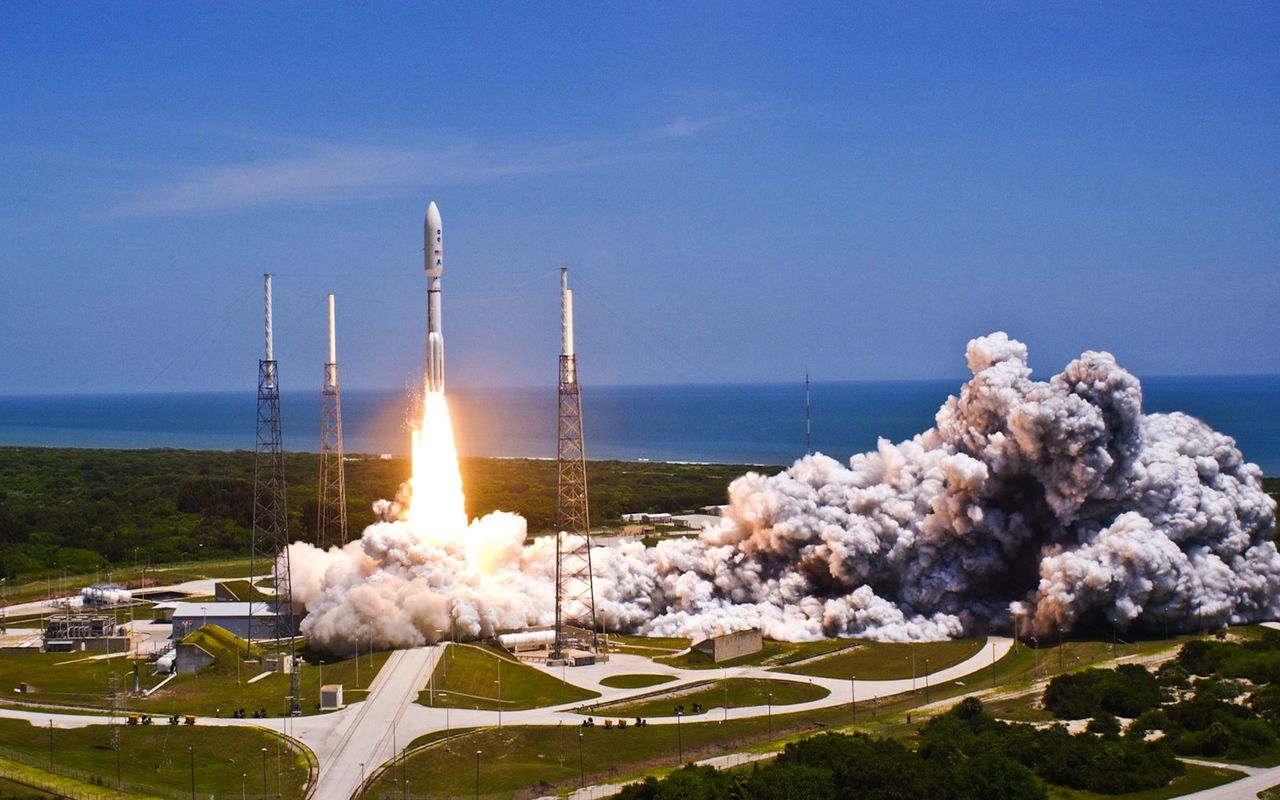
On August 5, 2011, NASA embarked on a groundbreaking mission to study Jupiter with the launch of the Juno spacecraft. The robotic explorer, lifted off atop an Atlas V rocket from the now Florida-based Cape Canaveral Space Force Station, embarking on a five-year journey of 1.74 billion miles to reach the largest planet in our solar system.
Upon arriving in Jupiter's orbit in 2016, Juno has captured unparalleled images of the gas giant and conducted extensive scientific measurements to analyze its composition, magnetic fields, weather patterns, and more.
The Juno mission holds significance as it marked the first dedicated orbiter at Jupiter since NASA's Galileo mission concluded in 2003. Furthermore, it is the first solar-powered spacecraft to venture to the gas giant. While Galileo's antenna did not fully deploy, allowing it to record detailed video of Jupiter's atmosphere, Juno's camera successfully captured the first detailed video of the planet's clouds and atmosphere.
Although Juno's primary mission ended just 20 months after its arrival, NASA extended its mission several times, most recently in 2021. This extension led to multiple flybys of Jupiter's largest moons: Ganymede, Europa, and Io. Juno's observations have already contributed to the science planning of future missions, including the European Space Agency's Jupiter Icy Moon Explorer (JUICE) and NASA's Europa Clipper probes, both of which are currently en route to the giant planet.
Written by urgent.news from Space.com's reporting — not their text. Machine-written — may contain errors; check the original before relying on it.