Here’s Why There Aren’t Any Tiny Dinosaurs
There are plenty of teensy animals—just not dinosaurs The post Here’s Why There Aren’t Any Tiny Dinosaurs appeared first on Nautilus .
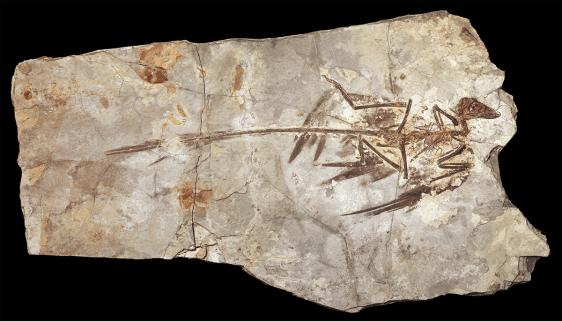
Tiny dinosaurs are notably absent from the fossil record, despite the abundance of small animals that do exist today. Argentinosaurus, the largest known dinosaur, weighed over 80 tons, while the smallest non-avian dinosaurs were around the size of a bunny. However, when considering the smallest vertebrates, even the tiniest non-avian dinosaurs still appear relatively large.
Birds, the descendants of dinosaurs, have even smaller ancestors, such as the bee hummingbird, which weighs less than 2 grams, dwarfing the smallest non-avian dinosaur. Researchers from Princeton University and the American Museum of Natural History explored the reasons behind the absence of tiny dinosaurs. They found that while tiny dinosaurs may not have left behind sufficient fossils, the modern world is teeming with small animals, with 75 percent of mammals and 90 percent of birds being smaller than the tiniest non-avian dinosaurs.
The study's authors utilized mathematical models to estimate body sizes based on energy conversion efficiencies, revealing that dinosaurs were limited by ecological factors such as competition, predation, and niche availability, rather than physiological constraints on size. The researchers suggest that mammals occupied the role of tiny animals in the ecosystem, taking advantage of the available niches.
The innovation that enabled birds to become smaller than their non-avian ancestors was powered flight, which opened up new ecological niches for them to exploit. Consequently, birds evolved to occupy body sizes that were previously unattainable for other dinosaurs.
Written by urgent.news from Nautilus's reporting — not their text. Machine-written — may contain errors; check the original before relying on it.