Kerala rains 2026: researchers call for redrawing disaster management strategy amidst increasing extreme rainfall events
Studies have shown that mesoscale cloudbursts occurring under favourable ocean-atmospheric conditions may leave a vast area of Kerala vulnerable to flash floods and landslides, anytime during the monsoon season, says expert
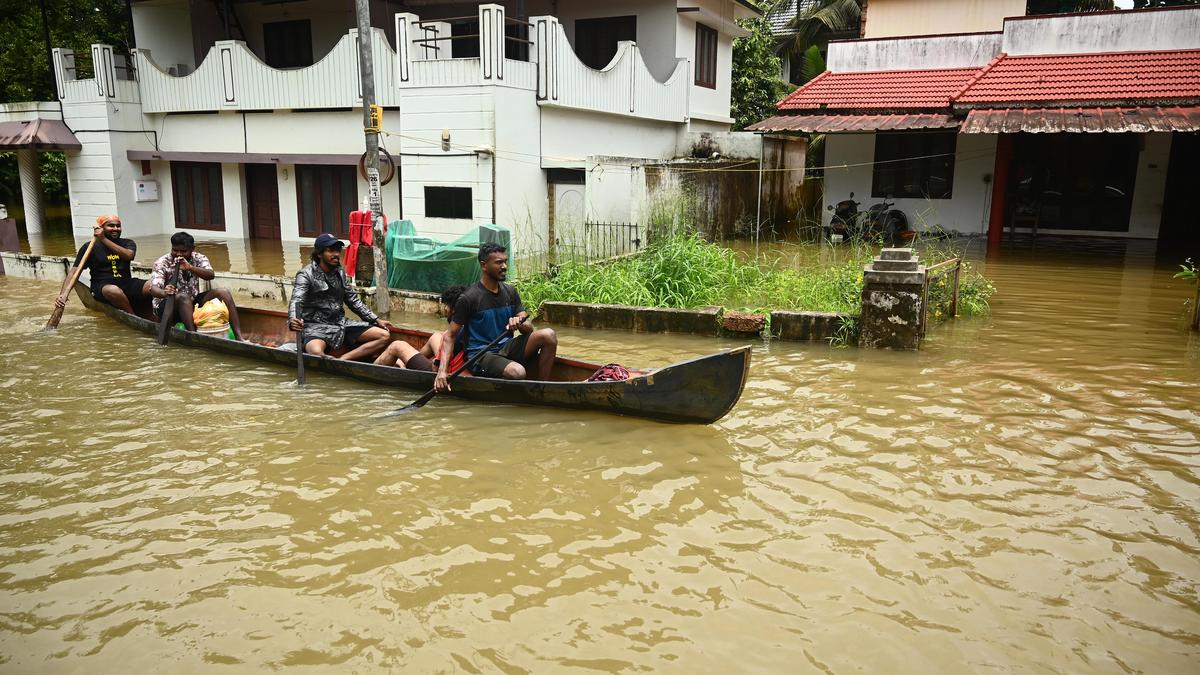
Researchers from the Advanced Centre for Atmospheric Radar Research (ACARR) at Cochin University of Science and Technology have urged a transformation in Kerala's disaster management approach due to the increasing frequency of extreme rainfall events in the region. The experts highlight that Kerala has transformed into a hotspot for mesoscale mini cloudbursts, characterized by intense localised downpours typically surpassing 100 mm within an hour and covering tens to hundreds of square kilometers.
These extreme events are a result of powerful convection and topographical uplift, leading to rapid runoff and flash floods. S. Abhilash, Director of ACARR, stresses the need for improved impact-based forecasting, real-time prediction systems, and climate-informed policy planning in order to safeguard coastal communities and those reliant on maritime livelihoods.
He also emphasizes the importance of a participatory, localized disaster management framework, as centralized strategies alone are inadequate given the State's changing climate and terrain vulnerability. The scientists attribute the rise in mesoscale cloudbursts to a warming Arabian Sea and a warmer atmosphere, which enhance the moisture content in the monsoon system, thereby creating conditions for more potent rainfall events.
The challenge for Kerala lies not in preventing extreme rainfall, but in building its ability to anticipate, prepare for, and mitigate the consequences of such events. A permanent multidisciplinary expert panel comprising climate scientists, meteorologists, hydrologists, geologists, engineers, disaster managers, and policymakers is recommended to ensure seamless coordination between scientific knowledge and practical decision-making during extreme weather scenarios.
Written by urgent.news from The Hindu's reporting — not their text. Machine-written — may contain errors; check the original before relying on it.