China urged to protect underwater cables amid growing fears of ocean sabotage
Beijing has been urged to create its own law to protect its underwater fibre-optic cables, as global fears grow over sabotage of critical ocean infrastructure. The recommendation by Shanghai Maritime University law professor Guo Ran comes amid growing threats to the undersea cables that carry about 99 per cent of global intercontinental data, including in critical chokepoints such as the Red Sea…
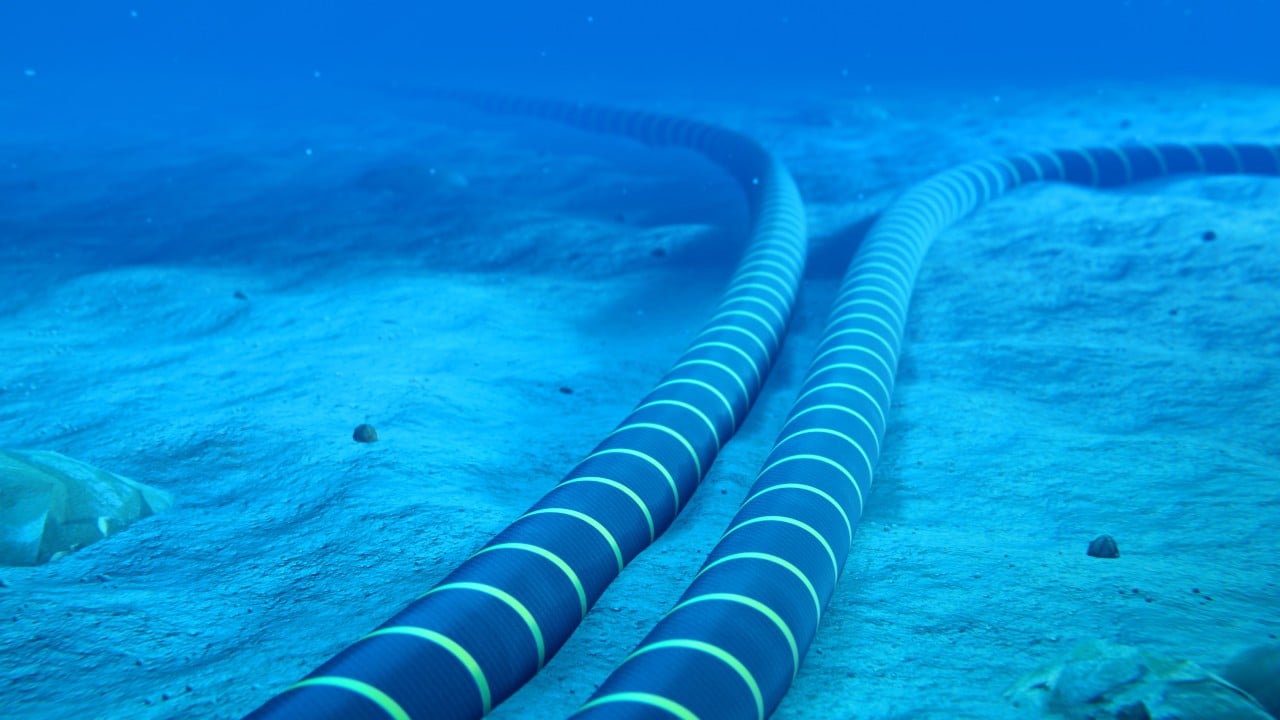
China has been advised to enact its own legislation to safeguard undersea fibre-optic cables, as the threat of sabotage on critical ocean infrastructure grows. The advice comes from Shanghai Maritime University law professor Guo Ran, who highlighted the high stakes for China as a major coastal nation and key investor in the Digital Silk Road.
These undersea cables, which carry approximately 99% of global intercontinental data, are crucial for AI, making their protection essential for the nation's interests. The Digital Silk Road aims to develop digital and telecommunications infrastructure as part of China's Belt and Road Initiative. While China has enacted laws like the Data Security Law and Cybersecurity Law to regulate the digital sphere, they have not addressed the protection of physical seabed infrastructure.
Guo proposes that China should establish a governance system for international subsea cable security to bridge the gap between traditional maritime law and modern warfare tactics. These tactics, known as grey-zone warfare, pose a significant security threat to undersea cable networks. The 1982 United Nations Convention on the Law of the Sea (UNCLOS) provides limited protection against grey-zone warfare, leaving coastal nations with minimal enforcement power in international waters.
Guo suggests that China could create no-anchor zones in high-risk areas, boost its underwater repair capabilities, and employ satellite surveillance, underwater drones, and seabed sensors to manage and protect undersea cables. By implementing such measures, China would not only enhance its national security but also contribute to establishing a robust global governance system for undersea cables, ensuring the integrity of global digital infrastructure.
Written by urgent.news from South China Morning Post's reporting — not their text. Machine-written — may contain errors; check the original before relying on it.
This story
This is one outlet's version. Read the fullest account.