Ancient bone-crunching Territory thylacine femur uncovered near Alice Springs
An 8-million-year-old intact femur from the bone-crunching Northern Territory tiger has been found for the first time at the Alcoota fossil beds north-east of Alice Springs.
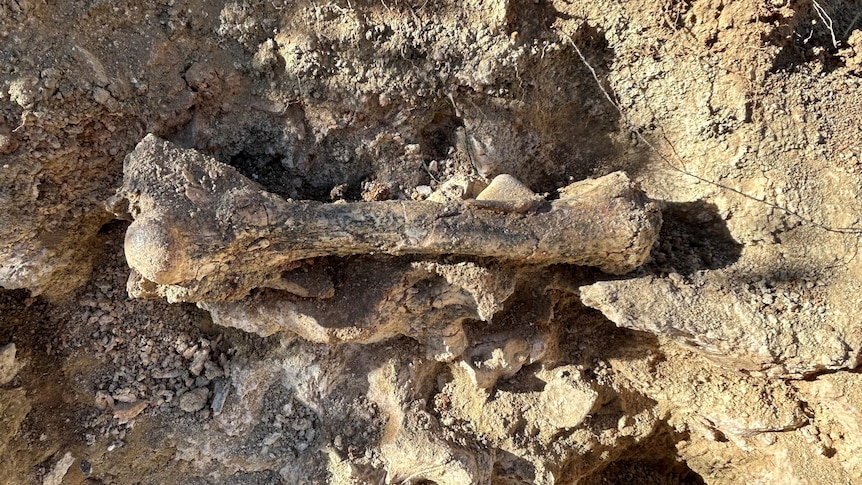
In a groundbreaking discovery, a complete femur of a rare and ancient Territory tiger (Thylacinus potens) has been unearthed at the Alcoota Scientific Reserve, located approximately 150 kilometers northeast of Alice Springs. This marks the first time an intact thigh bone of the dog-like animal, a distant relative of the Tasmanian tiger, has been discovered in the region.
The Alcoota Scientific Reserve is situated in the red sandy desert of Central Australia, which was once home to a diverse array of wildlife, including flightless giant birds, flamingos, crocodiles, and the largest known species of thylacine in the Northern Territory, Thylacinus potens. The climate during the time the Territory tiger roamed the area was markedly different, wetter with permanently flowing rivers compared to the arid conditions of today.
Museum and Art Gallery of the Northern Territory (MAGNT) palaeontologists, scientists, volunteers, and students from various parts of the country have been visiting the scientific reserve every two years to uncover its secrets. Dr. Adam Yates, a senior curator of earth sciences at MAGNT, made the remarkable find after meticulously removing millions of years of sediment, dirt, and dust from the bone.
Initially uncertain about the nature of the bone he unearthed, Dr. Yates persisted in his examination, confident that he would not find something ordinary. The discovery represents a significant addition to the collection at MAGNT, as only fragmentary remains of thylacine teeth and jaw bones have been found in the area over the past four decades. The new specimen will provide valuable insights into the size of the animal that lived during the late Miocene period.
While previous research suggested that the Territory thylacine was significantly larger than its Tasmanian counterpart, Thylacinus cynocephalus, the size of the recently discovered femur suggests that the animal may not have been as large as initially thought. The bone indicates that the Territory tiger had a massive head but a relatively small body, a unique combination not observed in its Tasmanian relative.
Notably, Alcoota's thylacine exhibited broader teeth than its Tasmanian counterpart, suggesting that it was better equipped to tackle tougher portions of prey, such as bones, gristle, ligaments, and sinew. This discovery adds to the growing body of knowledge about the diversity of thylacine species and their adaptation to different ecological niches in the ancient landscapes of Australia.
Written by urgent.news from ABC News AU's reporting — not their text. Machine-written — may contain errors; check the original before relying on it.