Advanced Mini-laboratories Automate Space Station Research
The International Space Station hosts hundreds of science experiments at a time. Some experiments can take hours to perform, and researchers need to account for astronauts’ limited time. Fully automated devices, like Redwire’s ADvanced Space Experiment Processors (ADSEPs), have been designed to conduct more space science with less crew time. Within each ADSEP facility there […] The post Advanced…
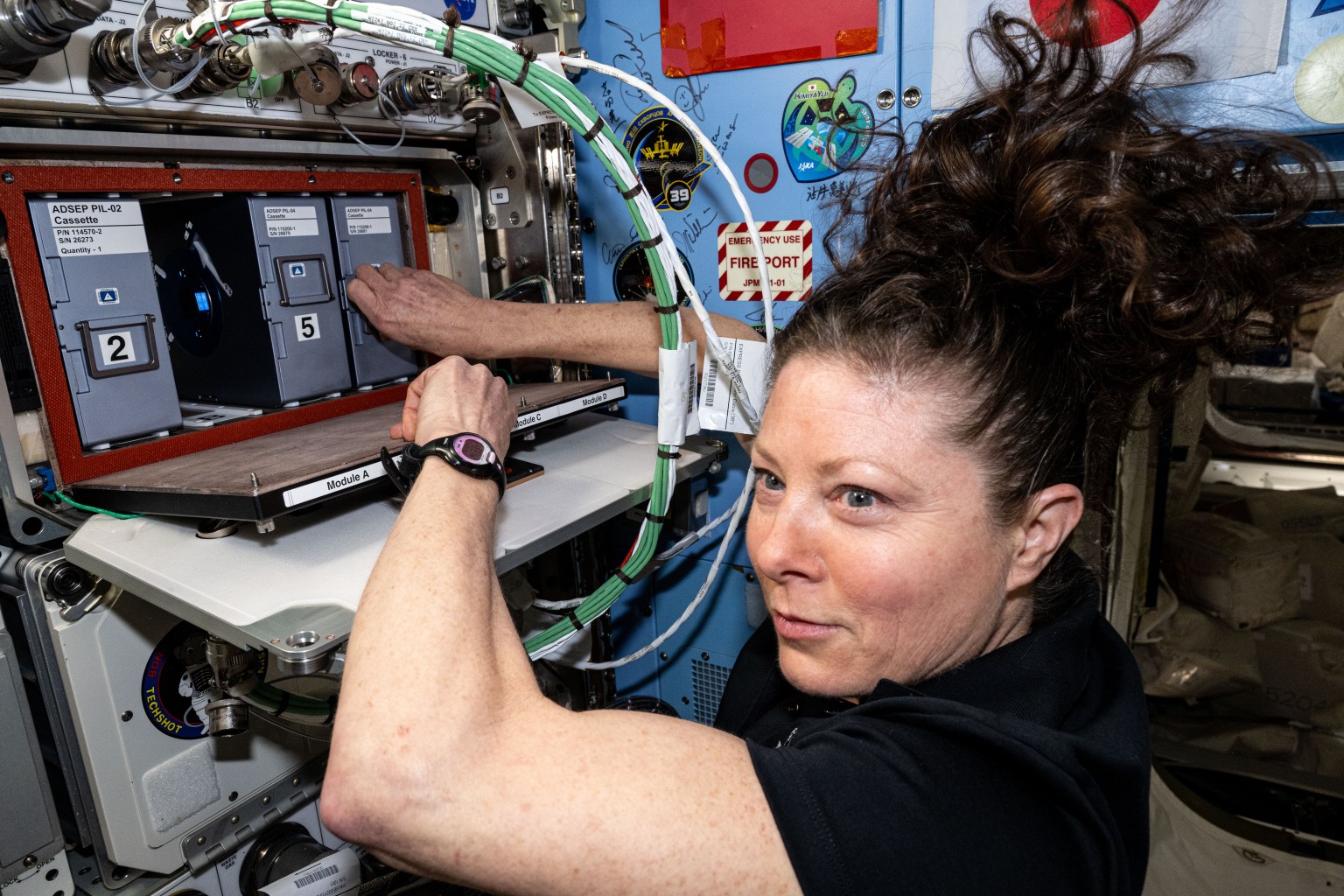
NASA's International Space Station is a hub for numerous scientific experiments simultaneously. Given the limited time astronauts have, automated devices such as Redwire's ADvanced Space Experiment Processors (ADSEPs) are employed to maximize space science with minimal crew time. Each ADSEP facility houses three to four mini-laboratories, or cassettes, enabling the simultaneous execution of multiple studies with varying requirements.
The most recent version, ADSEP-4, is capable of accommodating four cassettes and includes imagery capabilities.
Since 2017, ADSEPs have been instrumental in conducting and supporting numerous investigations aboard the space station, with more to follow. One such experiment, ADSEP-PIL-02, revolves around the growth of crystals in microgravity, aiming to understand the effects of this environment on various types of crystals. Another application of these mini-laboratories is in the realm of pharmaceutical development.
The Redwire Pharmaceutical In-Space Laboratory (PIL-BOX) is a cassette-based system that utilizes the ADSEP facility to grow enhanced, space-cultivated seed crystals. These crystals could potentially be used to reformulate existing drugs or develop entirely new therapeutics.
European Space Agency astronaut Sophie Adenot showcased a cassette for the ADSEP facility. ISS National Laboratory-sponsored PIL-BOX experiments have primarily focused on cancer research. The ADSEP-PIL-10 investigation, currently in progress in collaboration with Aspera Biomedicines, aims to crystallize cancer-blocking and cancer-promoting molecules, with the ultimate goal of creating an oral cancer medication.
Additionally, the ADSEP-PIL-15 experiment has been successful in crystallizing cancer-treating medicines, aiding in the refinement of production, quality, and stability of these crucial drugs.
A recent technology demonstration, ADSEP-ICC (Industrial Crystallization Cassette), has tested a larger cassette to expand the functionality of ADSEPs and increase crystallization production for commercial use.
Written by urgent.news from NASA Science's reporting — not their text. Machine-written — may contain errors; check the original before relying on it.