Price slump and tax frustration: crypto investors stuck in a prolonged freeze
Around 9 million people in Germany hold Bitcoin and other cryptos - but new taxes are now threatening. What this means for investors and the market remains open.
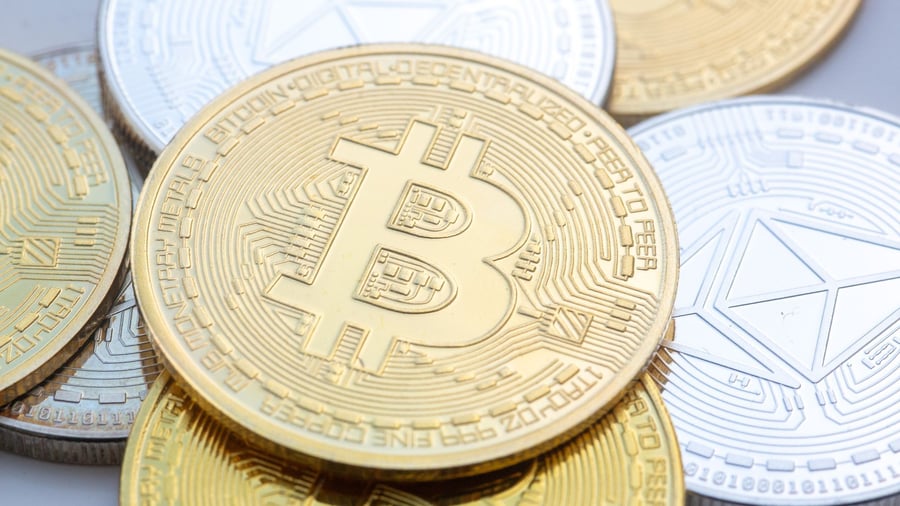
Investors who have invested their money in Bitcoin and other cryptocurrencies currently have to be patient. After the record high last autumn, the price of Bitcoin has plummeted by around half and has been moving in the range of $60,000 to $65,000 for months. In Germany, politics is now also dampening investor sentiment. Federal Finance Minister Lars Klingbeil (SPD) plans to change the tax rules.
Currently, if Bitcoin and Co. are held in private assets for more than a year, any disposal gains are completely tax-free; if held for a shorter period, the personal income tax rate applies. This regulation also applies to gold, luxury watches, vintage cars, works of art, and other valuables.
Bitcoin to be taxed like stocks
According to Klingbeil's plans, this one-year holding period for digital currencies is to be abolished, and crypto gains are to be taxed like stock earnings in the future. In Germany, gains from dividend payments and the sale of stocks are subject to a flat withholding tax of 25 percent plus solidarity surcharge and church tax. However, many details of Klingbeil's plans are still unclear, such as the question of transitional regulations.
It is also still open whether the coalition partner CDU/CSU will support the SPD's plans in parliament. After all, the three coalition parties had jointly agreed in the coalition contract not to increase taxes.
Almost 9 million crypto owners in Germany
Cryptocurrencies have so far played a minor role in the personal financial planning of the population in Germany. Nevertheless, 12.8 percent of adults in Germany currently own digital coins - equivalent to around 8.9 million people. This is according to a current representative population survey by the opinion institute YouGov on behalf of the management and technology consultancy BearingPoint.
Another 4.9 percent have already turned their back on Bitcoin, while 11.4 percent are at least still flirting with an entry. However, the majority of the population cannot currently imagine investing in cryptocurrencies. 67.4 percent of citizens do not own cryptocurrencies and categorically rule out a purchase for the future.
There is a deep divide between generations and genders. While almost every fifth man has digital assets in their portfolio, it is not even every thirteenth woman. In addition, cryptocurrencies remain a phenomenon of the younger generation: among 25- to 34-year-olds, the ownership rate is 28.4 percent, while the generation of those over 55 hardly has anything to do with the business.
However, those who have invested money in the crypto market primarily trust the market leader: three-quarters of crypto investors hold Bitcoin, followed by Ethereum with just over a third and Solana with just over a fifth. Speculative memecoins like Dogecoin, on the other hand, play only a minor role.
High risk awareness
Only a small minority of around 5 percent sees cryptocurrencies as a reliable store of value in times of crisis. Instead, awareness of the high risk dominates: for almost a third of the total population (32.7 percent), cryptocurrencies are primarily a highly speculative product. Even among active crypto investors, around 38 percent classify their engagement primarily as pure speculation.
Given the fluctuating exchange rates, Finance Minister Klingbeil will not be able to rely on a solid stream of revenue if he changes the tax treatment of cryptocurrencies and abolishes the holding period.
The vice-chancellor's project is met with criticism from parts of the population: more than 40 percent of the total population and over 70 percent of active crypto investors are convinced that abolishing the holding period will drastically reduce the attractiveness of crypto investments. In addition, 37.6 percent of the population advocate for taxing investors with a long-term perspective more favorably than speculators who trade back and forth in the short term - with only 24.2 percent rejection. Among active crypto owners, this vote is even overwhelming, with 80.8 percent in favor.
Criticism of the abolition of the tax-free holding period
Industry experts warn lawmakers urgently not to tighten the tax screws prematurely. Robert Bosch, global head of financial services at BearingPoint, emphasizes that tax treatment goes far beyond a mere detail question. It decisively determines how reliable the market remains for investors and how attractive Germany scores in international competition for digital financial innovations.
"Cryptocurrencies have left the niche, but have not yet arrived in the broad mass of society." For the economy and politics, this is an important signal: "In order for digital assets to find lasting acceptance, trust, understandability, and a reliable institutional framework are needed."
Translated by urgent.news. Machine-written — may contain errors; check the original before relying on it.