Price slump and tax frustration: crypto investors stuck in perpetual frustration
Around 9 million people in Germany hold Bitcoin and other cryptos - but new taxes are now threatening. What this means for investors and the market remains open.
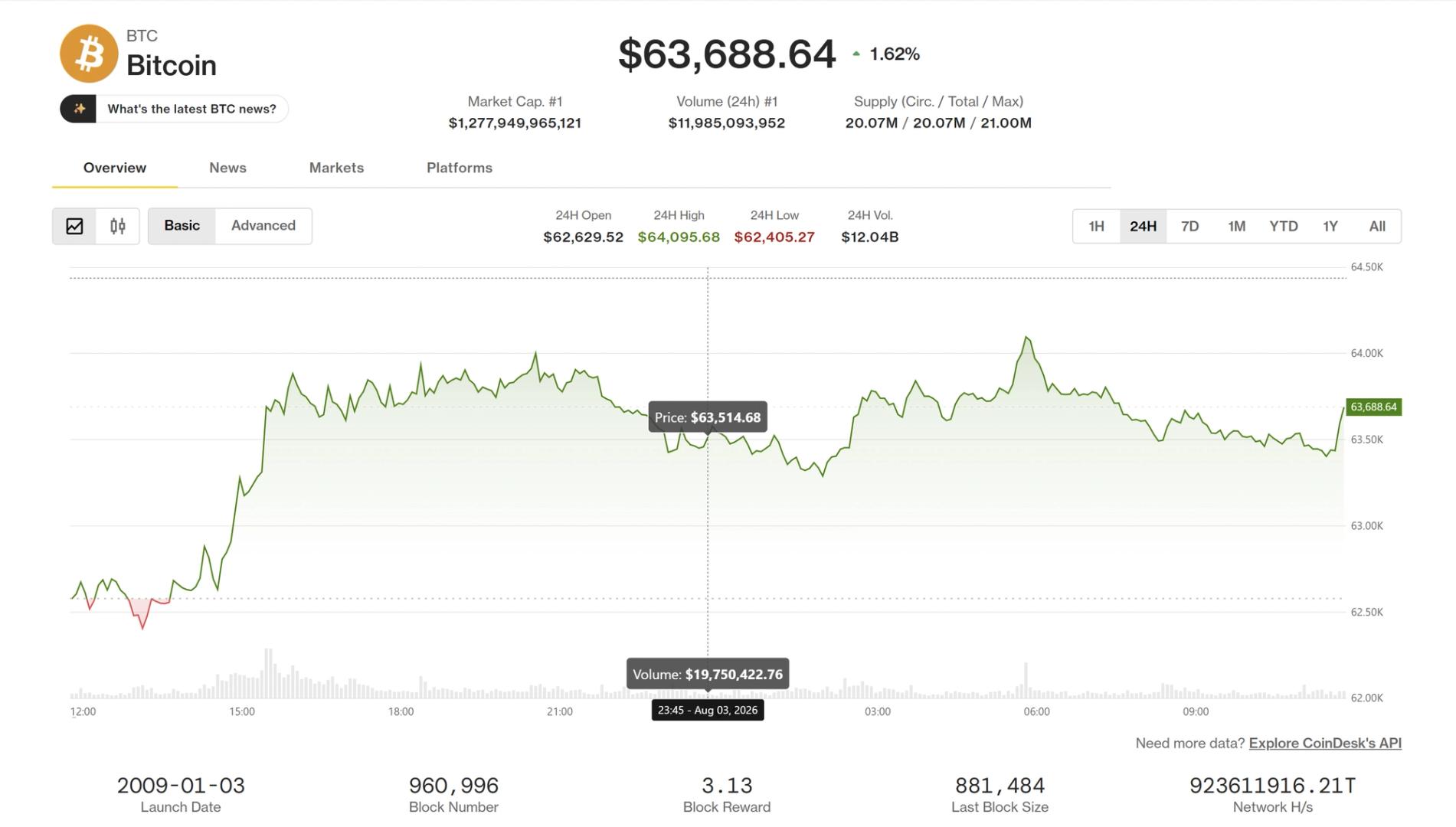
Investors who have put money into Bitcoin and other cryptocurrencies must now exercise patience. Since last autumn's record high, the price of Bitcoin has dropped by nearly half and has been hovering between $60,000 and $65,000 for months. In Germany, even the politics are affecting investor sentiment. Federal Finance Minister Lars Klingbeil (SPD) is planning to make a change to the tax rules.
Currently, if Bitcoin and similar digital currencies are held as private assets for more than a year, any profits from their sale are tax-free, but if the holding period is shorter, the personal income tax rate applies. This rule also applies to gold, luxury watches, vintage cars, art objects, and other valuable items. However, Klingbeil's plan would eliminate the one-year holding period for digital currencies, and crypto profits would be taxed like stock earnings in the future.
The details of Klingbeil's plans remain unclear, including any transitional arrangements. It is also uncertain whether the coalition partner CDU/CSU will support the SPD's plans in Parliament, as they all agreed in the coalition contract not to raise taxes. Approximately 9 million crypto owners in Germany Currently, digital coins are still a secondary role in the personal financial planning of Germany's population.
However, 12.8% of adults in Germany currently own digital coins, which translates to nearly 8.9 million people. This is according to a recent representative population survey conducted by the opinion research institute YouGov on behalf of the management and technology consultancy BearingPoint. Additionally, 4.9% have already exited Bitcoin, while 11.4% are still considering an entry.
However, the majority of the population cannot imagine investing in cryptocurrencies, with 67.4% of citizens owning no crypto and categorically ruling out any future purchase. The generation and gender gap is particularly pronounced, with nearly every fifth man holding digital assets in a brokerage account, compared to only one in thirteen women.
Moreover, cryptocurrencies remain a phenomenon of the younger generation, with only 28.4% of those aged 25-34 owning digital assets, while the 55-plus generation barely gets started. Those who have invested in the crypto market primarily trust the market leader: four-fifths of crypto investors hold Bitcoin, followed by Ethereum with just over a third, and Solana with nearly a fifth.
Speculative meme coins like Dogecoin play a minor role in comparison. High-risk tolerance Only a small minority of around 5% see cryptocurrencies as a reliable store of value during crises. Instead, the awareness of the high risk dominates: nearly a third of the total population (32.7%) view cryptocurrencies primarily as a highly speculative product.
Even among active crypto investors, 38% primarily consider their engagement as pure speculation. Given the fluctuating prices, Finance Minister Klingbeil cannot rely on a stable revenue stream if he changes the tax treatment of cryptocurrencies and abolishes the holding period. The plan is bound to face criticism from parts of the population as well.
Over 40% of the total population and over 70% of active crypto investors believe that abolishing the holding period would drastically reduce the attractiveness of crypto assets. Furthermore, 37.6% of the population favors treating long-term investors more tax-favorably than speculators who trade short-term, with 80.8% support in the case of active crypto holders.
Despite this, there is widespread uncertainty in the population: roughly 39% of respondents lack the expertise to make a judgment on the best tax model. Criticism of abolishing the tax-free holding period Industry experts urge policymakers to tread carefully when tightening tax screws prematurely. Robert Bosch, Global Head of Financial Services at BearingPoint, emphasizes that the tax treatment goes far beyond a mere detail question.
It decisively determines how reliable the market remains for investors and how attractive Germany is in the international competition for digital financial innovations. "Cryptocurrencies have left the niche, but they are still not widely accepted in the broader society," he says. For both economy and politics, this is a crucial signal: "To ensure that digital assets find lasting acceptance, it requires trust, comprehensibility, and a reliable institutional framework."
Written by urgent.news from Handelsblatt's reporting — not their text. Machine-written — may contain errors; check the original before relying on it.
This story
This is one outlet's version. Read the fullest account.