Which 10 atmospheres are the Solar System’s thickest?
Our Solar System has gas giants, rocky planets, moons, asteroids, and more. By size, it’s clear that the gas giant worlds vastly outstrip any of the terrestrial planets, and this is true for mass as well. Although Saturn is nearly the same physical size as Jupiter, it contains just 21% of the planetary mass in the Solar System, compared to Jupiter’s whopping 71%. Mass is the largest factor in…
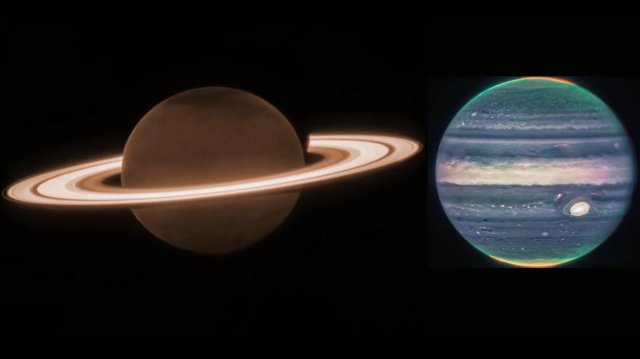
The Solar System’s planets with the thickest atmospheres, in order, are: Venus, Uranus, Neptune, and Jupiter. Venus boasts a staggering 92 times the surface pressure found on Earth, making it the most pressurized world in our cosmic neighborhood. This dense atmosphere, primarily composed of carbon dioxide, creates a greenhouse effect that raises Venus's surface temperature to an incredible 864 degrees Fahrenheit (460 degrees Celsius), far surpassing any other planet.
Following Venus, Uranus and Neptune hold the second and third spots, respectively. Though smaller than Uranus, Neptune's atmosphere is slightly thinner, yet still immensely thick compared to other worlds. Uranus, with roughly 3000 miles (5000 km) of predominantly hydrogen and helium, has the third-thickest atmosphere in the Solar System. Meanwhile, Jupiter, the largest gas giant, boasts the thickest atmosphere of all, with a mixture of hydrogen, helium, and trace amounts of methane, ammonia, and water vapor.
Written by urgent.news from Big Think's reporting — not their text. Machine-written — may contain errors; check the original before relying on it.