Surfing Lesson Ends With Unusual Injury
(MedPage Today) -- It appeared to be the perfect storm: a man in his 30s was learning to surf. As he stood up on the board and twisted to the left for balance, a wave knocked him over. He instantly felt a sharp pain in his lower back, but managed...
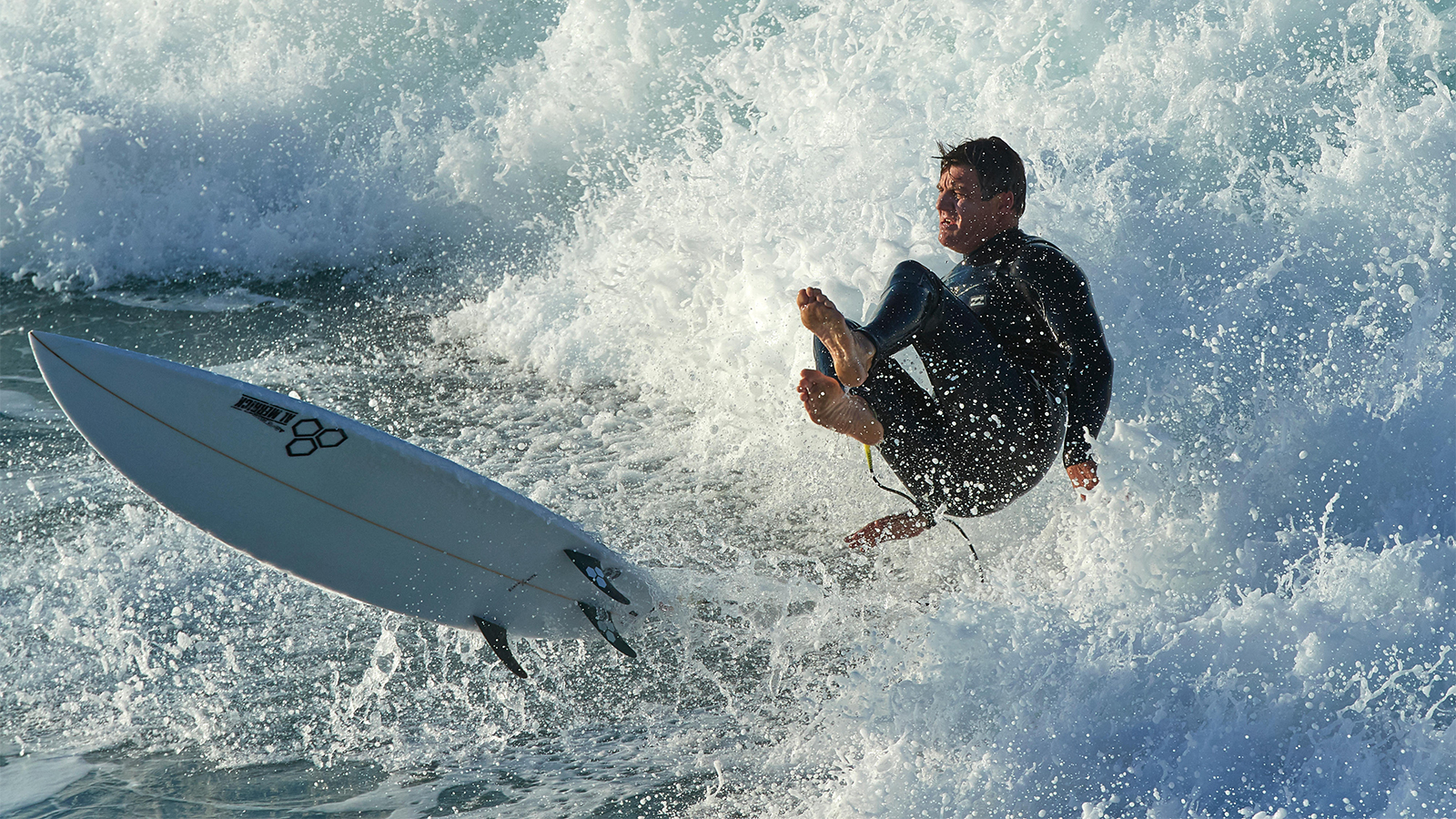
A man in his 30s was participating in a surfing lesson when he sustained an unusual injury that left him paralyzed. The incident occurred when the individual stood up on the surfboard and twisted left for balance, inadvertently leading him to collide with a wave. Following the collision, the man felt a sharp pain in his lower back, but managed to complete the lesson.
Post the lesson, he noticed his toe feeling numb, and within 30 minutes, he began losing sensation from his toes to his upper legs. Doctoral student Nuno Ribeiro Ferreira and colleagues at the Hospital CUF Tejo in Lisbon, Portugal, reported the case in BMJ Case Reports, describing the condition as challenging.
Upon examination, no external trauma to the spine was found, but the severity of the man's paralysis led to a grade A classification on the American Spinal Injury Association Impairment Scale, indicative of a complete injury. No fractures, lesions, or other damage were detected via CT scan of the spine. However, a T2-weighted MRI revealed certain abnormalities, leading to hospital admission.
CT angiography was conducted to investigate potential vascular etiology, uncovering multiple arterial abnormalities, including stenosis and occlusions, which heightened the likelihood of spinal cord ischemia. The team began oral antiplatelet therapy with 150 mg of acetylsalicylic acid daily for five days.
Despite this, the team had to consider the possibility of transverse myelitis, which was ultimately ruled out due to an extensive autoimmune and infectious workup. The diagnosis of surfer's myelopathy was made. Ferreira hypothesized that the position and sudden torso movements might have caused a tear in the artery wall, triggering a clot and leading to ischemic injury, akin to cervical artery dissection following neck manipulation.
While other mechanisms, such as kinking of the artery, are possible, the documented stenosis and thrombosis seem to indicate an arterial wall injury.
Upon diagnosis, the patient continued oral acetylsalicylic acid and received high-dose intravenous methylprednisolone (1 g for 5 days) alongside low-molecular-weight heparin (40 mg daily). Within 72 hours of admission, the patient commenced an intensive rehabilitation program in the neurorehabilitation unit. After eight weeks of rehabilitation, the patient showed improvement and was classified as ASIA D, able to flex his feet and legs but still unable to walk.
He required intermittent self-catheterization for urination, which was improving at the time of the case report. He achieved spontaneous bowel movements with laxative therapy but had not regained voluntary anal sphincter relaxation and contraction. Ferreira emphasized that this injury can affect healthy individuals without underlying conditions, though it is not common in experienced surfers.
He recommended that surf schools teach beginners not to spend excessive time in a prone position, suggesting that waiting for a wave while sitting up on the surfboard might be a safer alternative.
Written by urgent.news from MedPage Today's reporting — not their text. Machine-written — may contain errors; check the original before relying on it.