Scientists uncover big clue as to how Antarctica's mysterious Blood Falls came to be
Brine that feeds the gruesome-looking Blood Falls in East Antarctica may have been emplaced when sea levels were higher than they are now, a new study says.
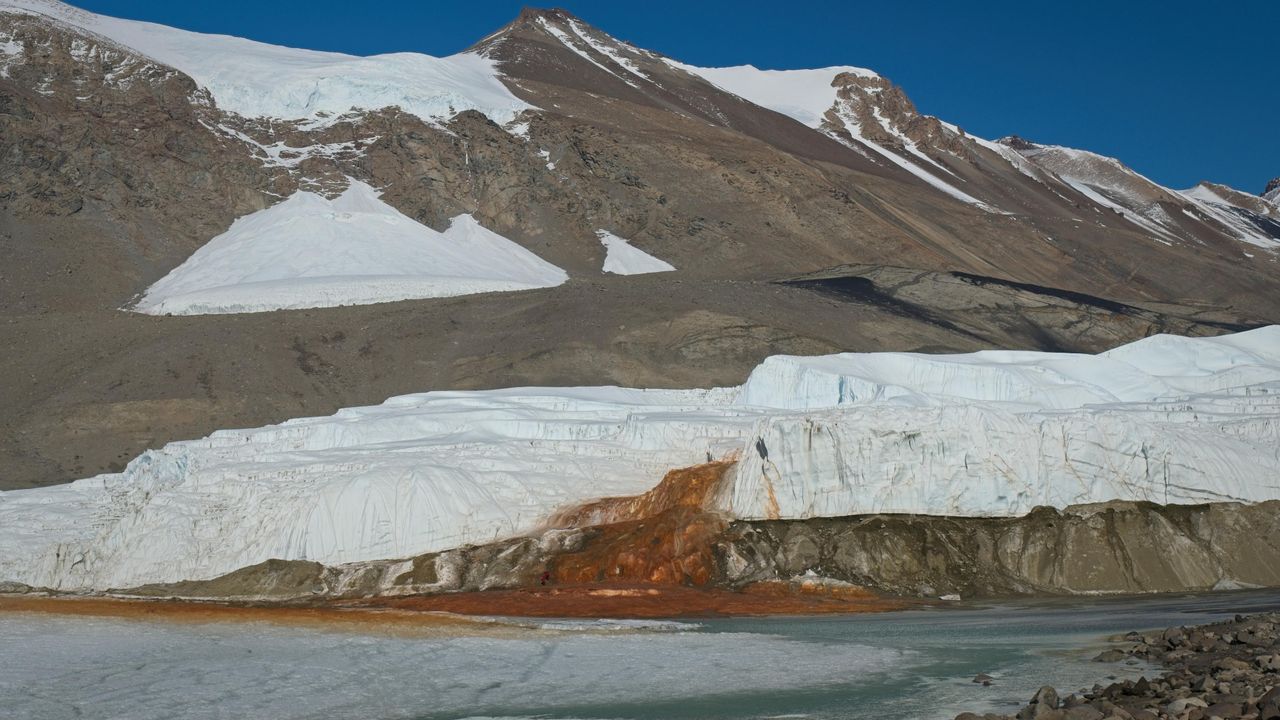
Scientists have discovered a potential explanation for the origin of Antarctica's enigmatic Blood Falls, a crimson waterfall that oozes red brine in East Antarctica's Taylor Valley. Previous research had determined that the brine is rich in iron and contains ancient seawater, but the new study provides molecular and genetic evidence supporting this hypothesis.
The researchers found that the Blood Falls area has a higher proportion of marine eukaryotic lineages compared to the broader McMurdo Dry Valleys, suggesting a deep connection to an ancient seawater source. While the precise timing of when this seawater was trapped beneath the glacier remains unclear, the team estimates it may have occurred over 1 million years ago during a warmer period with higher sea levels.
The study, published in Nature Geoscience, also found that the air near Blood Falls contains only a small fraction of marine microorganisms, indicating that current winds cannot fully account for the unique microbial composition. The researchers conclude that an ancient seawater origin is the most plausible explanation for the microorganisms found at Blood Falls today, with winds likely playing a lesser role in shaping the current microbial community.
Further research, including more comprehensive genetic profiling and mapping, is needed to pinpoint the exact timing of the glacier's growth and its impact on the trapped seawater.
Written by urgent.news from Live Science's reporting — not their text. Machine-written — may contain errors; check the original before relying on it.
Also reported by 2 other outlets
- How Antarctica's Blood Falls came to be scientificamerican.com
- Scientists uncover big clue as to how Antarctica's mysterious Blood Falls came to be r.smartbrief.com